Chinese Robot Runs 100m in 8.86 Seconds, Beats Usain Bolt
A humanoid robot just sprinted faster than the world's greatest human athlete, crossing the finish line in under nine seconds. The breakthrough at Beijing's World Humanoid Robot Games shows how quickly AI and robotics are turning science fiction into reality.
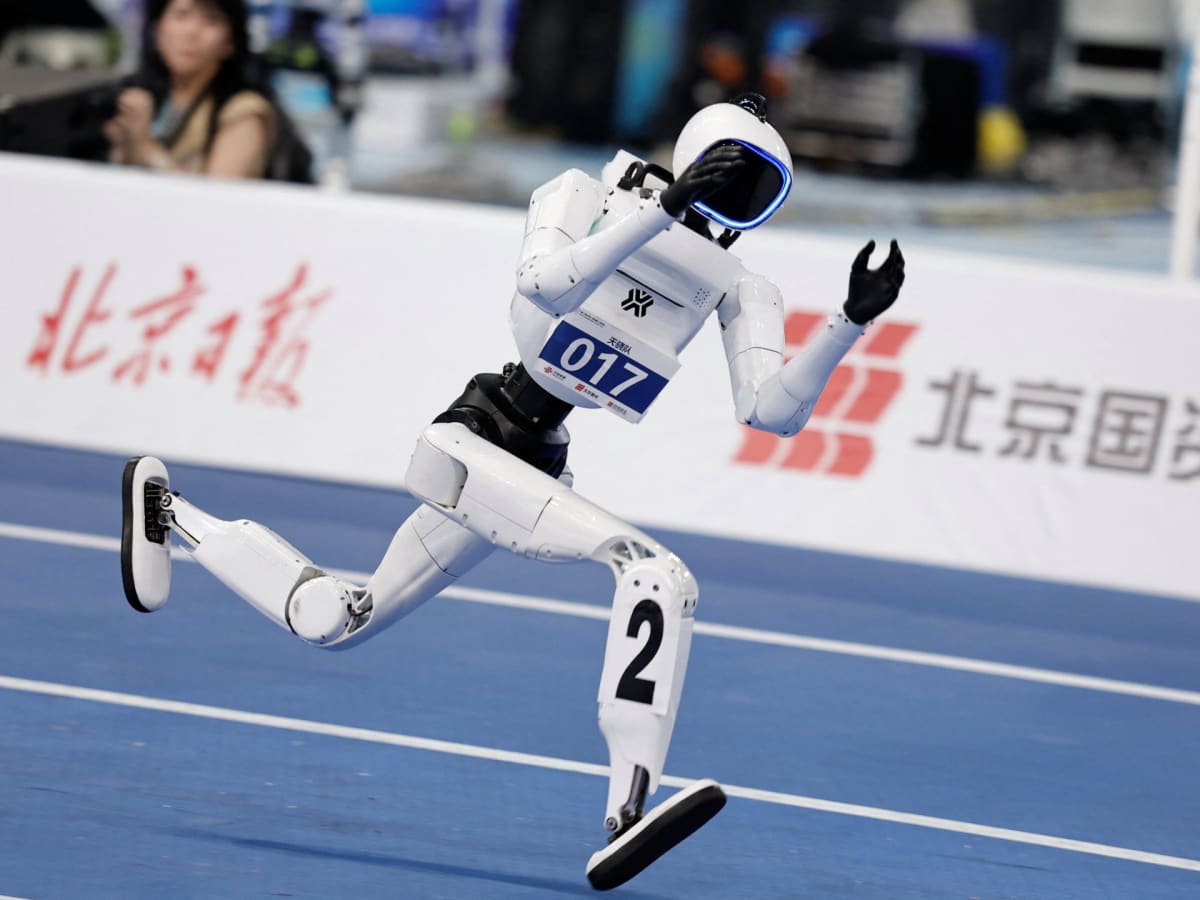
China's Tiangong Ultra humanoid robot just ran 100 meters in 8.86 seconds, smashing Usain Bolt's human world record of 9.58 seconds by more than seven-tenths of a second. The historic sprint happened Tuesday at the World Humanoid Robot Games in Beijing, where over 2,000 robots are competing in everything from soccer to dancing.
Just three days earlier, the same robot had clocked 9.39 seconds in its opening race. The dramatic improvement from one competition to the next shows how rapidly these machines are learning and evolving.
The progress becomes even more stunning when you look back just one year. At the 2025 games, Tiangong won the 100-meter dash with a time of 21.50 seconds. That means the robot more than doubled its speed in just 12 months.
"Reading that a motor-powered robot can run faster than a human is one thing," said Li Hui, an engineer watching the competition. "Seeing it rush past you during training is completely different. You realise how impressive it is."
The race didn't end gracefully. Tiangong struck a thick mat placed beyond the finish line to stop the sprinting machines, then collapsed from the impact. A small fire appeared in the robot's torso after the dramatic finish. In the other semifinal race, another robot actually disassembled mid-sprint.
The Ripple Effect
China has designated humanoid robots as a strategic industry, pouring resources into turning AI advances into practical uses for manufacturing, logistics, and services. The Tiangong Ultra was developed by the Beijing Humanoid Robot Innovation Center, backed by tech giants including Baidu and Xiaomi's robotics division.
The center says its robots have now broken four human world records, including times of 38.15 seconds in the 400 meters and 2 minutes 21.64 seconds in the 1,500 meters. They've even achieved a 2.88-meter-high jump.
More than 666 teams brought their creations to Beijing for 51 different events, creating a proving ground where robotics companies can test their innovations and push the boundaries of what machines can do. Each breakthrough in balance, speed, and coordination brings humanoid robots closer to working alongside humans in factories, warehouses, and hospitals.
The technology racing around the track today could be restocking shelves, assisting in surgery, or responding to disasters tomorrow.
Based on reporting by Al Jazeera English
This story was written by BrightWire based on verified news reports.
Spread the positivity!
Share this good news with someone who needs it