Chinese Scientists Hit 33% Solar Cell Efficiency Record
Researchers in China just cracked a major solar power barrier, building a cell that converts sunlight to electricity at a record 33.33% efficiency. The breakthrough uses a clever new technique that could make ultra-powerful solar panels cheaper to mass-produce.
Scientists in China just achieved something that could transform how we power our homes and cities.
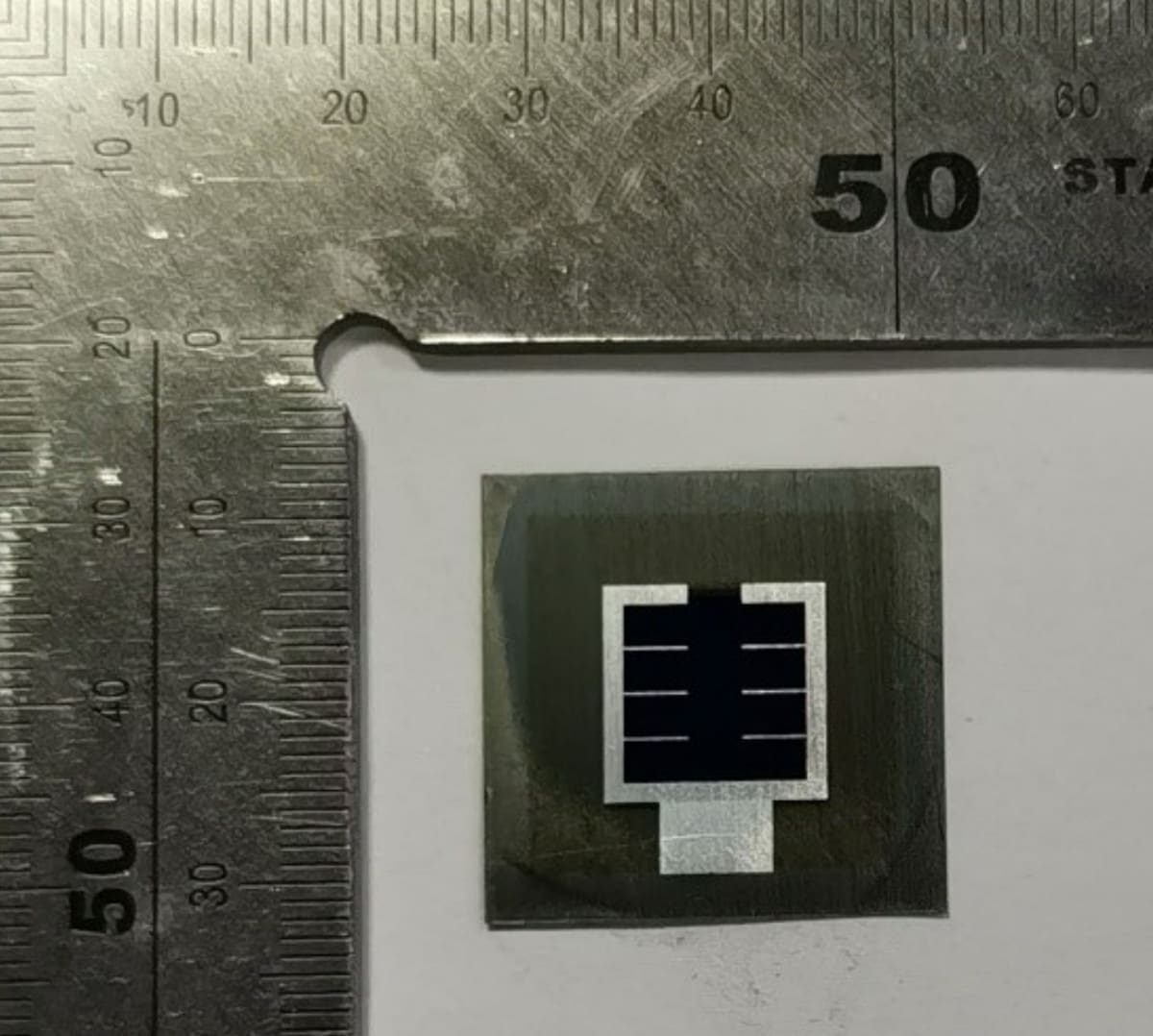
A research team led by the Chinese Academy of Sciences built a solar cell that converts 33.33% of sunlight into electricity, setting a new record. Even better, their method works with existing manufacturing equipment, meaning this breakthrough could reach rooftops and solar farms faster than usual.
The innovation solves a stubborn problem that's plagued solar technology for years. Traditional silicon solar cells have tiny pyramid-shaped bumps on their surface that help capture light, but these bumps create gaps when researchers try layering a newer material called perovskite on top. Those gaps cause energy to leak, wasting precious electricity.
Lead researcher Weichuang Yang and his team got creative. They used tiny polystyrene spheres as temporary templates to deposit aluminum oxide precisely on the tips of those pyramids. This targeted coating acts like insulation, plugging the leaks without blocking the beneficial contact between materials.
The result is a smooth, gap-free perovskite layer that sits perfectly on the silicon base. The two materials work together like a tag team, each capturing different parts of the light spectrum that the other misses.
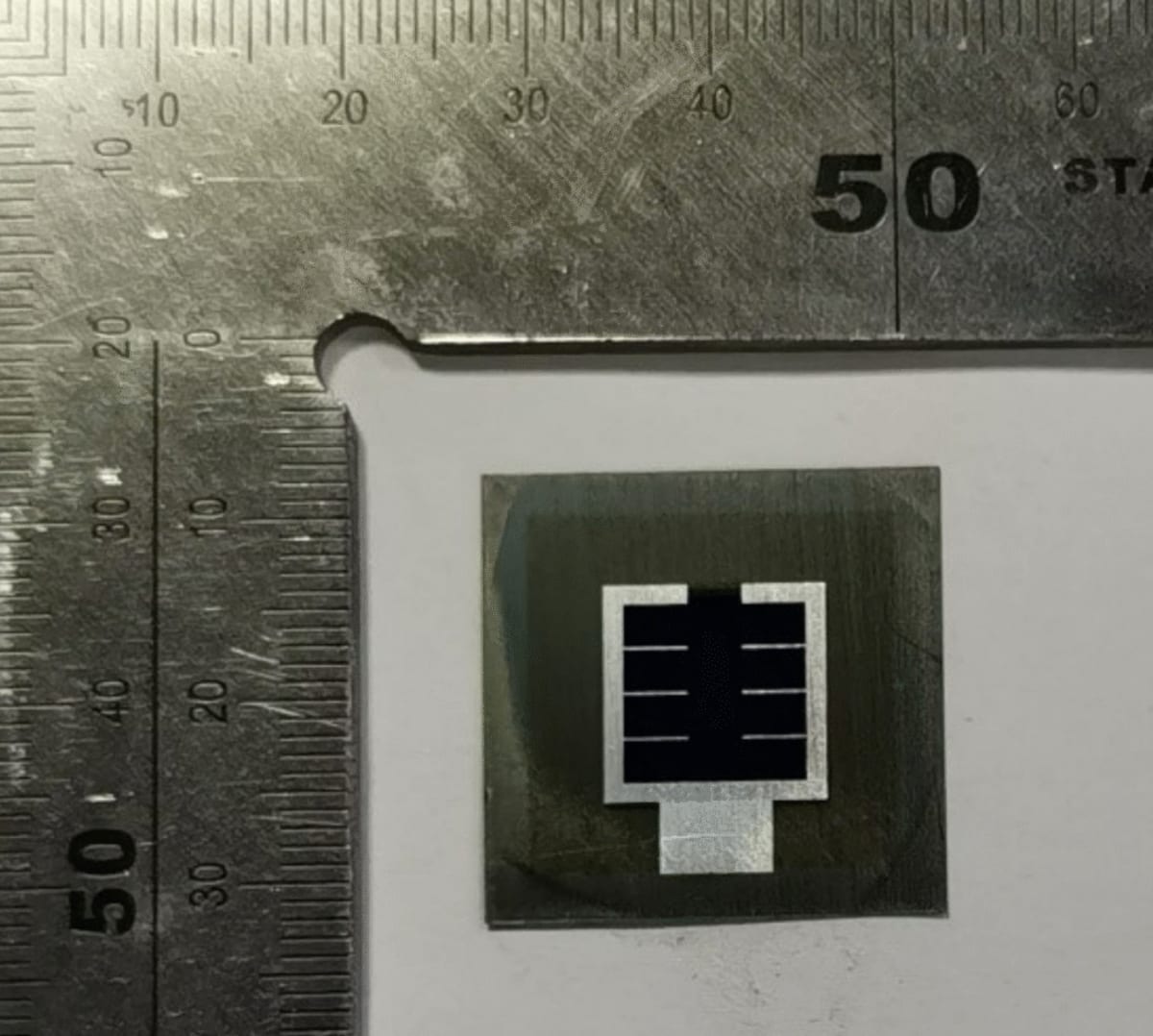
In testing, their 1-square-centimeter cell achieved 33.33% efficiency at peak performance and earned official certification at 32.89%. For context, most rooftop solar panels today operate around 15 to 20% efficiency.
The Ripple Effect
This isn't just a lab curiosity. Yang emphasizes that the process requires no modifications to current silicon solar cell production lines and avoids expensive lithography equipment. That compatibility means solar manufacturers could adopt this technology without rebuilding factories from scratch.
The team also tested durability, running the cell continuously for 1,000 hours. It retained about 90% of its original efficiency, proving it can handle real-world conditions.
As energy demands grow worldwide and climate concerns intensify, squeezing more power from the same amount of sunlight becomes increasingly valuable. Higher efficiency means fewer panels needed to generate the same electricity, reducing materials, space, and ultimately cost.
The research appeared in the journal Matter, with scientists from multiple Chinese institutions collaborating. Their work joins a global race to push solar efficiency beyond current limits while keeping production affordable.
Sunny skies ahead for clean energy.
More Images


Based on reporting by PV Magazine
This story was written by BrightWire based on verified news reports.
Spread the positivity!
Share this good news with someone who needs it