Chinese Solar Cell Hits 27% Efficiency, Lasts 5,000 Hours
Chinese researchers just cracked a major barrier in solar technology, creating a cell that converts sunlight 27% more efficiently than previous designs while lasting over 5,000 hours without losing power. The breakthrough could make solar panels work on windows and building facades.
Solar panels just got a serious upgrade that could change how we power our buildings and cities.
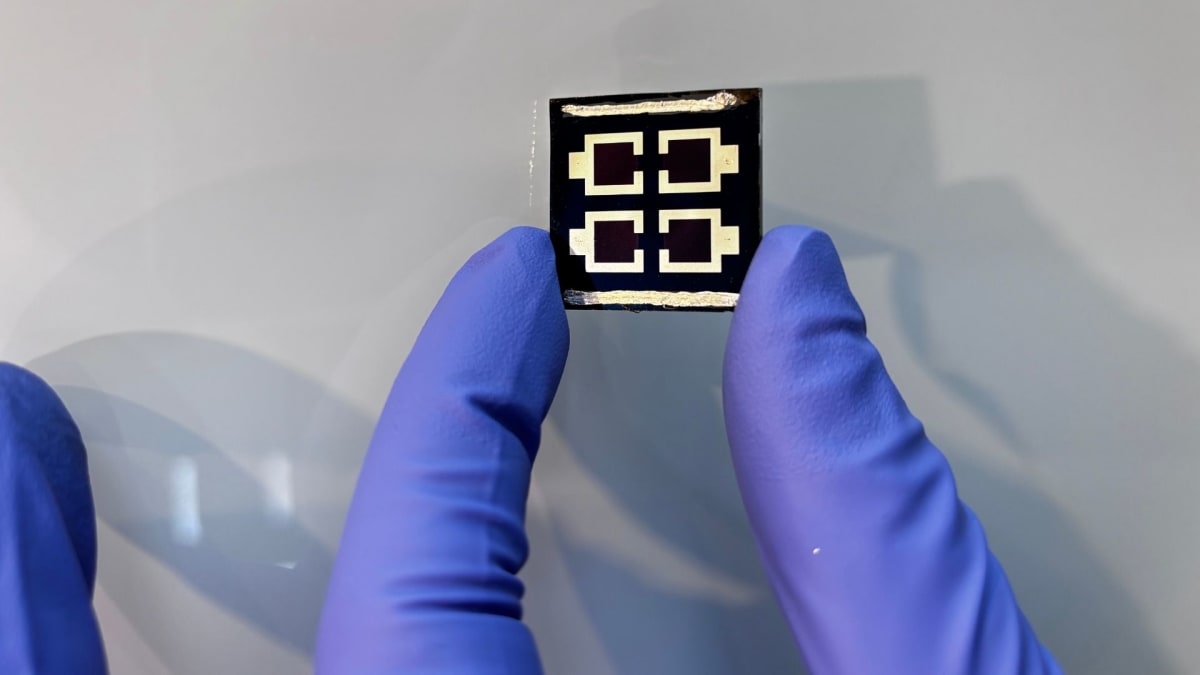
A research team in China developed a new solar cell that converts 27.39% of sunlight into electricity, beating previous designs while staying stable for months of continuous use. The secret lies in a molecule shaped like a tiny cage that fixes microscopic flaws in the solar material.
Lead researcher Cong Chen and his team tackled one of solar energy's trickiest problems. When solar materials crystallize too quickly, they develop defects that trap electricity instead of letting it flow. Think of it like potholes in a road that slow down traffic.
The team designed a molecule called ADA-DA that acts like a precision repair tool. Its rigid 3D structure lets it grab onto problem spots in the material without blocking the flow of electricity. The molecule naturally migrates to surfaces and grain boundaries where defects cluster most.
The results speak for themselves. The new solar cells grew larger, smoother crystals with far fewer defects than standard designs. Tests showed dramatic reductions in traps that catch electrons and holes, the charge carriers that generate electricity.
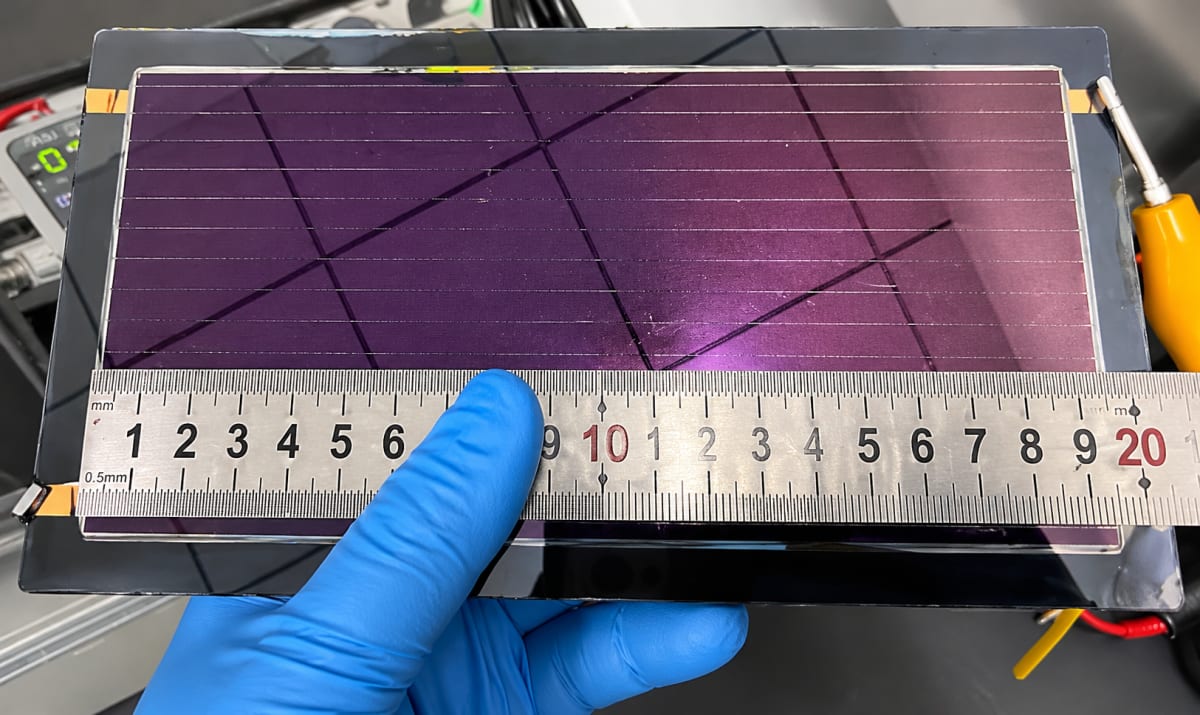
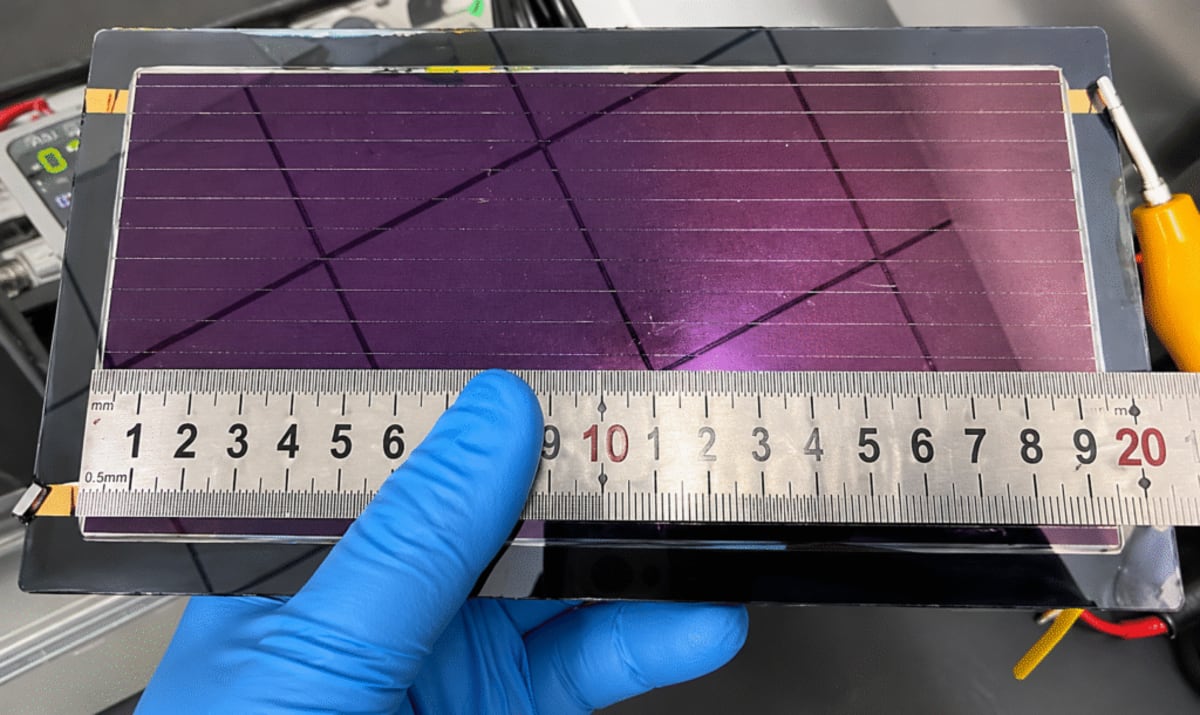
But the team didn't stop at lab samples. They scaled up the technology to create bifacial mini-modules that work from both sides, perfect for windows and building surfaces. One module measuring over 150 square centimeters maintained 99.6% of its power output after running continuously under LED light for 5,000 hours.
That stability matters enormously for real-world applications. Solar panels need to last decades outdoors, facing heat, moisture, and constant sunlight. Previous high-efficiency designs often degraded too quickly to be practical.
The Ripple Effect
This advancement arrives as cities worldwide search for ways to generate clean energy without sacrificing space. Building-integrated solar panels that work on windows and facades could transform skyscrapers from energy consumers into power generators.
The transparent, double-sided design means architects can incorporate solar technology without compromising building aesthetics. Imagine office towers with windows that look normal but generate electricity from both inside and outside light sources.
The technology also addresses manufacturing practicality. The team used vacuum-flash crystallization, a process that can scale to industrial production. Their molecule works as an additive during manufacturing rather than requiring completely new equipment or processes.
Independent certification verified the 27.39% efficiency rating, confirming this isn't just lab hype. The combination of record efficiency, long-term stability, and scalability moves this from research curiosity to commercial possibility.
Universities across China collaborated on the project, including Hebei University of Technology, Jiaxing Nanhu University, and Tianjin University. Their work appeared in the scientific journal Joule.
The race to improve solar efficiency continues globally, but this breakthrough shows we're getting closer to solar panels that work anywhere, last longer, and generate more power than ever before.
More Images


Based on reporting by PV Magazine
This story was written by BrightWire based on verified news reports.
Spread the positivity!
Share this good news with someone who needs it