Cities Turn Into Sponges to Fight Climate Floods
After a billion-dollar flood, Copenhagen transformed itself into a giant sponge using green spaces and smart engineering. Now cities worldwide are soaking up success with nature-based solutions that turn concrete jungles into flood fighters.
When Copenhagen flooded in 2011 with over 5 inches of rain in a single day, causing $1 billion in damage, city officials didn't just rebuild. They reimagined their entire city as a sponge.
Over the next decade, Copenhagen installed a network of rain gardens, green roofs, and wetlands designed to absorb stormwater before it floods streets and homes. The transformation worked so well that cities from Hong Kong to New York are now following the Danish playbook.
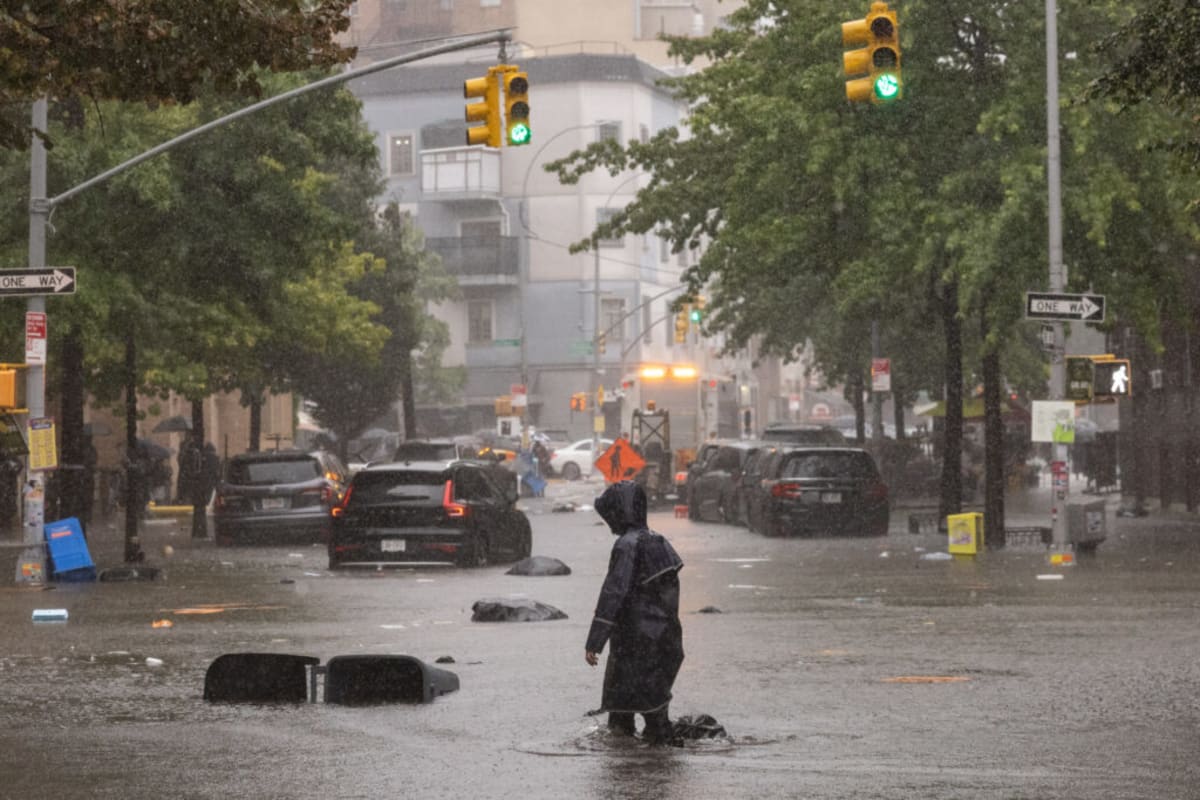
The problem these "sponge cities" solve is surprisingly simple. Most urban areas are covered in concrete and asphalt that send rainwater rushing into outdated drainage systems. When extreme storms hit, those systems overflow, sending sewage into waterways and floodwater into neighborhoods.
Los Angeles proved the concept works at scale when green spaces and porous basins soaked up 8.6 billion gallons of water during a 2024 atmospheric river. That's enough water to fill more than 13,000 Olympic swimming pools that otherwise would have flooded streets.
But climate scientist Franco Montalto from Drexel University says American cities are taking a patchwork approach rather than the comprehensive transformation needed. "We do it where we can, where it's easy, where it's not too expensive, and that hasn't really turned out to be enough," he explained.
China has seen more success because officials integrate sponge city designs early in development rather than retrofitting existing infrastructure. After President Xi Jinping endorsed the concept a decade ago, Chinese cities built these systems from the ground up.
The Bright Side
Even when storms get too powerful for green infrastructure to handle alone, these natural systems still deliver major wins. Tree-lined streets and vegetated areas improve mental health, clean waterways, and absorb carbon from the atmosphere.
Climate scientist Jen Pierce from Boise State University put it perfectly: even in the most severe storms, green spaces always absorb more water than concrete parking lots. Every rain garden helps, even if it can't stop a once-in-a-century downpour.
The sweet spot happens when cities plan comprehensively rather than opportunistically. Copenhagen's success came from treating their entire city as one connected system, not just adding green patches wherever convenient.
As climate change brings more extreme rainfall, the choice becomes clearer: cities can either work with nature's ability to absorb water, or watch billions of dollars wash away with the next big storm.
Based on reporting by Inside Climate News
This story was written by BrightWire based on verified news reports.
Spread the positivity!
Share this good news with someone who needs it