Cleaner Ship Fuel Cuts Lightning Strikes by 36%
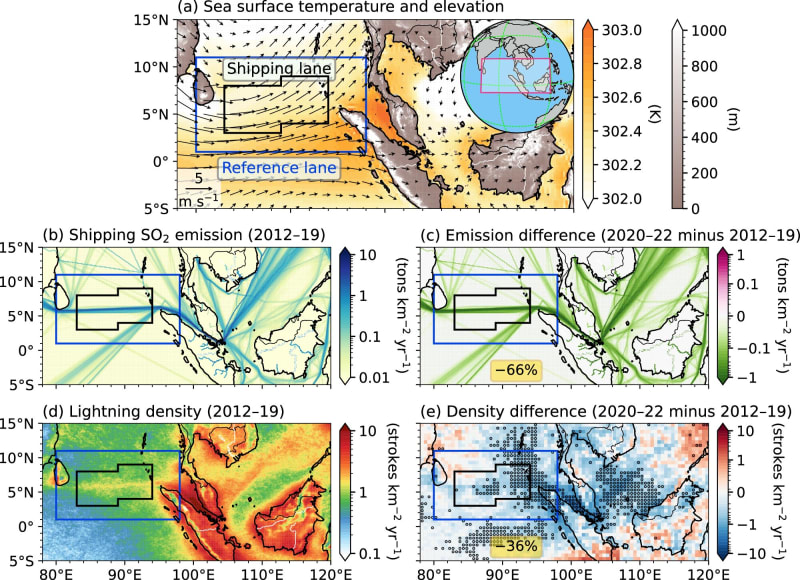
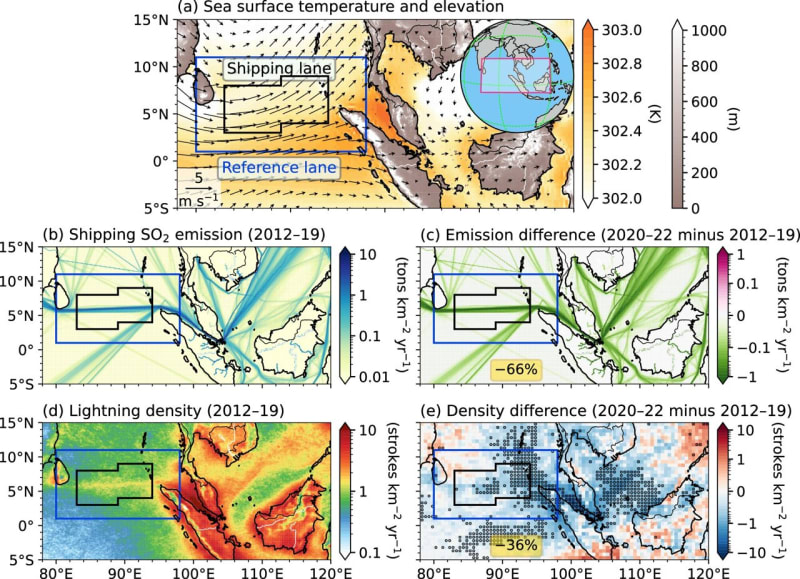
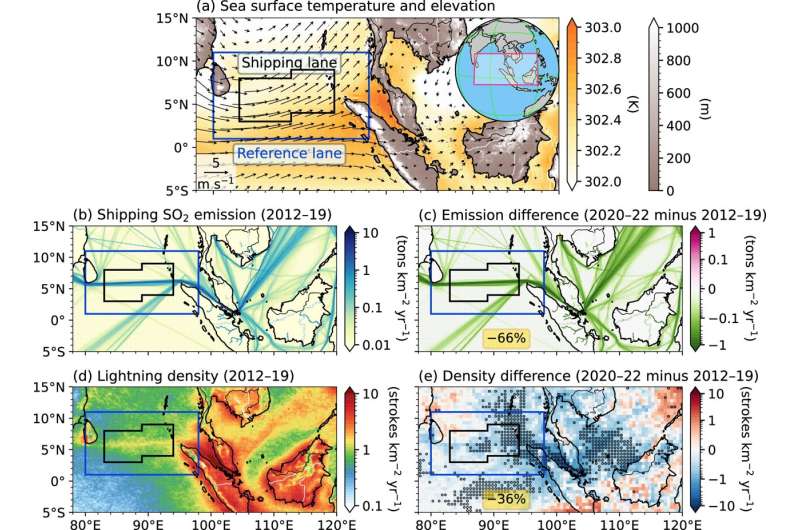
New rules forcing ships to use cleaner fuel have slashed lightning strikes by more than a third over busy ocean shipping lanes. Scientists discovered this unexpected benefit while studying air quality improvements in the Bay of Bengal and South China Sea.
Scientists just discovered an unexpected win from cleaning up the world's shipping industry: 36% fewer lightning strikes over the ocean.
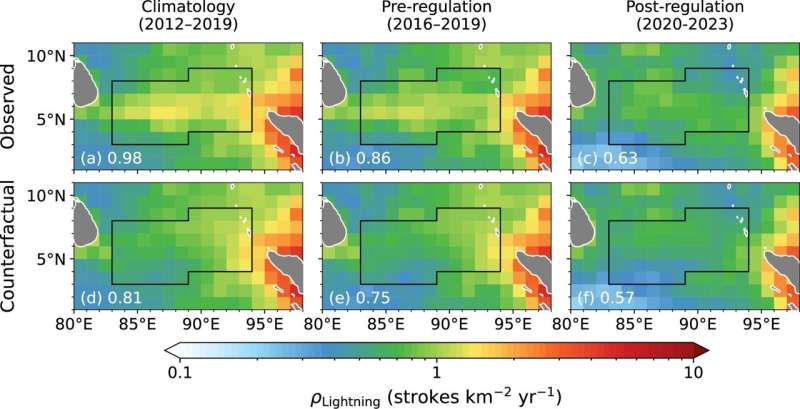
When international rules forced ships to cut sulfur pollution in 2020, researchers at the University of Kansas noticed something surprising. Lightning dropped dramatically along busy shipping routes in the Bay of Bengal and South China Sea.
The connection comes down to tiny particles in the air. Ships burning dirty fuel used to release massive amounts of sulfate aerosols, which acted like seeds for storm clouds. More particles meant smaller water droplets, which made clouds last longer and grow taller, creating perfect conditions for lightning.
Lead researcher Qinjian Jin explains that the Bay of Bengal was the perfect place to spot this change. "The shipping activity is so frequent that it releases a lot of sulfate aerosols, more than other oceanic regions," he said. The region also sees powerful storms that produce lots of lightning naturally.
After the 2020 International Maritime Organization capped sulfur in ship fuel, sulfate emissions dropped by roughly 70% in the Bay of Bengal. The cleaner air meant fewer cloud particles, which led to bigger water droplets, weaker storms, and ultimately less lightning.
The team used data from the World Wide Lightning Location Network to track individual lightning strikes across the globe. They compared patterns before and after the 2020 regulations took effect.
The Bright Side
Fewer lightning strikes mean safer conditions for sailors and equipment at sea. Lightning can damage ships, disrupt operations, and reduce visibility during storms.
The researchers found similar drops in lightning along other major shipping routes. The South China Sea showed nearly identical results, while the Red Sea showed a weaker but still noticeable decrease.
This discovery adds to the growing list of benefits from cleaning up ship fuel. The regulations were designed to improve air quality and protect human health in coastal communities. Now scientists know they're also making the oceans safer for maritime workers.
The research appears in the journal npj Climate and Atmospheric Science. Jin worked with colleagues from universities in China and Kansas to analyze years of lightning and shipping data.
The findings show how one environmental improvement can create unexpected positive ripples across entire ocean regions.
More Images

Based on reporting by Phys.org - Earth
This story was written by BrightWire based on verified news reports.
Spread the positivity!
Share this good news with someone who needs it