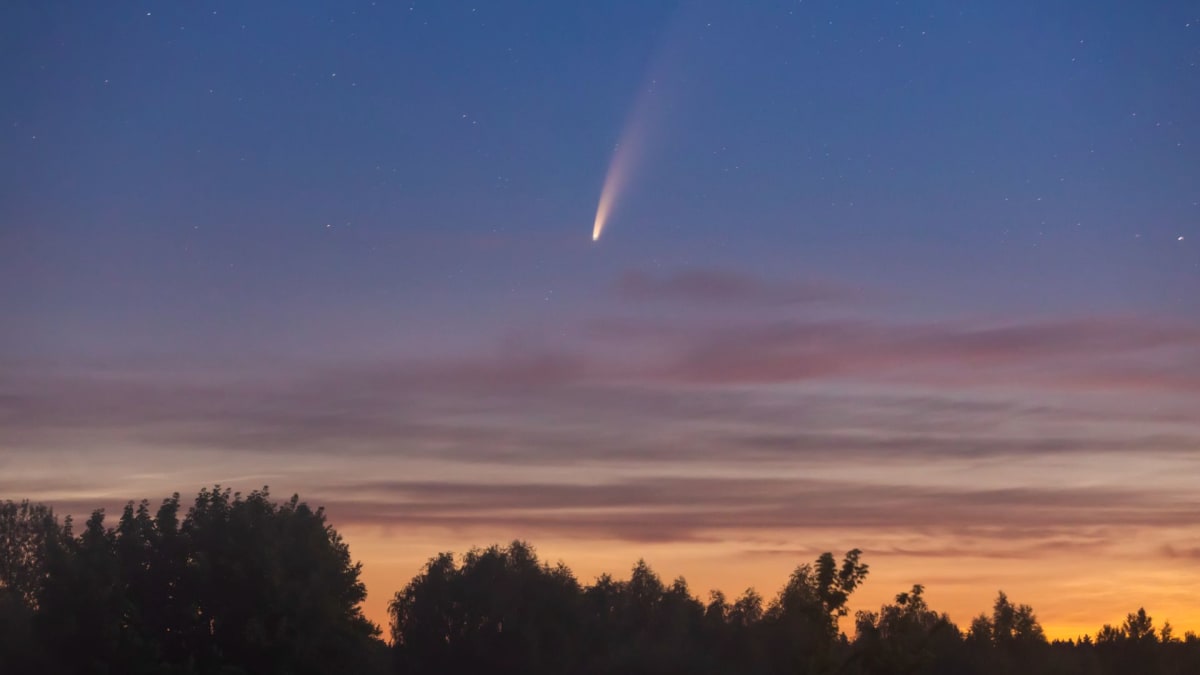
Comet PanSTARRS May Light Up Skies This Month
A newly brightening comet could become visible to the naked eye in mid-April, offering early risers a rare celestial show. Comet PanSTARRS is expected to reach peak brightness around April 20 when it passes closest to the sun.
Stargazers have a reason to set their alarms early this month as Comet PanSTARRS brightens in the predawn sky, potentially becoming visible without any equipment.
The comet, officially named C/2025 R3 (PanSTARRS), has been steadily brightening throughout early April. Observations show it already reached magnitude 6, just at the edge of what human eyes can detect in very dark skies.
Scientists predict the comet could brighten to magnitude 4 in the coming weeks, making it much easier to spot with the naked eye. Even if predictions fall short, the comet should still be visible through basic binoculars, a rare treat for amateur astronomers.
The best viewing window runs from April 13 to April 15, when the comet will appear near the Great Square of Pegasus just above the eastern horizon about an hour before sunrise. After that, it moves into the constellation Pisces, continuing its journey across the sky.
On April 20, the comet reaches perihelion, its closest point to the sun at 47.4 million miles away. This proximity causes ice on the comet to transform into glowing gas, creating the brilliant tail and glow that makes comets so captivating to watch.
The comet makes its closest approach to Earth on April 27, passing within 44 million miles of our planet. However, by that date, the sun's glare may make viewing more challenging despite the comet being at peak brightness.
The Bright Side
This celestial visitor arrives with perfect timing. A new moon on April 17 means darker skies right when the comet should be at its most brilliant, giving viewers the best possible conditions for observation.
Unlike Comet C/2026 A1 (MAPS), which recently vaporized when it flew too close to the sun, PanSTARRS follows a safer trajectory. Astronomers feel confident this comet will survive its solar encounter and put on the show skywatchers have been hoping for.
The comet also offers an accessible entry point for anyone curious about astronomy. No expensive telescope needed, just clear skies, an early wake-up call, and a view of the eastern horizon.
While comets remain notoriously unpredictable, current data suggests PanSTARRS is delivering on its promise, brightening steadily as it approaches. Weather permitting, millions of people across the Northern Hemisphere could witness this cosmic traveler lighting up the dawn sky.
More Images


Based on reporting by Google News - Science
This story was written by BrightWire based on verified news reports.
Spread the positivity!
Share this good news with someone who needs it


%2Fhttps%3A%2F%2Ftf-cmsv2-smithsonianmag-media.s3.amazonaws.com%2Ffiler_public%2Ff0%2Ffe%2Ff0fe19e4-e68b-474d-b0a4-19c5beb9d19d%2Fspeedy-star.webp)