Congo Peace Talks Begin After Decades of Conflict
After 30 years of fighting that killed six million people, Congo's government and rebel groups are finally talking. While refugees remain cautious, the negotiations backed by international partners mark a meaningful first step toward ending one of Africa's longest conflicts.
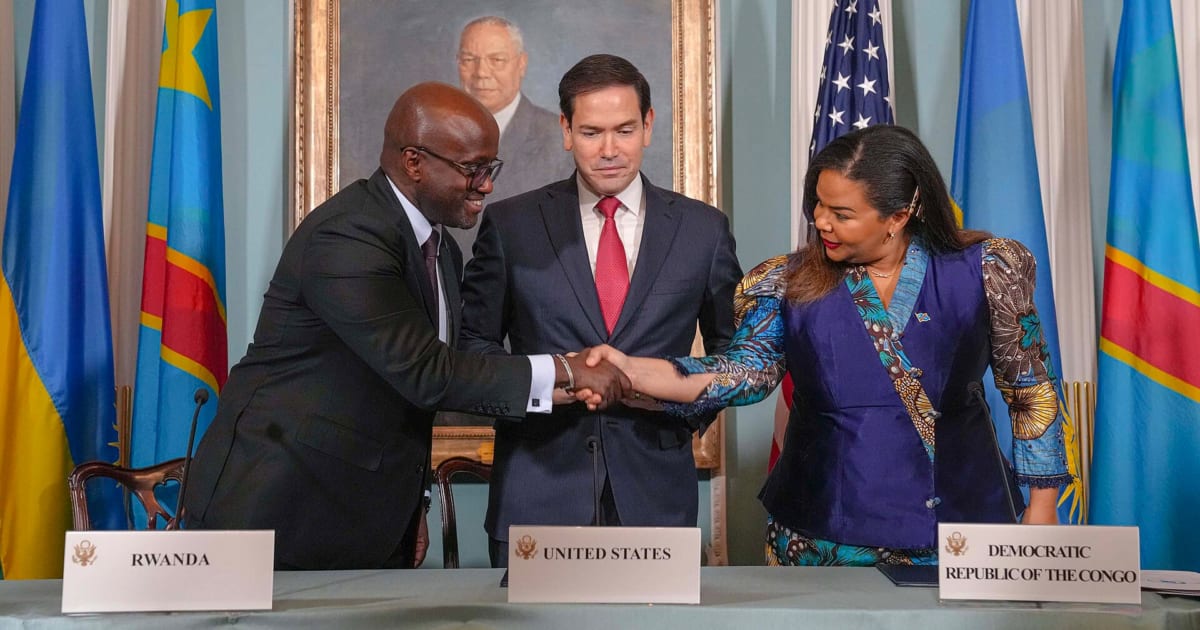
Representatives from the Democratic Republic of Congo and the AFC/M23 rebel alliance sat down together in Switzerland in late August to chart a path toward peace. The talks, supported by the United States, Qatar, and the African Union, resulted in a roadmap agreement and the deployment of ceasefire monitors to eastern Congo's South Kivu region.
The conflict has ravaged eastern Congo since 1996, rooted in the aftermath of Rwanda's 1994 genocide when armed groups crossed into Congolese territory. Competition over the region's vast mineral wealth, ethnic tensions, and political interests have fueled decades of violence that displaced over seven million people.
For Congolese nationals who have endured years of fighting, the negotiations spark cautious hope. "A part of me wants to believe in these current negotiations because we are fed up with the conflict," Ramazani Muteba, a lawyer in Kindu, told FairPlanet.
Raphael Akonkwa, now a refugee in Kampala, Uganda, shares that careful optimism. "I feel cautiously hopeful that the Congolese government and M23 are talking instead of fighting," he said.
Why This Inspires
After countless failed peace agreements—from the 1999 Lusaka Agreement to the 2013 Kampala Dialogue—Congolese communities have every reason to doubt diplomatic promises. Yet they continue showing up with hope, choosing to believe that this time might be different.
The fact that talks are happening at all represents progress in a region where violence has become normalized. International backing from multiple nations and organizations demonstrates global commitment to supporting Congo's path forward.
Emmanuel Ndonye, an expert in African governance, emphasizes that implementation matters more than signatures. "The issue is not simply that agreements are signed; it is whether they are implemented," he told FairPlanet.
The ceasefire monitoring mission now deployed in South Kivu provides something previous agreements lacked: eyes on the ground to verify commitments. While the process excludes some regional actors and faces legitimate criticism, it offers a framework that could finally allow millions of displaced Congolese to imagine returning home.
For refugees like Akonkwa who left behind homes, communities, and entire ways of life, peace talks mean the possibility of reunion with loved ones and rebuilding what was lost. Even those whose hope has been tested by repeated disappointments deserve to see their leaders choose dialogue over bullets.
The road ahead remains long and uncertain, but thirty years of fighting has proven that war offers no solutions—only more displacement, more trauma, and more lives lost.
Based on reporting by Google News - Peace Agreement
This story was written by BrightWire based on verified news reports.
Spread the positivity!
Share this good news with someone who needs it