Construction Soil Hack Cuts Carbon Emissions By 96%
Scientists discovered urban construction sites release tons of hidden carbon emissions from excavated soil—then found a simple fix that slashes those emissions by up to 96%. A small addition of biochar combined with smart burial techniques could turn forgotten dirt piles into climate solutions.
Every time cities dig foundations for new buildings, the excavated soil sitting in massive piles is quietly releasing greenhouse gases into the atmosphere. Scientists just figured out how to stop it with a surprisingly simple solution.
Researchers studying urban construction sites discovered that exposed excavated soil emits about 12.78 tons of carbon per hectare annually. These aren't small piles—urban development generates enormous volumes of dirt that often sits stockpiled for months or years, steadily releasing carbon dioxide and methane as microbes break down organic matter.
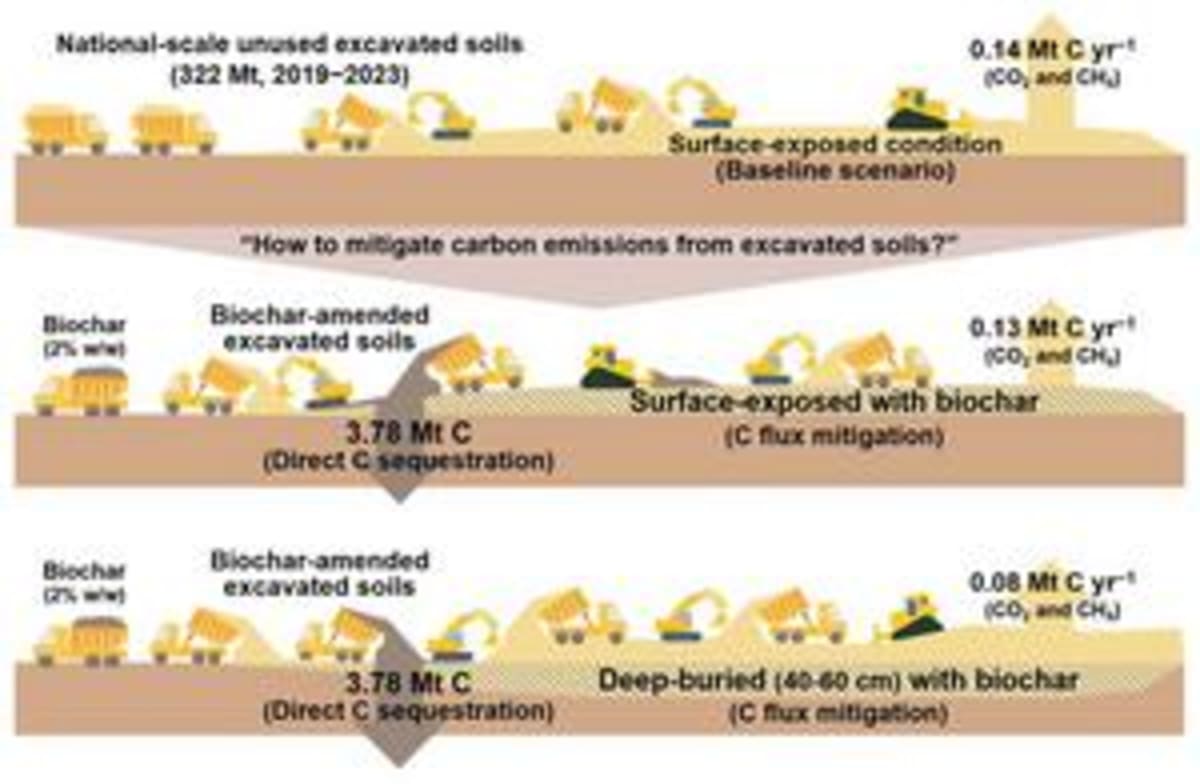
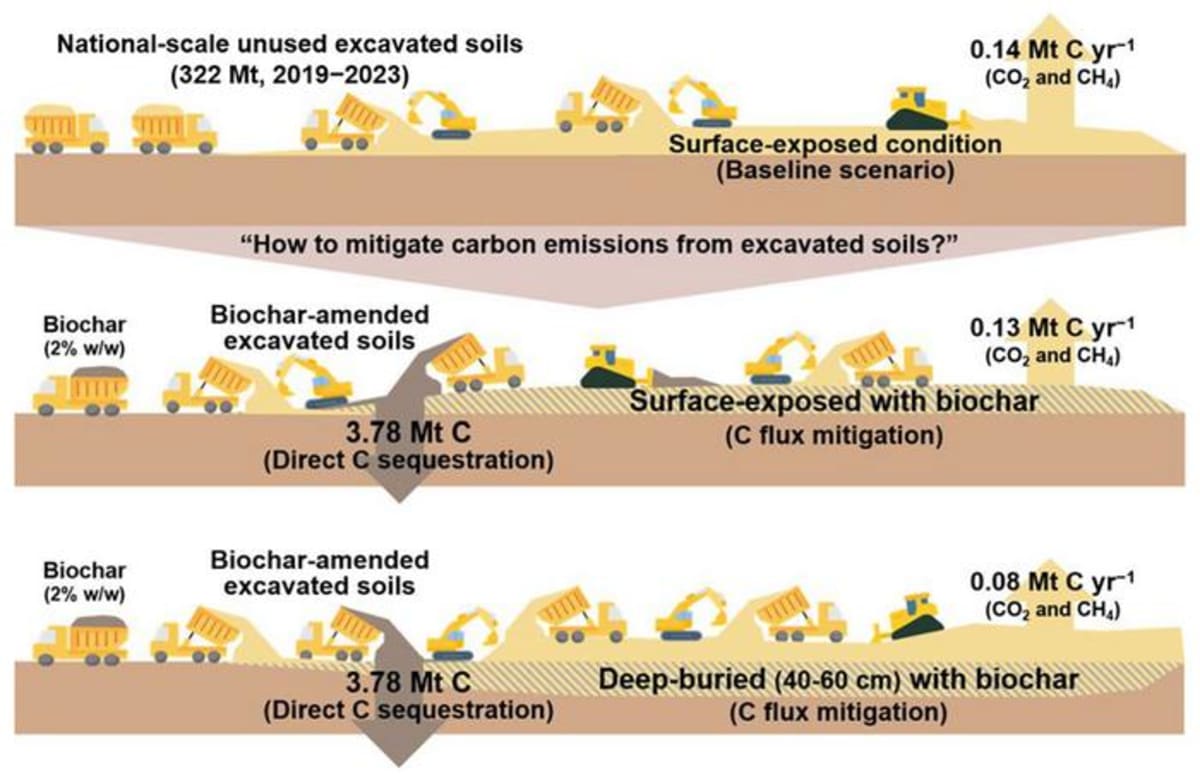
The team tested a practical fix during a large-scale redevelopment project. When they buried excavated soil deeper and mixed in a small amount of biochar—a carbon-rich material made from plant matter—emissions plummeted.
The results stunned even the researchers. Carbon dioxide emissions dropped by more than 40 percent, while methane emissions fell by nearly 96 percent compared to soil left exposed at the surface.
Biochar works double duty. It locks carbon into the soil for long-term storage while improving soil structure by increasing oxygen flow, which prevents methane formation that occurs in oxygen-starved conditions.
The Ripple Effect
The implications stretch far beyond individual construction sites. In South Korea alone, excavated soils released an estimated 0.14 million tons of carbon between 2019 and 2023—emissions that never appeared in official greenhouse gas inventories.
Applying these mitigation strategies nationwide could offset about 15 percent of the country's entire waste sector emissions over the same period. That's a significant climate win hiding in plain sight at construction zones worldwide.
The research team emphasized that their biochar application rates reflect realistic, affordable amounts that cities could actually implement at scale. This isn't a laboratory fantasy—it's a practical intervention that can slot into existing construction workflows without major disruption.
Methane proved particularly important to address despite being released intermittently. During wet conditions, methane contributed up to 22 percent of total warming effects because it traps heat far more effectively than carbon dioxide.
Cities around the world are expanding rapidly, creating more excavated soil every year. Most urban planners and climate policymakers don't currently account for these emissions when calculating their carbon footprints or setting reduction targets.
The researchers are now working to develop monitoring frameworks and refine estimates for global implementation. Their study provides one of the first real-world datasets proving both the scale of this overlooked problem and the feasibility of fixing it.
Construction sites could shift from hidden emission sources to active climate solutions—one biochar-amended soil pile at a time.
More Images
Based on reporting by Google News - Climate Solution
This story was written by BrightWire based on verified news reports.
Spread the positivity!
Share this good news with someone who needs it