Texas Solar Will Outshine Coal Power by 2026
The Lone Star State is about to hit a historic energy milestone. Solar panels will generate more electricity than coal plants in Texas next year, marking a turning point in America's largest energy-producing state.
Texas is flipping the script on American energy, and the numbers tell an incredible story of transformation.
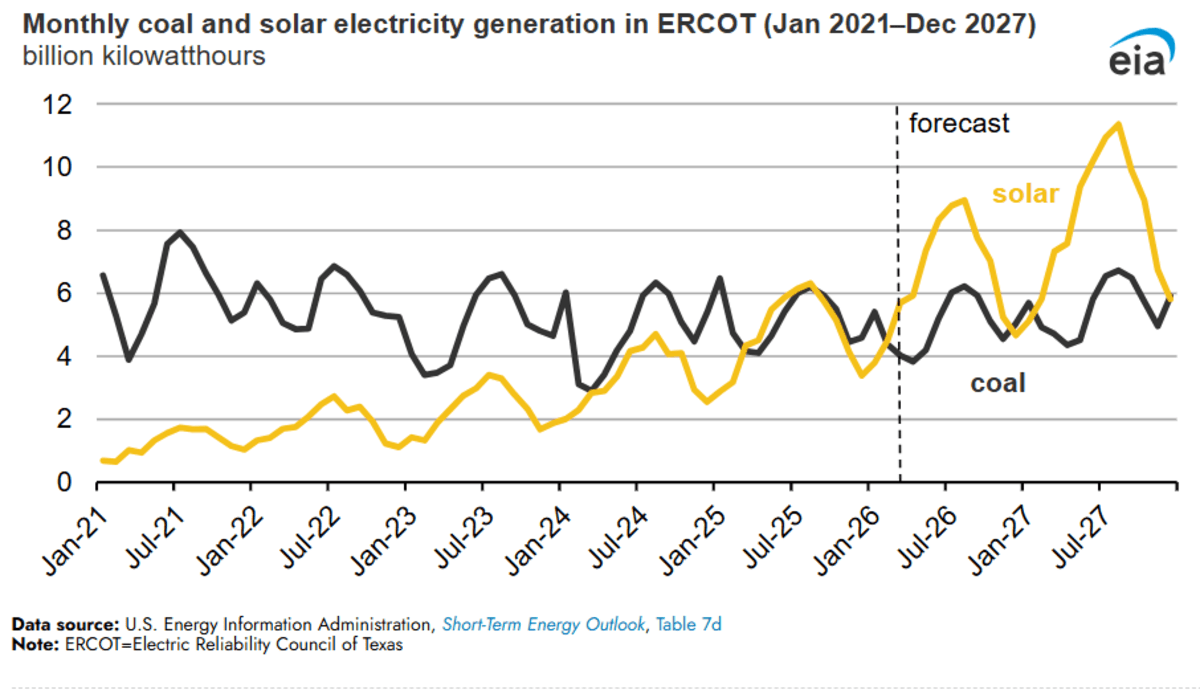
By 2026, solar power will generate 78,000 gigawatt-hours of electricity across Texas, officially surpassing the 60,000 gigawatt-hours expected from coal. It's a historic flip in the state that produces more energy than any other, and it's happening faster than almost anyone predicted just a few years ago.
The shift is backed by massive investment in physical infrastructure. Texas will host 40% of all new solar capacity added across the entire United States in 2026, with developers planning to install 14 gigawatts of new utility-scale solar panels.
One standout project is the Tehuacana Creek 1 Solar facility, which will become the largest single solar installation to come online nationwide this year at 837 megawatts. That's enough to power hundreds of thousands of homes with clean energy.
But solar panels are only part of the story. Texas is also leading the nation in battery storage, accounting for more than half of the 24 gigawatts of utility-scale batteries planned for the U.S. grid in 2026.
These batteries solve one of renewable energy's biggest challenges: storing power when the sun isn't shining and the wind isn't blowing. By early 2027, total U.S. battery capacity is projected to reach 67 gigawatts, up from just 15 gigawatts added in 2025.
The Texas transformation mirrors a national trend. Solar and wind combined recently hit 17% of total U.S. power generation, and by early 2027, that share is expected to exceed 20%.
The Ripple Effect
This energy shift creates benefits that extend far beyond cleaner air. The construction boom is generating thousands of jobs in installation, maintenance, and grid management across Texas communities.
Lower energy costs are becoming more common as solar and wind production costs continue to drop. Battery storage helps stabilize the grid during peak demand, potentially reducing those summer electricity bills that Texas families know too well.
The decentralized nature of solar power also makes the grid more resilient. When severe weather hits one area, distributed solar installations across the state help keep the lights on elsewhere.
Texas proving that the largest energy-producing state in America can lead the clean energy transition sends a powerful message to the rest of the country and the world.
More Images

Based on reporting by PV Magazine
This story was written by BrightWire based on verified news reports.
Spread the positivity!
Share this good news with someone who needs it