Cosmonauts Install Sun-Watching Telescope in 6-Hour Spacewalk
Two Russian cosmonauts successfully completed a six-hour spacewalk outside the International Space Station, installing a telescope that will help scientists better predict dangerous solar flares. The mission showcased international cooperation in space while advancing our ability to understand the sun's behavior.
Scientists just got a powerful new tool to protect Earth from dangerous solar storms, thanks to two cosmonauts floating 250 miles above our planet.
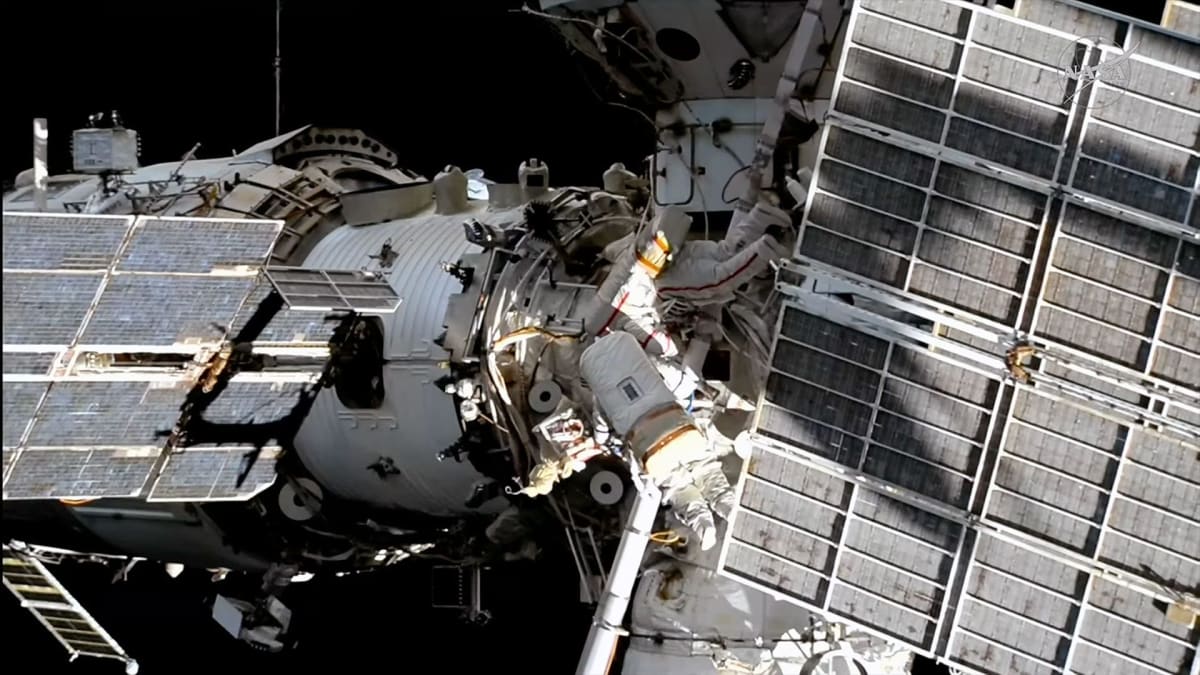
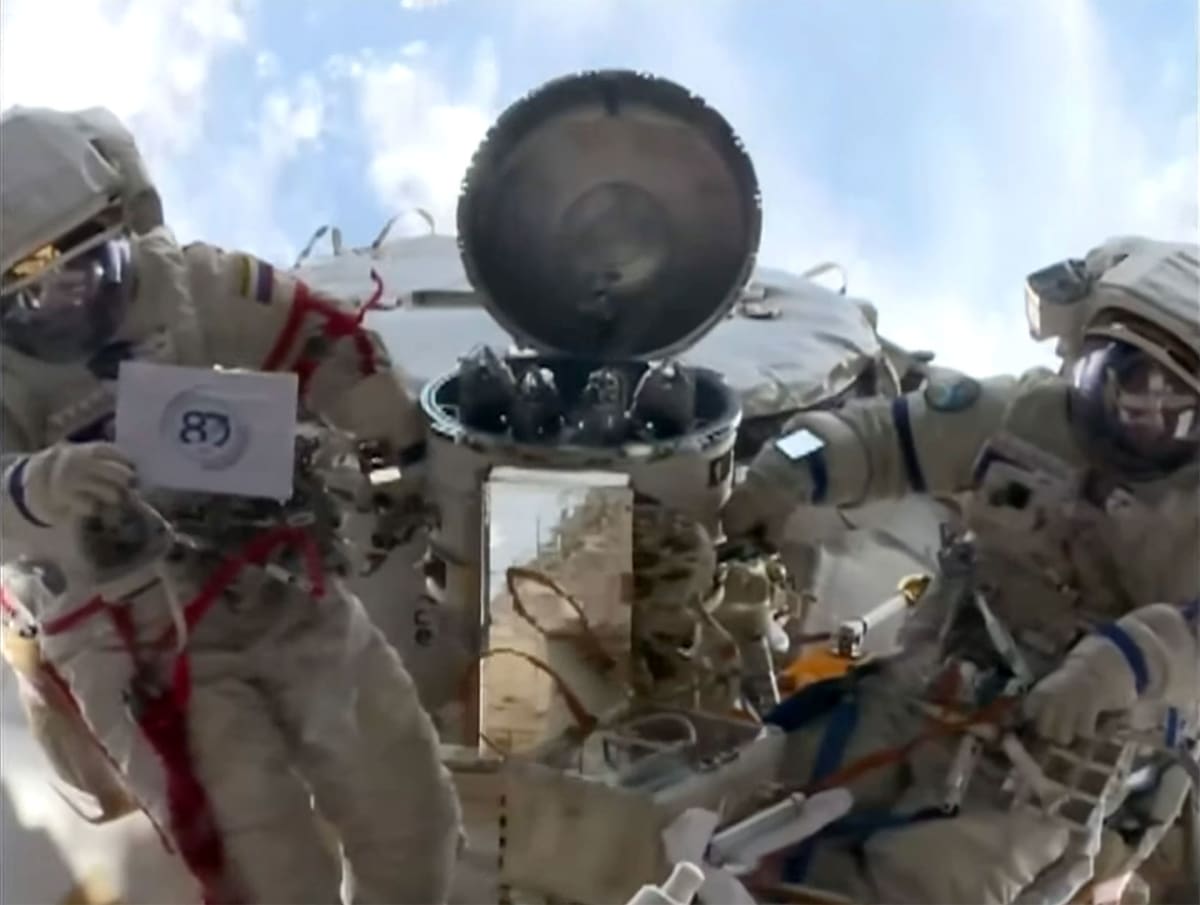
Sergey Kud-Sverchkov and Sergei Mikaev spent over six hours outside the International Space Station on Wednesday, installing the Solntse-Teragerts telescope on the station's Russian segment. The telescope will observe powerful solar flares bursting from the sun and collect critical data to improve prediction models.
Better solar flare predictions mean better protection for our increasingly connected world. These massive bursts of solar radiation can knock out power grids, disrupt GPS systems, and damage satellites that we rely on for everything from weather forecasts to internet service.
The telescope will operate through 2028, giving scientists years of valuable data about solar activity across different frequencies. Each observation brings us closer to understanding the sun's temperamental behavior and safeguarding the technology that powers modern life.
The cosmonauts also retrieved samples from a unique experiment that grows ultra-pure semiconductor films in space. The microgravity environment allows scientists to create materials impossible to produce on Earth, potentially leading to advances in electronics and communications technology.
Why This Inspires
This mission reminds us that humanity's greatest achievements happen when we work together beyond borders. While the cosmonauts worked outside, astronauts from multiple nations collaborated inside the station to support them.
The spacewalkers even took time to celebrate milestones, holding up a commemorative card for their space agency's 80th anniversary and wishing happy birthday to the residents of St. Petersburg. These small human moments, happening in the harsh vacuum of space, show that exploration doesn't erase our connections to home.
When the duo encountered technical difficulties retrieving one of the experiment cassettes, they adapted and solved the problem with help from ground controllers. The mission accomplished every planned objective despite the challenges.
This was Mikaev's first spacewalk and the second for Kud-Sverchkov, who now has over 12 hours of experience working in the vacuum of space. It marked the 279th spacewalk supporting the International Space Station since assembly began in 1998.
The station continues to serve as humanity's laboratory in orbit, where research benefits everyone on Earth regardless of nationality. From protecting our planet from solar storms to developing new materials, the work happening above us creates a brighter future for all of us below.
More Images
Based on reporting by Space.com
This story was written by BrightWire based on verified news reports.
Spread the positivity!
Share this good news with someone who needs it