Croatian Village Shares Rooftops With 200+ White Storks
In Cigoc, Croatia, white storks outnumber people and nest directly on village rooftops each spring. For 32 years, this tiny wetland community has been Europe's official "Stork Village" where pensioners and birds live as neighbors.
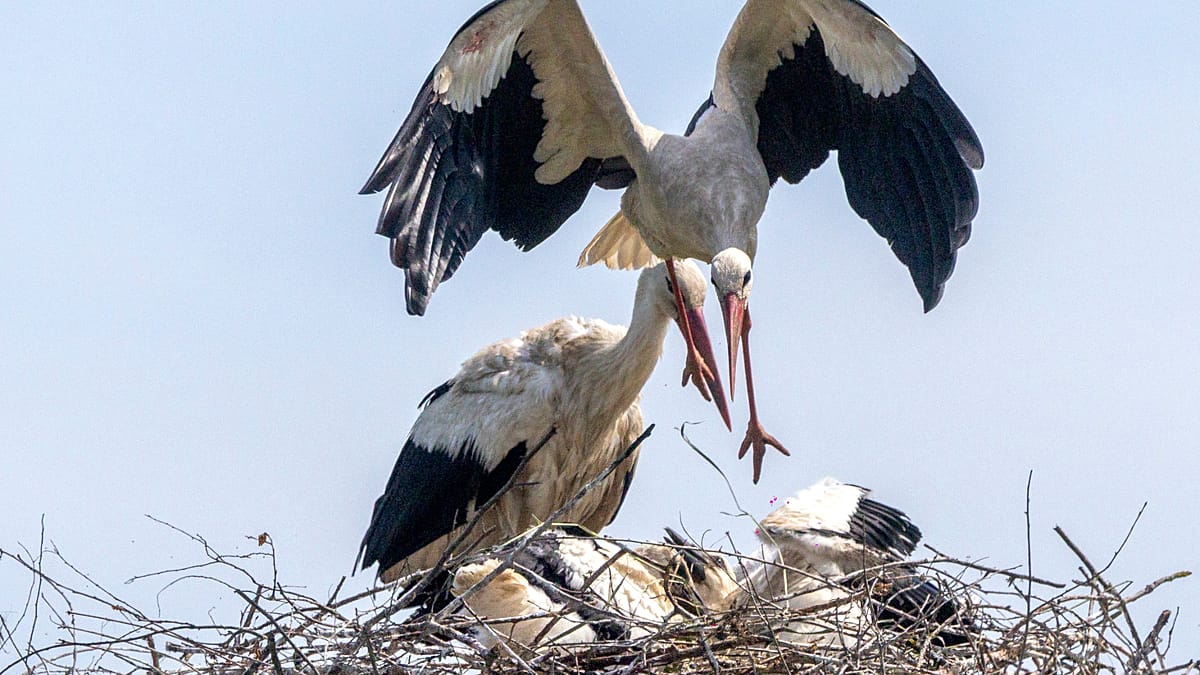
Every spring in the Croatian village of Cigoc, something magical happens on the rooftops. White storks return from their African migration to nest on traditional wooden houses, often outnumbering the village's human residents.
Unlike storks elsewhere in Europe who prefer trees or coastal cliffs, these birds have made human homes their own. They build massive nests directly on barns and rooftops, raising their families just feet above the people below.
Cigoc earned the title of Europe's first "Stork Village" 32 years ago, and it's easy to see why. The village sits in Lonjsko Polje nature park, Croatia's largest protected wetland, about 90 kilometers southeast of Zagreb.
The wetlands are a stork paradise. Rich with frogs, fish, snakes and insects, the ecosystem supports over 250 bird species including both white and black storks.
That abundance shows in the numbers. Stork pairs in Cigoc raise an average of three to four chicks per nest, roughly double the European average of one to two.
The relationship between villagers and storks runs deep. Pensioner Marijan Belosevic captured it perfectly: "The storks were here before me, and I don't see how I could ever remove their nest or chase them away when they keep returning here."
He adds that it's simply their habit, and he has deep respect for nature. His neighbors feel the same way.
Why This Inspires
Cigoc proves that humans and wildlife can genuinely share space when we choose respect over control. In a world where habitat loss threatens countless species, this village offers a different path forward.
The partnership isn't just symbolic. Local employee Davor Anzil from the Cigoc Information Centre explains that the storks live in close contact and coexistence with people, creating a bond that transcends typical wildlife viewing.
The village does face challenges. As the population ages and young people move to cities, farmland that storks once used for foraging falls out of use, and stork numbers have declined accordingly.
But the remaining residents refuse to abandon their feathered neighbors. They maintain their homes as nesting sites and protect the tradition that makes Cigoc special.
The village's "Stork Village" status remains a point of fierce local pride, a living reminder that when we make room for nature, both species and communities thrive.
More Images


Based on reporting by Euronews
This story was written by BrightWire based on verified news reports.
Spread the positivity!
Share this good news with someone who needs it