CU Boulder Grad Predicts Wind Turbine Failures Before They Hit
A new startup uses AI to forecast equipment failures at wind and solar farms before they happen, potentially saving millions in repair costs. The technology could make renewable energy more reliable and affordable.
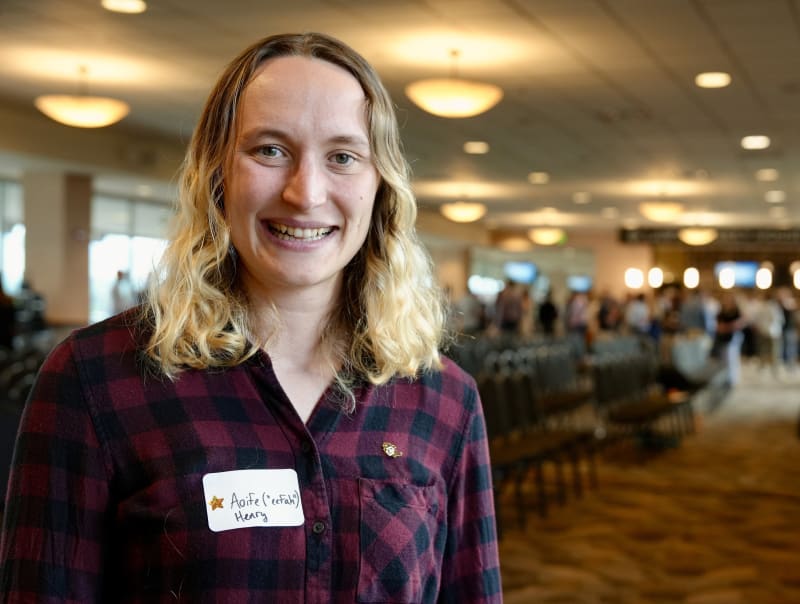
Aoife Henry turned her engineering PhD into a crystal ball for clean energy operators who lose millions when wind turbines and solar panels fail without warning.
The CU Boulder graduate founded Zentus, a startup that uses machine learning to predict when cracks in turbine blades or defects in solar panels will cause problems. Instead of scrambling when a $6 million blade suddenly breaks, operators get advance notice to schedule repairs during calm weather or low-demand periods.
The financial stakes are massive. Offshore wind farms spend roughly $250,000 per day when repairs force turbines offline. A single replacement turbine costs around $20 million. For solar operations, every hour panels sit idle is lost power generation and revenue.
Henry's system tackles two critical needs: categorizing defects and assigning risk scores, then forecasting how those defects will affect power output. Engineering teams can decide whether to repair, replace, or simply monitor equipment based on upcoming weather conditions and operational demands.
Zentus is currently running three pilot programs in the United States and United Kingdom. The company plans to launch commercially later this year while raising funds to expand development.
The Ripple Effect
Henry's journey from researcher to entrepreneur started with CU Boulder's Ascent Deep Tech Accelerator, which helps university scientists commercialize their discoveries. That led to a fellowship at Stanford's Sustainability Accelerator, where she assembled a five-person team including a former CU Boulder master's student.
Her advisor, Professor Lucy Pao, connected her with opportunities through programs like Venture Partners and NSF I-Corps. Henry even won first place in CU Boulder's 2025 Three Minute Thesis competition for her wind energy research.
The technology is already expanding beyond wind and solar. Zentus is developing tools for energy storage systems, particularly lithium-ion batteries that help balance renewable energy on the power grid. These storage solutions are essential because solar and wind production fluctuates with weather.
Henry chose clean energy research deliberately. After finishing her master's degree, she received offers from three PhD programs but picked CU Boulder specifically for its wind energy work. She knew the electricity industry needed transformation to meet carbon reduction targets.
As renewable energy adoption accelerates worldwide, predictive maintenance could become the difference between affordable clean power and costly failures that shake public confidence in the technology.
Henry's mission drives every decision at Zentus: improving renewable energy reliability to support the planet's clean energy transition, one prediction at a time.
Based on reporting by Google News - Clean Energy
This story was written by BrightWire based on verified news reports.
Spread the positivity!
Share this good news with someone who needs it