Danish Road Tech Cuts Potholes 50% in India Trial
A monsoon-battered road in Andhra Pradesh is testing bulletproof vest fibers mixed into asphalt to stop potholes before they start. If it works, the Danish technology could spread across India's struggling highway network.
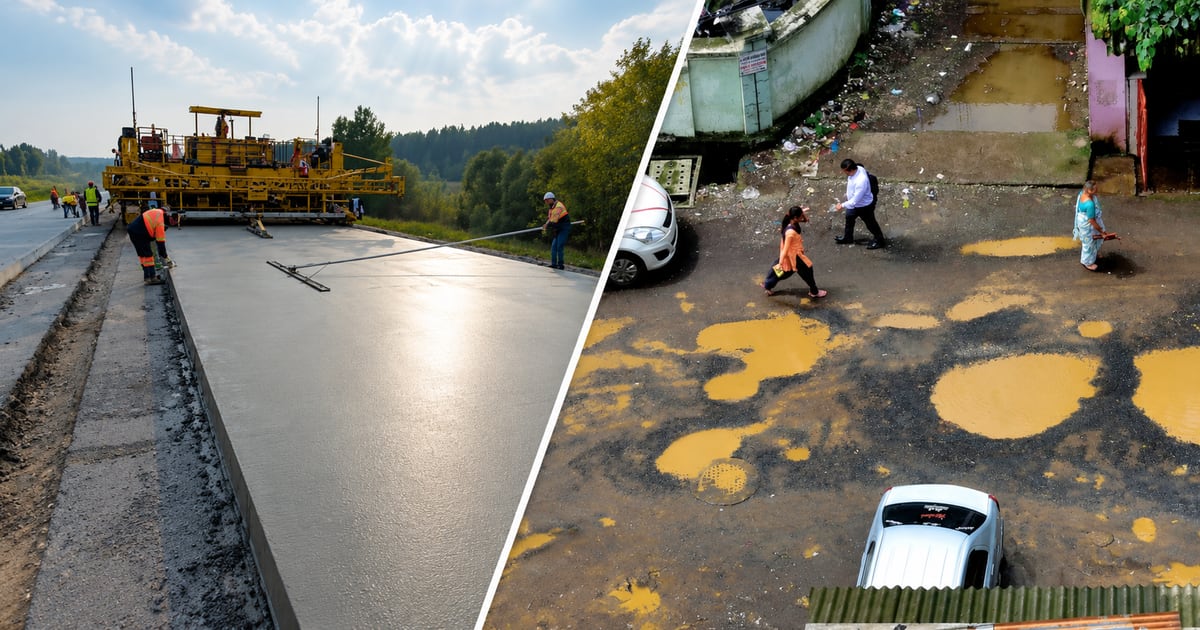
For years, the road between Mudigedu and Sanjamala in Andhra Pradesh's Nandyal district fell apart every monsoon. Heavy trucks hauling limestone and granite would crack the surface into potholes deep enough to swallow a scooter wheel.
On July 4, 2025, the state's Roads and Buildings Department tried something new. They laid down asphalt mixed with Danish fibers, the same technology already protecting runways at Heathrow Airport and highways across Dubai and Germany.
The secret is surprisingly simple. Danish Fibres A/S developed a mix of aramid, the material in bulletproof vests, combined with polyolefin to create a web inside the asphalt. When mixed into hot bitumen at less than a kilogram per ton, these fibers spread stress evenly across the road surface instead of letting it concentrate at one point where cracks usually begin.
Independent tests show the fibers cut rut depth by more than 50 percent. They stay stable in temperatures as low as negative 26 degrees Celsius, far beyond what India's climate demands.
Officials chose this stretch deliberately. Nandyal district has become a hub for cement and granite processing, putting extreme pressure on roads never built for such heavy loads. It's the perfect stress test before committing state funds to a wider rollout.
Engineer-in-Chief Ramachandra said the department expects the reinforced road to last 50 percent longer than conventional asphalt. That means fewer repairs and lower long-term costs for the state.
Government data shows thousands of pothole-linked crashes happen in India annually. The Supreme Court once noted that more Indians die from bad roads than from terrorist attacks, pushing states to find better alternatives to plain bitumen.
The Ripple Effect
This trial matters beyond one road in Andhra Pradesh. States across India face the same crushing problems: overloaded freight trucks, monsoon flooding, and maintenance budgets that favor quick patches over prevention.
If the Danish fibers hold up through the coming monsoons, other states with similar pressures could follow. Quarry belts in Rajasthan and freight corridors in Odisha would have a tested, data-backed model to study instead of another unproven claim.
India has tried homegrown pothole fixes before. A Tamil Nadu professor melted plastic waste into bitumen, now used in over 11 states. Bangalore ventures have laid honeycomb mats of recycled plastic to build roads faster.
What sets the Danish trial apart is prevention over repair. Instead of patching craters after monsoons, the fibers stop cracks before they widen into hazards for two-wheelers, ambulances, and school buses.
The department is watching the Mudigedu-Sanjamala stretch closely through monsoon season. That cautious approach, testing globally proven materials on one heavily stressed road before scaling up, is itself worth noticing.
If a small stretch in the Nallamala foothills can survive India's toughest road conditions, it could reshape how the country builds highways for generations.
More Images
%2Fenglish-betterindia%2Fmedia%2Fmedia_files%2F2026%2F09%2F08%2F1-2026-09-08-17-41-39.png)

%2Ffilters%3Aformat(webp)%2Fenglish-betterindia%2Fmedia%2Fmedia_files%2F2026%2F09%2F08%2F2-2026-09-08-17-38-06.png)
%2Ffilters%3Aformat(webp)%2Fenglish-betterindia%2Fmedia%2Fmedia_files%2F2026%2F09%2F08%2F3-2026-09-08-17-38-29.png)
Based on reporting by The Better India
This story was written by BrightWire based on verified news reports.
Spread the positivity!
Share this good news with someone who needs it