Dead Star Confirms 90-Year-Old Quantum Physics Mystery
Scientists just proved that empty space isn't actually empty by observing a magnetic star. The discovery confirms a mind-bending 90-year-old theory about how the universe really works.
A spinning dead star 20,000 light-years away just solved one of physics' longest-standing mysteries and proved that empty space is stranger than anyone imagined.
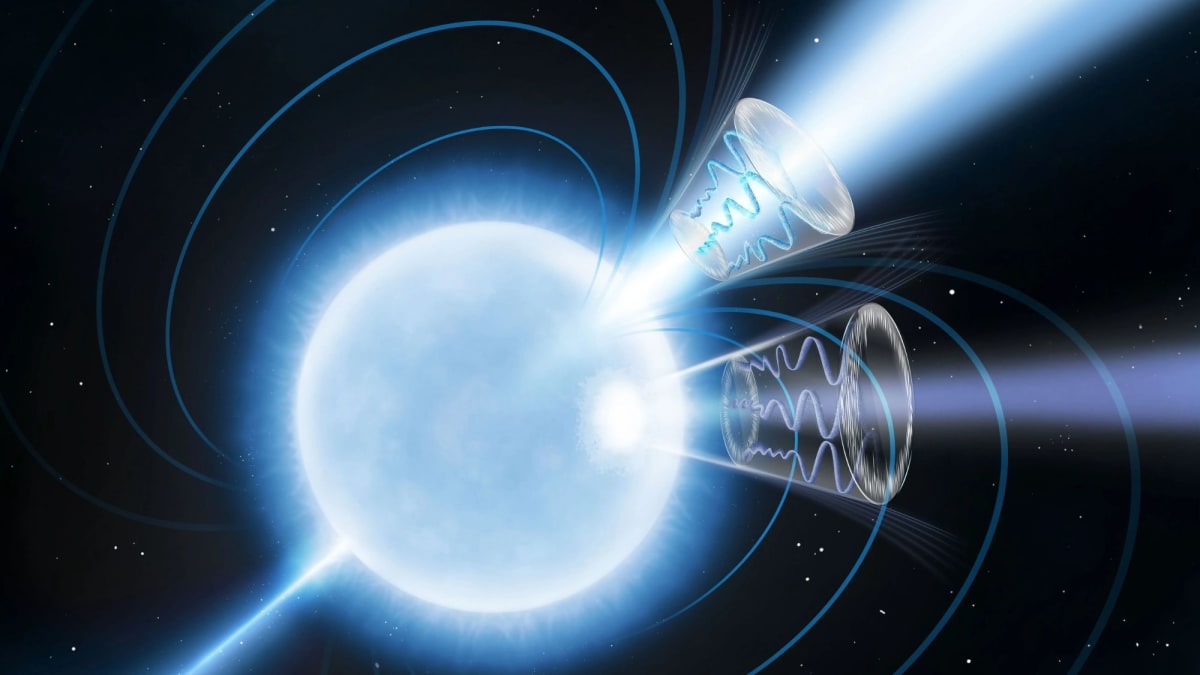
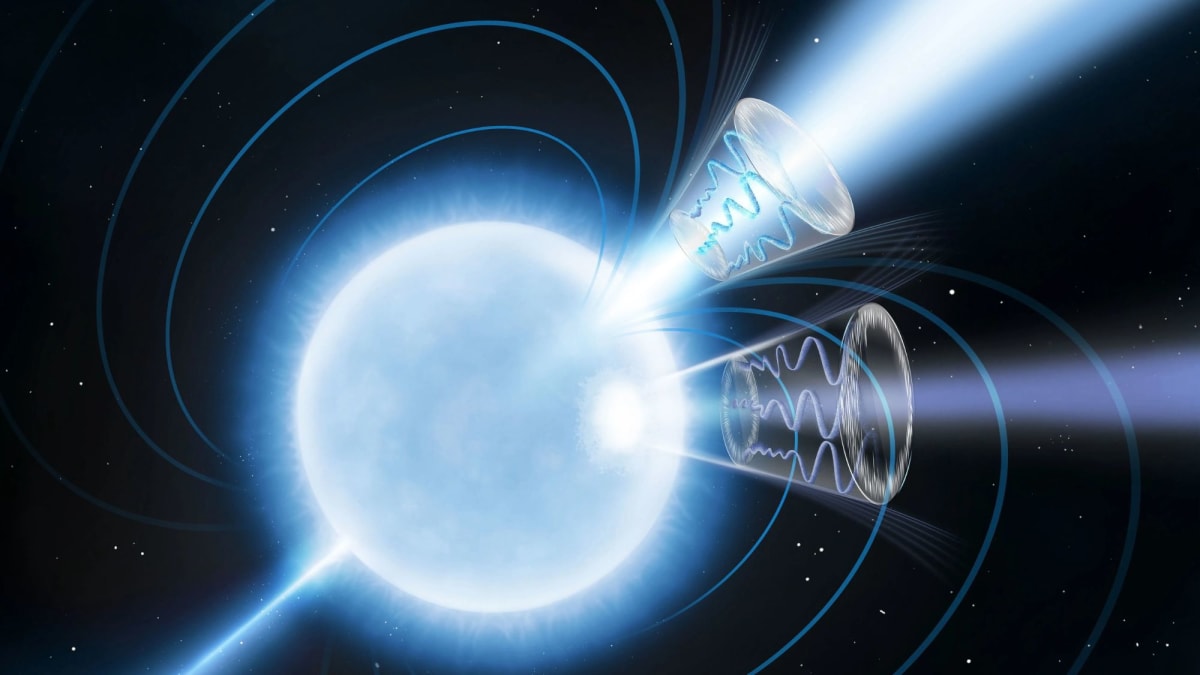
Scientists using NASA's advanced X-ray telescope confirmed that vacuum birefringence is real. This bizarre quantum effect means that seemingly empty space acts like a prism, bending light as it travels through the universe.
The discovery validates a prediction made in 1936 by physicist Werner Heisenberg and his student Hans Euler. They proposed that space is never truly empty but instead teems with invisible "virtual particles" that flicker in and out of existence like cosmic static.
Graduate student Rachael Stewart from George Washington University led the research team that found the proof. "The information we obtained from looking at this distant star core also gives us clues about the nature of the fabric of reality as we know it," she said.
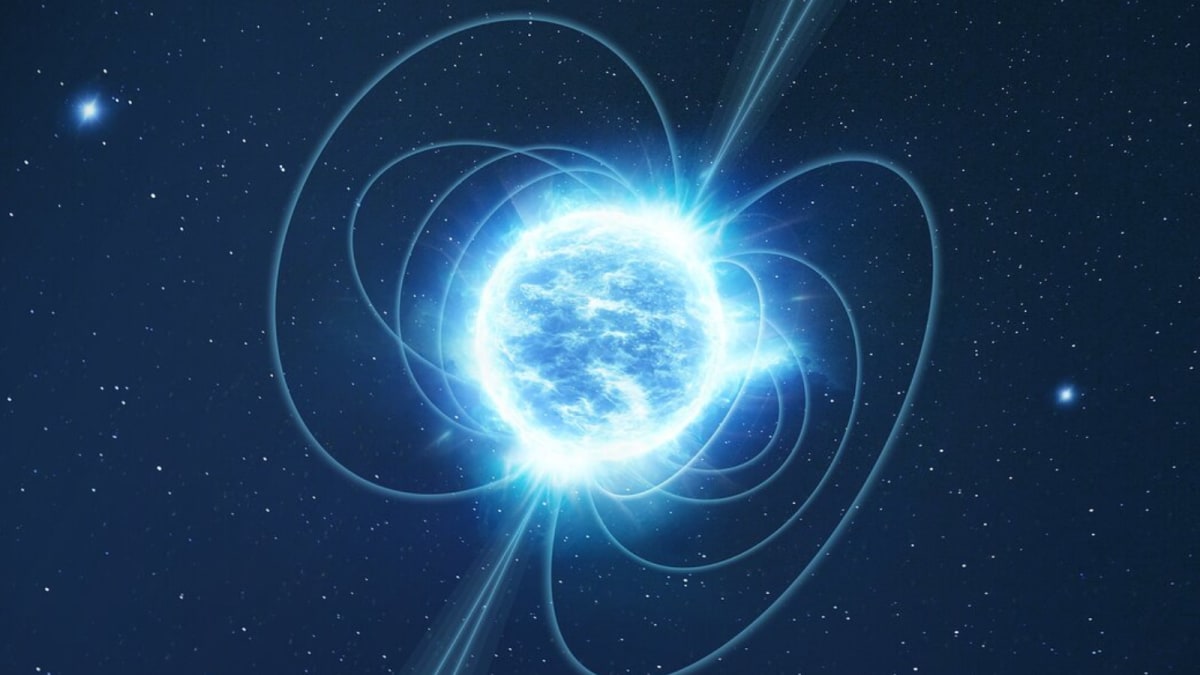
The key was observing a magnetar called 1E 1547-5408, a city-sized stellar corpse with magnetic fields 100 million times stronger than anything humans have created. These extreme fields are the only natural laboratories powerful enough to reveal vacuum birefringence in action.
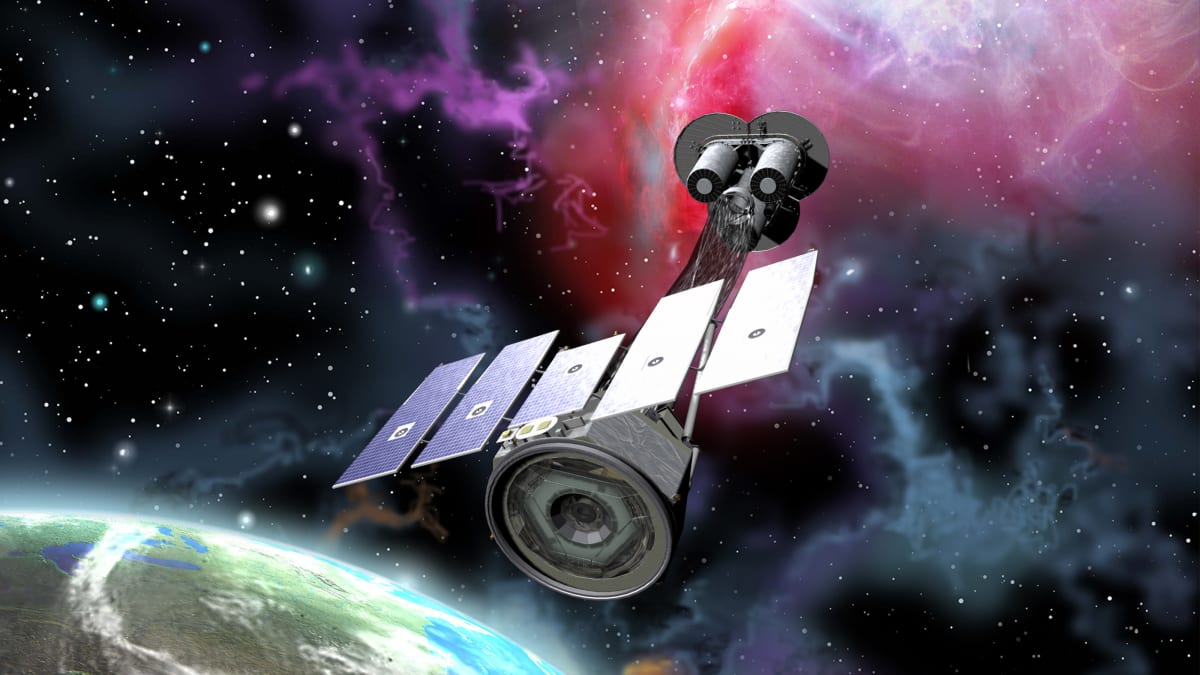
NASA's Imaging X-ray Polarimetry Explorer telescope, launched in 2021, made the breakthrough possible. When researchers pointed it at the magnetar in March 2025, they found X-rays nearly three times more polarized than standard models could explain.
The polarization aligned perfectly with the star's magnetic field, matching patterns seen in its radio waves. Only vacuum birefringence could explain both observations together.
Scientists had seen hints of this effect before. In 2017, researchers using Chile's Very Large Telescope spotted possible signs around a neutron star 400 light-years from Earth, but the evidence remained inconclusive.
Why This Inspires
This discovery reminds us that the universe still holds profound secrets waiting to be unlocked. A team of researchers spent decades studying this single magnetar, with co-author Fernando Camilo tracking it since 2007 when he first detected its radio waves.
Their patience paid off in ways nobody imagined. What started as monitoring an unusual stellar object evolved into testing the fundamental laws of physics itself.
The finding also showcases how modern space telescopes are transforming our understanding of reality. We're not just observing distant objects anymore but using them as cosmic laboratories to probe questions impossible to answer on Earth.
Co-author Marcus Lower from Swinburne University captured the significance: "We're not just studying astronomical objects anymore; we're using them to test the laws of nature."
The research confirms that our current understanding of quantum mechanics still holds true, even under the most extreme conditions nature can produce.
More Images

Based on reporting by Space.com
This story was written by BrightWire based on verified news reports.
Spread the positivity!
Share this good news with someone who needs it