Deaf Scientist Builds Robot to Decode Frog Family Talk
A hard-of-hearing researcher used her unique understanding of touch-based communication to create a robot that mimics how tadpoles talk to their parents. Her invention is unlocking the secret language of poison frog families.
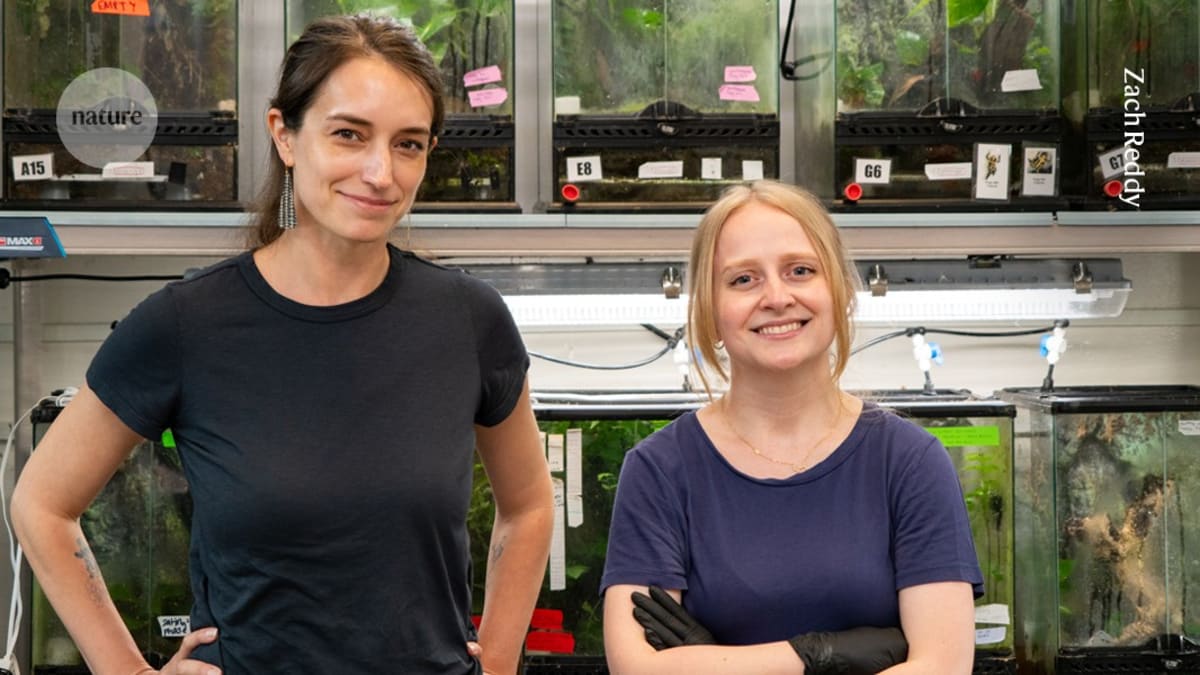
When Billie Goolsby watched poison frog tadpoles wiggle against their parents' bodies, she recognized something familiar: a language spoken through touch, just like the one her mother used to communicate with her growing up.
Goolsby was born hard of hearing and her mother invented creative ways to connect with her daughter. She used touch to guide young Billie through noisy crowds and taught her to speak by feeling how sounds moved in her mouth.
That childhood experience prepared Goolsby for an unusual scientific mystery. Poison frog tadpoles don't croak or sing to tell their parents they're hungry. Instead, they perform a wiggling dance underwater, and somehow mom and dad understand the message perfectly.
When Goolsby started her PhD at Stanford University in 2020, she decided to crack this amphibian code. But first, she needed a way to test what the tadpoles were actually saying.
She reached out to Stanford's robotics lab with an ambitious request: build a fake tadpole. It would need to be tiny, silent, waterproof, and able to wiggle just like the real thing.
Engineer Tony Chen loved the challenge. He designed a two-centimeter robot covered in dark grey silicone that could dance underwater. The team named it TadBot.
The early tests didn't go as planned. Father frogs saw the wiggling robot and climbed on top of it like it was a mechanical bull. Something was getting lost in translation.
But Goolsby's team kept refining TadBot's movements until they got it right. They're now learning how different wiggle patterns trigger different parental responses in mimic poison frogs, where fathers check on their babies daily and call mothers to deliver unfertilized eggs as food.
The project has changed more than frog research. Goolsby's presence in the lab has transformed how her colleagues communicate. Team members now routinely face her when speaking and have become more mindful about creating inclusive spaces.
That chemistry professor who once told Goolsby that "people like you don't stay in science" was wrong. She found mentors in her university's Deaf Studies program who gave her a different message: you can do anything as your full self.
Why This Inspires
Goolsby's story shows how diversity in science leads to breakthrough discoveries. Her unique perspective on touch-based communication helped her see a research question that others might have missed. The robot she created is opening new windows into animal behavior while proving that scientists from all backgrounds bring irreplaceable insights to their work.
Now when poison frog families have their private conversations, science can finally listen in.
More Images


Based on reporting by Nature News
This story was written by BrightWire based on verified news reports.
Spread the positivity!
Share this good news with someone who needs it