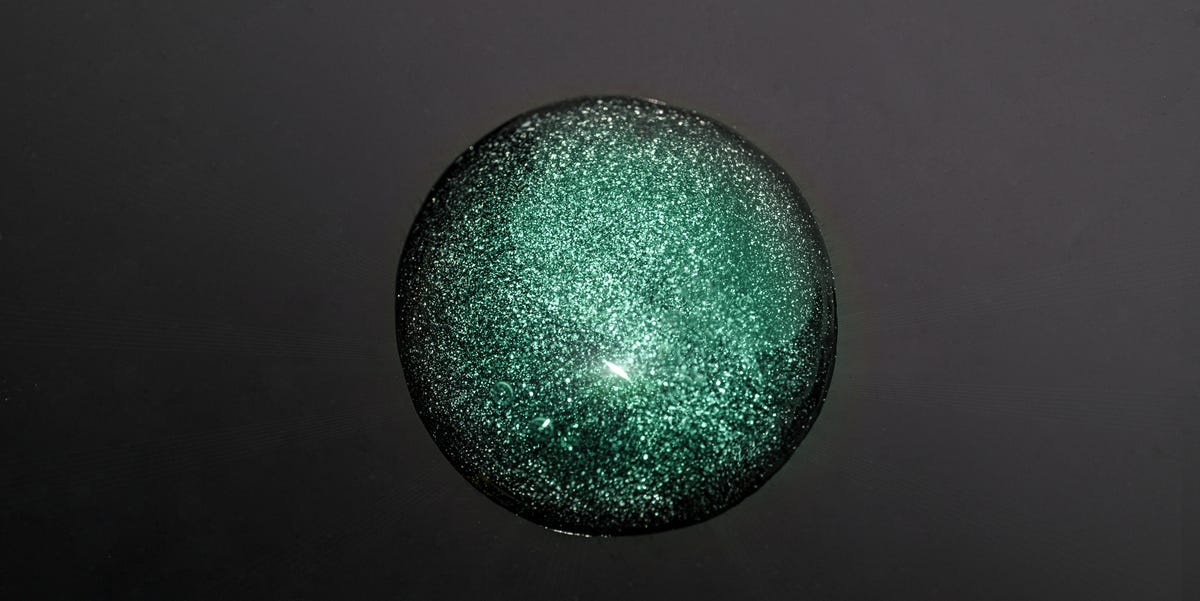
Deep-Sea Rocks Produce Oxygen in Total Darkness
Scientists discovered potato-sized rocks 4,000 meters below the Pacific Ocean are producing oxygen without sunlight, challenging everything we thought we knew about how life began on Earth. This breakthrough could reshape our understanding of life's origins on our planet and beyond.
Scientists just found something remarkable hiding on the ocean floor that's rewriting the story of life itself.
Deep in the Pacific Ocean's Clarion-Clipperton Zone, nestled between Hawaii and Mexico, researchers discovered that small rocky lumps called polymetallic nodules are producing oxygen in complete darkness. These potato-sized rocks sit 4,000 meters below the surface where no sunlight can reach, yet somehow they're creating oxygen anyway.
Andrew Sweetman, a deep-sea ecologist with the Scottish Association for Marine Science, first noticed something strange in 2013 when his sensors showed oxygen levels increasing in the ocean's depths. He initially dismissed the readings as equipment malfunction, but the pattern kept appearing in future studies.
What Sweetman and his team eventually discovered sounds like science fiction. These nodules, packed with metals like nickel, manganese, copper, and cobalt, act as natural batteries. They produce roughly 0.95 volts of electricity, enough to split seawater and release oxygen through a process called electrolysis.
The implications are staggering. Scientists have long believed that all oxygen on Earth came from photosynthetic organisms using sunlight. This discovery suggests oxygen production can happen in total darkness, meaning life could have started in places we never imagined possible.
"For aerobic life to begin on the planet, there had to be oxygen," Sweetman explained. "We now know that there is oxygen produced in the deep sea, where there is no light. I think we therefore need to revisit questions like: where could aerobic life have begun?"
This finding also has huge implications for our search for life beyond Earth. Moons like Europa and Enceladus have deep oceans beneath their icy surfaces where no sunlight reaches. If oxygen can be produced without light here on Earth, similar processes could be happening on other worlds.
Why This Inspires
This discovery reminds us how much we still don't know about our own planet. After billions of years, Earth is still revealing secrets that challenge our most fundamental assumptions about life itself.
The finding also arrived at a critical moment for ocean conservation. Mining companies have been eyeing these nodules as essential materials for green energy batteries. However, 25 countries are now calling for a pause on deep-sea mining until we better understand these ecosystems.
Lisa Levin from Scripps Institution of Oceanography, who wasn't involved in the study, emphasized the importance of protecting these deep-sea areas. "The production of oxygen at the seafloor by polymetallic nodules is a new ecosystem function that needs to be considered when assessing the impact of deep-sea mining," she noted.
The ocean floor isn't just a resource to be extracted but a living laboratory still teaching us about the fundamental nature of life.
More Images

Based on reporting by Google News - Scientists Discover
This story was written by BrightWire based on verified news reports.
Spread the positivity!
Share this good news with someone who needs it