Denmark Wind Farm Creates 6-Mile "Ghost Tails" Over Ocean
A pilot flying over Denmark's offshore wind farm spotted mysterious six-mile trails streaming behind turbines. Scientists discovered the stunning phenomenon reveals crucial data to make future wind farms even more efficient.
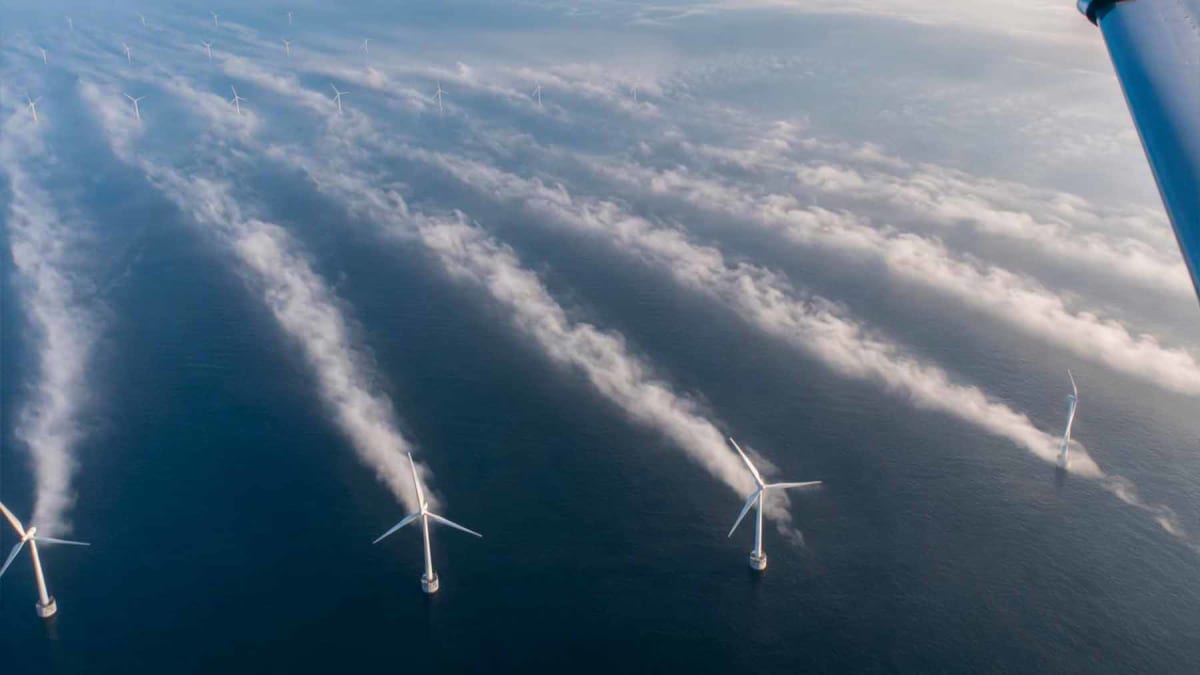
A pilot glancing out over the North Sea in 2016 witnessed something extraordinary: thin, ghostly trails stretching nearly six miles behind spinning wind turbines off Denmark's coast.
The mysterious sight appeared over Denmark's Horns Rev 2 offshore wind farm on January 25. Behind each rotating turbine blade, delicate white streams flowed across the ocean surface like ribbons in the sky.
Scientists investigating the visual spectacle uncovered a fascinating meteorological dance at work. Cold, saturated fog was sitting just 65 feet above the sea surface, with a layer of warmer, drier air floating above it.
When the turbine blades rotated, they mixed these two air layers together. The sudden pressure changes forced cold, humid air upward into the rotor zone, where invisible moisture instantly condensed into visible water droplets.
Over the smooth ocean surface with nothing to break up the flow, these "wake clouds" remained intact for miles. The turbulent trails eventually dissolved as warmer air evaporated the droplets back into invisible vapor.
The discovery comes as offshore wind power expands rapidly across oceans worldwide. In 2025, global wind power exceeded 1.3 terawatts, with offshore turbines generating up to 50% more electricity than similar onshore installations thanks to stronger, more consistent ocean winds.
The Bright Side
These ghost tails are more than just a stunning natural spectacle. The visible wake clouds reveal important aerodynamic information that researchers can now use to optimize wind farm design.
Scientists and developers can map turbulent zones more accurately using this data. Future offshore wind farms can be planned with better turbine spacing and rotor alignments to minimize atmospheric drag and "wind theft" between turbines.
The result means maximum power output from each installation. As nations work to meet climate targets while electricity demand continues rising, these efficiency gains matter.
The ghostly trails also highlight how offshore wind farms interact with marine environments in unexpected ways. While turbine foundations can temporarily disturb seafloor ecosystems during construction, they often become artificial reefs attracting mussels, barnacles, kelp, and fish afterward.
Many offshore wind zones even become protected marine sanctuaries since commercial bottom trawlers are prohibited around the turbines.
Nature just gave engineers a beautiful roadmap to build better clean energy infrastructure for our future.
More Images

Based on reporting by Google News - Wind Energy
This story was written by BrightWire based on verified news reports.
Spread the positivity!
Share this good news with someone who needs it