Dinosaur Poop Feather May Explain Why Birds Survived
A perfectly preserved feather found inside 66-million-year-old dinosaur dung is helping scientists understand why modern birds survived the asteroid impact that wiped out the dinosaurs. The ancient feather reveals crucial differences in insulation that may have meant life or death during the impact winter.
A tiny feather trapped in fossilized dinosaur droppings for 66 million years might finally explain one of paleontology's biggest mysteries: why birds are still here.
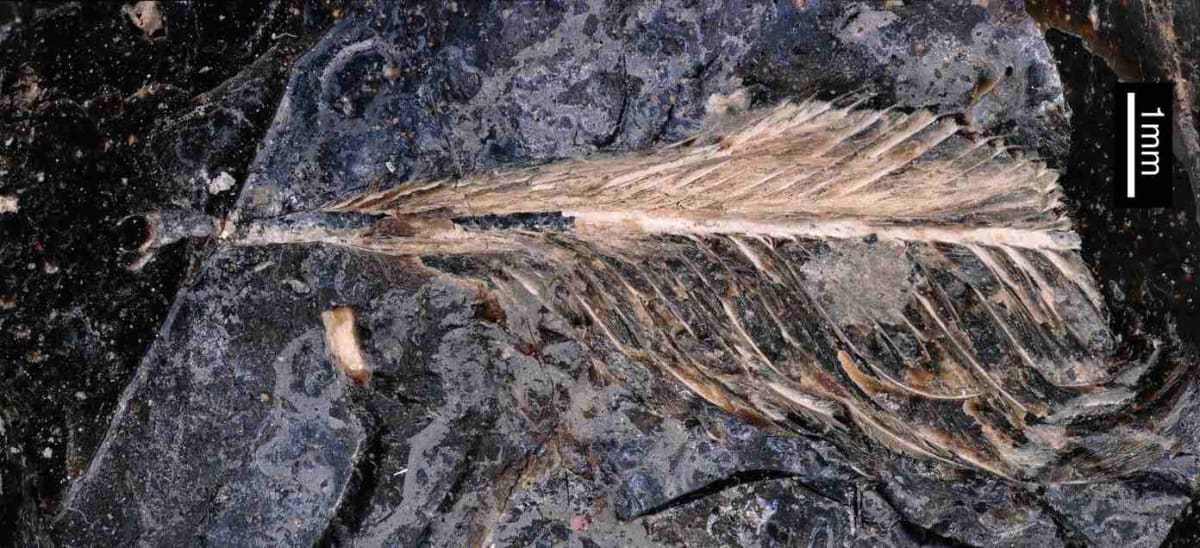
The feather, discovered in Montana in 2016, belonged to a diving bird called a hesperornithiform. These prehistoric birds looked similar to modern loons and hunted fish underwater, but they vanished along with the dinosaurs after an asteroid struck Earth.
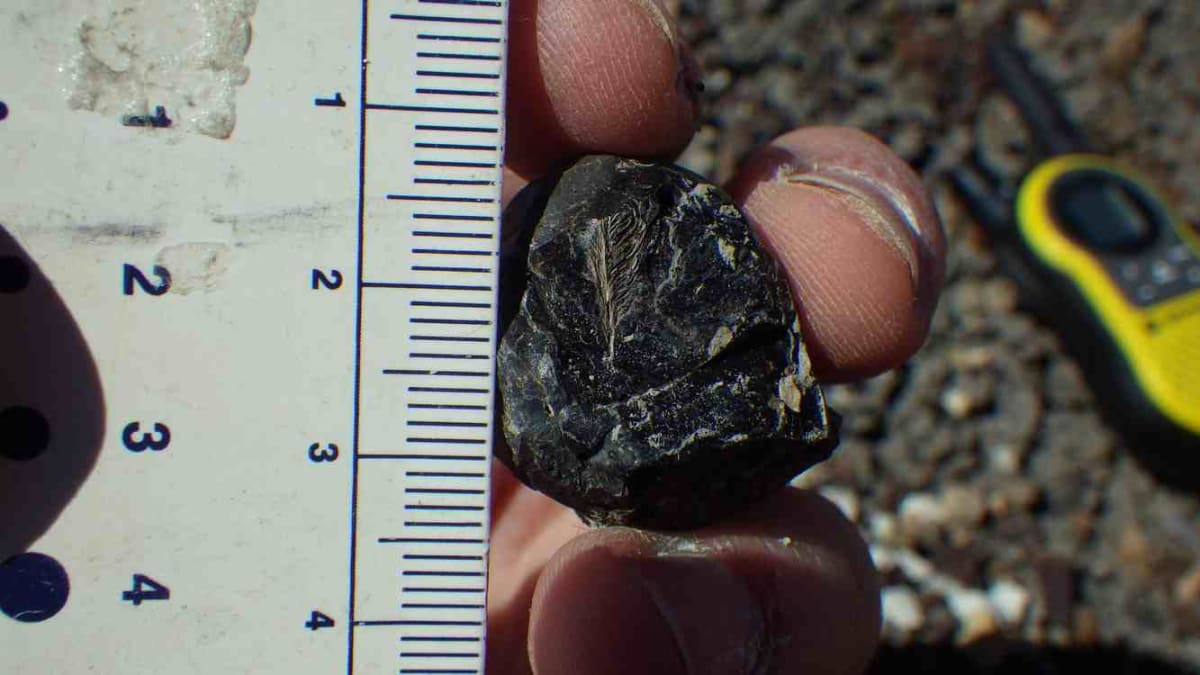
David DeMar Jr. spotted the dark reddish-brown nodule while hunting for fish fossils on a rocky Montana outcrop. When he examined the golf ball-sized specimen through his hand lens, he couldn't believe his eyes: a perfectly preserved ancient feather was staring back at him.
Scientists at the Field Museum of Chicago used CT scans to study the fossil and found it contained multiple feathers, tiny fish scales, and bird leg bones. The feathers represent the first ever found from hesperornithiforms, and they tell a compelling story about survival.
Professor Jingmai O'Connor, the study's lead author, has spent years trying to solve a crucial puzzle. Every bird alive today descends from just one group called Neornithes, the only dinosaur lineage that survived the mass extinction. The question is why them and not others.
The answer may lie in something as simple as staying warm. The hesperornithiform feathers show a mix of modern waterproof feathers and smaller, fuzzy primitive ones similar to those on dinosaurs. That combination might not have been enough to survive the brutal impact winter that followed the asteroid strike.
Why This Inspires
This discovery reminds us that even the smallest details can determine survival. The Neornithes birds that made it through had superior insulation from their modern feather structure, allowing them to weather months or years of darkened skies and freezing temperatures.
Their descendants now fill our skies with song, from tiny hummingbirds to soaring eagles. Every bird you see outside your window carries the legacy of those ancient survivors who had just the right equipment at just the right time.
The research team published their findings in the journal Current Biology and is now calling for more CT scanning of fossilized dung samples in museum collections. Who knows what other secrets are hiding in unexpected places, waiting to reveal the remarkable story of life on Earth.
Sometimes the key to understanding millions of years of evolution comes down to what one dinosaur ate for lunch on a long-ago day.
More Images



Based on reporting by Good News Network
This story was written by BrightWire based on verified news reports.
Spread the positivity!
Share this good news with someone who needs it


