%2Fhttps%3A%2F%2Ftf-cmsv2-smithsonianmag-media.s3.amazonaws.com%2Ffiler_public%2F86%2F57%2F8657fc18-096f-4d55-93a8-576ab0657a58%2Ferebus.png)
DNA Solves 166-Year Mystery of Lost Arctic Explorer
After 166 years, scientists have finally identified the skeleton of Henry Peglar, a senior sailor from the doomed 1845 Franklin expedition who mysteriously died wearing a steward's uniform. DNA analysis solved a puzzle that has baffled historians since his remains were discovered on a remote Arctic island in 1859.
A skeleton found on a windswept Arctic island in 1859 has finally revealed its secrets, bringing closure to one of exploration's most haunting mysteries.
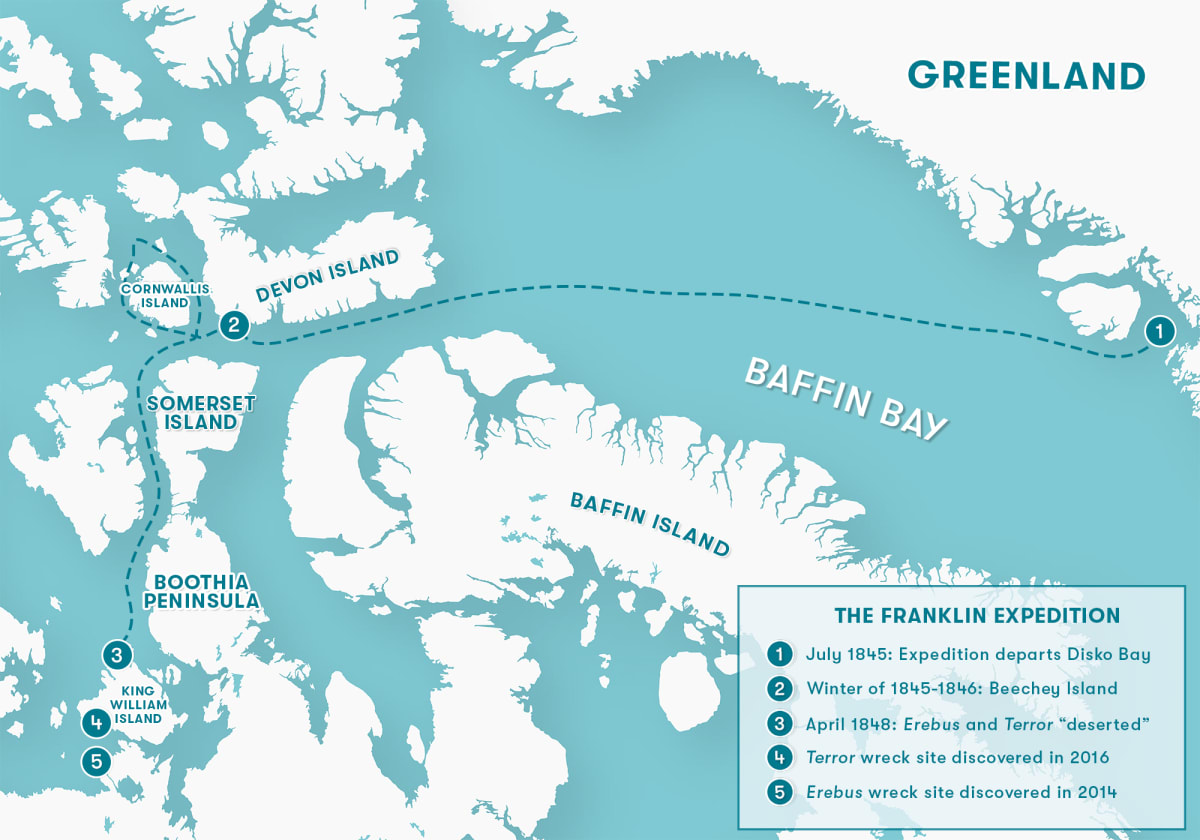
Henry Peglar, captain of the foretop on HMS Terror, was one of 129 men who vanished during Sir John Franklin's 1845 expedition to find the Northwest Passage. When searchers found his remains 11 years later, they discovered something puzzling: his wallet contained his identification papers, but he wore clothing typical of a steward, a rank far below his senior position.
For over a century, experts believed the skeleton belonged to someone else, perhaps a friend who carried Peglar's belongings after his death. A Royal Navy captain simply wouldn't be caught wearing a steward's uniform, historians reasoned.
But new DNA analysis published in Polar Record proves the remains are indeed Peglar's. Douglas Stenton, an archaeologist at the University of Waterloo in Canada, spent years comparing DNA from expedition skeletons with samples from descendants. "Once and for all, about 166 years later, we finally put that one to rest," he says.
The discovery raises new questions about Peglar's final days. Experts now believe he may have deliberately worn a deceased shipmate's coat, possibly someone close to him who served as a steward. The gesture hints at the deep bonds formed between crew members as they faced impossible conditions.
Peglar is now the sixth Franklin expedition member identified through DNA. Three others were just confirmed this week: William Orren, David Young, and John Bridgens, all crew members from HMS Erebus.
Why This Inspires
This breakthrough shows how modern science can honor the past in deeply personal ways. Each identification returns a name to someone who died alone in unimaginable circumstances, reconnecting them with descendants who never forgot them.
The work also challenges old assumptions about the expedition's final chapter. Rather than a simple march to doom, evidence suggests a more complex story of survival, friendship, and human dignity in the face of tragedy.
These identifications transform anonymous victims into real people with families, ranks, and choices. Peglar's decision to wear his friend's coat, even at the end, speaks to something profoundly human that transcends centuries.
Science continues giving voices back to those history almost forgot.
More Images
%2Fhttps%3A%2F%2Ftf-cmsv2-smithsonianmag-media.s3.amazonaws.com%2Ffiler_public%2F86%2F57%2F8657fc18-096f-4d55-93a8-576ab0657a58%2Ferebus.png)
%3Afocal(750x500%3A751x501)%2Fhttps%3A%2F%2Ftf-cmsv2-smithsonianmag-media.s3.amazonaws.com%2Ffiler_public%2F86%2F57%2F8657fc18-096f-4d55-93a8-576ab0657a58%2Ferebus.png)
%2Fhttps%3A%2F%2Ftf-cmsv2-smithsonianmag-media.s3.amazonaws.com%2Ffiler_public%2F7e%2Faf%2F7eafdd46-a0f3-45d0-b49b-dd6409104b69%2Fscreenshot_2026-05-07_at_30258pm.png)
Based on reporting by Smithsonian
This story was written by BrightWire based on verified news reports.
Spread the positivity!
Share this good news with someone who needs it