Teen Finds First Ancient Greek Coin Ever Discovered in Berlin
A curious 13-year-old in Berlin found a 2,300-year-old bronze coin from ancient Troy, making archaeological history as the city's first artifact from Greek antiquity. His discovery is opening new questions about connections between ancient Greece and Germanic tribes that historians barely understood existed.
A teenage treasure hunter in Berlin just rewrote the city's archaeological record with a discovery smaller than a quarter.
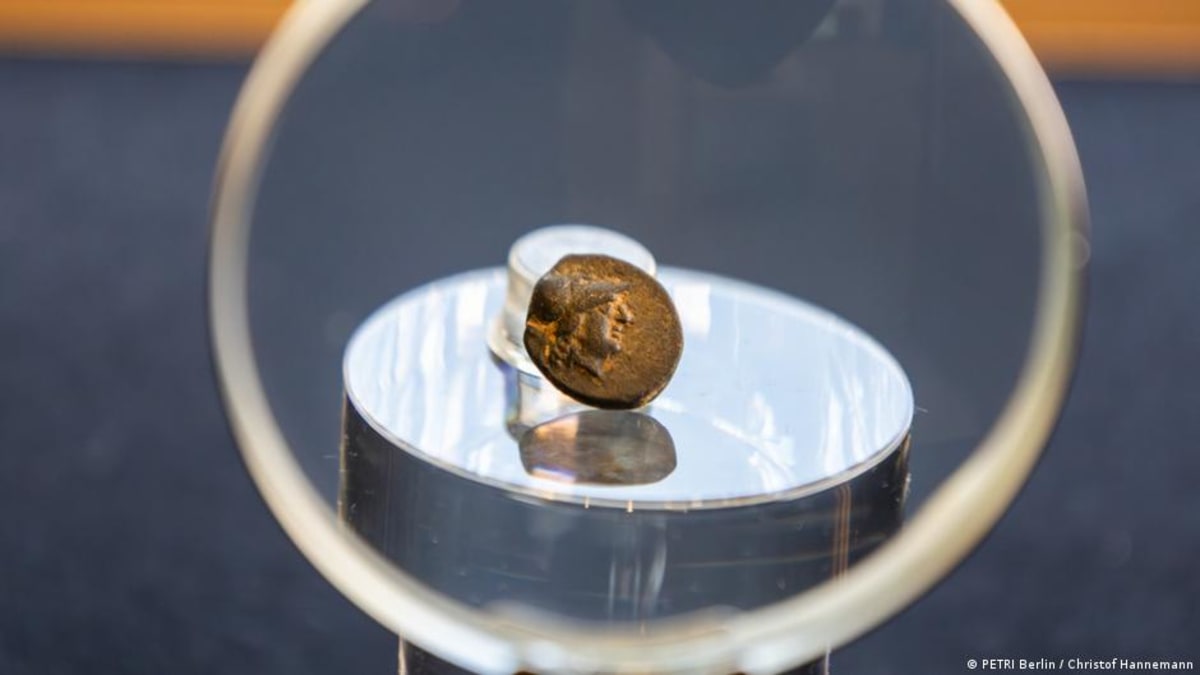
While walking through the Spandau neighborhood, a 13-year-old spotted a small bronze coin that turned out to be 2,300 years old. Experts traced it back to the ancient Greek city of Troy in present-day Turkey, making it the first item from Greek antiquity ever found in Berlin.
What makes this story special isn't just the coin. It's what the boy did next.
Instead of pocketing his find or showing it off to friends, he brought it to the Archaeology Lab PETRI Berlin during a school visit. He wanted to know more about what he'd discovered.
"This young boy realized he had found something interesting and he wanted to know more about it," archaeologist Jens Henker told reporters. "My colleague looked at it and said 'oh, this is quite interesting!'"
The tiny bronze coin weighs just 7 grams and measures half an inch across. Both sides depict the warrior goddess Athena, one showing her in a Corinthian helmet, the other with a headdress, spear, and spindle.
Experts at Berlin's Numismatic Collection, which holds one of the world's most significant coin collections, confirmed the coin originated from Troy and dates between 281 and 261 BC.
Why This Inspires
This discovery proves that young people can make real contributions to science and history. The teen's curiosity and decision to seek expert help turned a playground find into a significant archaeological breakthrough.
His precision mattered too. When researchers asked where exactly he found the coin, he showed them the exact spot on a map. That location turned out to be a known burial ground dating back to the Iron Age, used throughout centuries.
The find is raising fascinating questions. Ancient Romans had well-documented trade networks with northern Europe, but connections between ancient Greeks and Germanic tribes remain largely mysterious. Greeks considered the Germanic peoples barbarians and didn't write about them, and the Germanic tribes didn't write at all.
"We really depend on these finds to learn more about potential connections," Henker explained.
The coin might have been a souvenir from someone who traveled to Greece and brought it home. Metal objects rarely survived from ancient settlements because they were typically melted down and reused, but they were sometimes placed in graves as gifts.
One Greek explorer named Pytheas traveled from present-day France to northern Europe around 330 BC, possibly reaching the Baltic Sea. Other Greeks dismissed his tales of northern lights and icy seas as fiction, though scholars later confirmed his journey.
Could someone from the North have joined Greek troops and returned home with this coin? The true story remains a mystery.
"If this coin could tell its story, it would probably be a crazy one with a lot in it," Henker said.
The coin is now on display at Berlin's PETRI museum, where visitors can see the tiny artifact that's opening big questions about ancient history.
More Images
Based on reporting by Google: ancient artifact found
This story was written by BrightWire based on verified news reports.
Spread the positivity!
Share this good news with someone who needs it