$200M Fund Aims to Save 100 Endangered Species
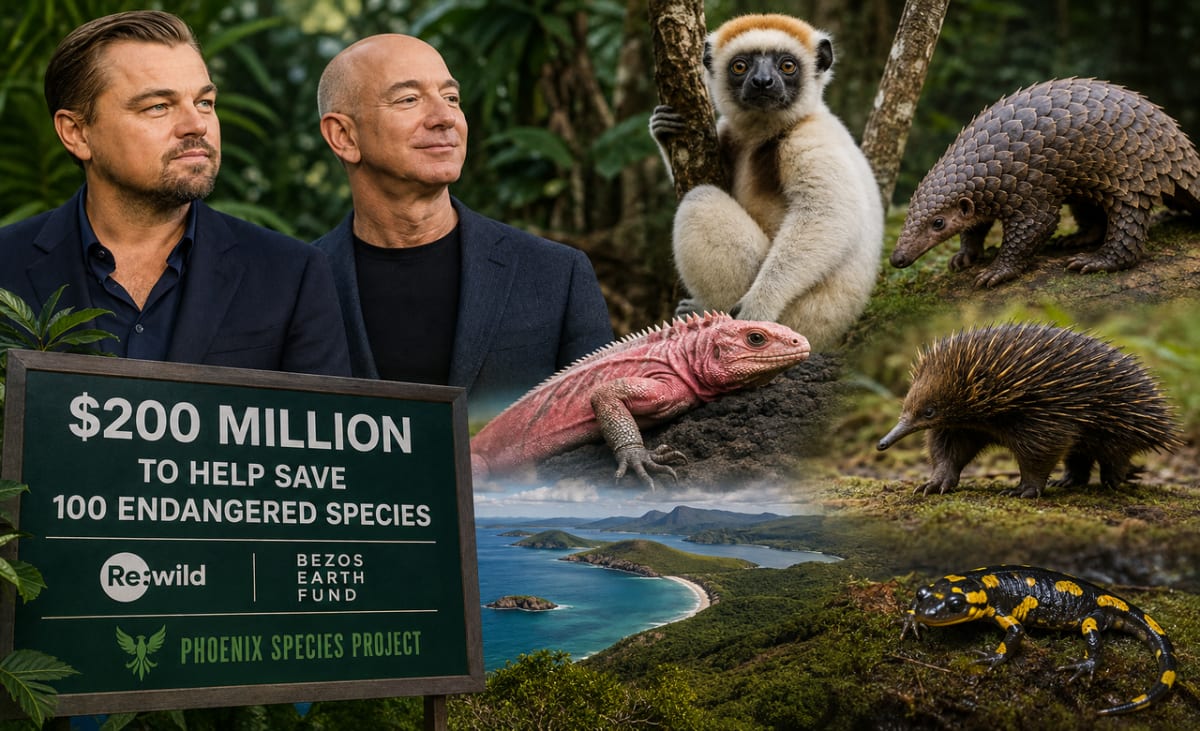
Leonardo DiCaprio and Jeff Bezos are backing a $200 million initiative to actively rebuild populations of 100 species on the brink of extinction. The Phoenix Species Project marks a shift from simply protecting habitats to intensive recovery programs tailored to each animal's specific needs.
A new conservation effort is flipping the script on how we save disappearing wildlife.
The Phoenix Species Project launched Tuesday with $200 million in funding from Re:wild, the conservation group co-founded by Leonardo DiCaprio, and the Bezos Earth Fund. It's the largest philanthropic fund ever created with one singular mission: reversing extinction for species that still have a fighting chance.
The initiative marks a fundamental shift in conservation strategy. For decades, protecting natural habitats was the primary defense against biodiversity loss. But for thousands of species, that protection came too late.
Their populations have dropped so low that preserving their homes alone won't save them. They need direct, intensive help.
The fund will support species-specific recovery programs across 30 countries. Early priorities include Madagascar's golden-crowned sifaka, the Malayan pangolin, the Galápagos pink iguana, Attenborough's long-beaked echidna in New Guinea, and a rare North Carolina salamander.
Each species faces different threats, from habitat destruction and wildlife trafficking to invasive species and disease. The program will provide tailored solutions including ecosystem restoration, captive breeding, disease management, and invasive species control.
Crucially, the fund will support scientists, Indigenous communities, and local conservation groups who have spent years protecting these animals but lacked resources to scale their work. Many of these initiatives have already shown success on shoestring budgets.
The Ripple Effect
Saving these species means protecting far more than individual animals. Pangolins regulate insect populations that could otherwise devastate crops and forests. Lemurs disperse seeds essential for regenerating tropical rainforests. Reptiles, amphibians, and birds maintain ecological balance that supports thousands of other species.
When one species disappears, it disrupts entire food webs and weakens ecosystem services we depend on: pollination, water regulation, soil fertility, and carbon storage. These 100 species play irreplaceable roles in keeping our planet healthy.
The project will work alongside governments, researchers, and local organizations rather than replacing public conservation efforts. Both DiCaprio and Lauren Sánchez Bezos emphasized that lasting conservation requires combining scientific expertise, community leadership, and sustained financial support.
The challenges remain steep. Species recovery takes decades of monitoring and investment while threats like climate change and deforestation continue accelerating. No single fund can solve a global biodiversity crisis alone.
But the Phoenix Species Project offers something powerful: proof that we can move from merely slowing extinction to actively reversing it, one species at a time.
Based on reporting by Google: species saved endangered
This story was written by BrightWire based on verified news reports.
Spread the positivity!
Share this good news with someone who needs it