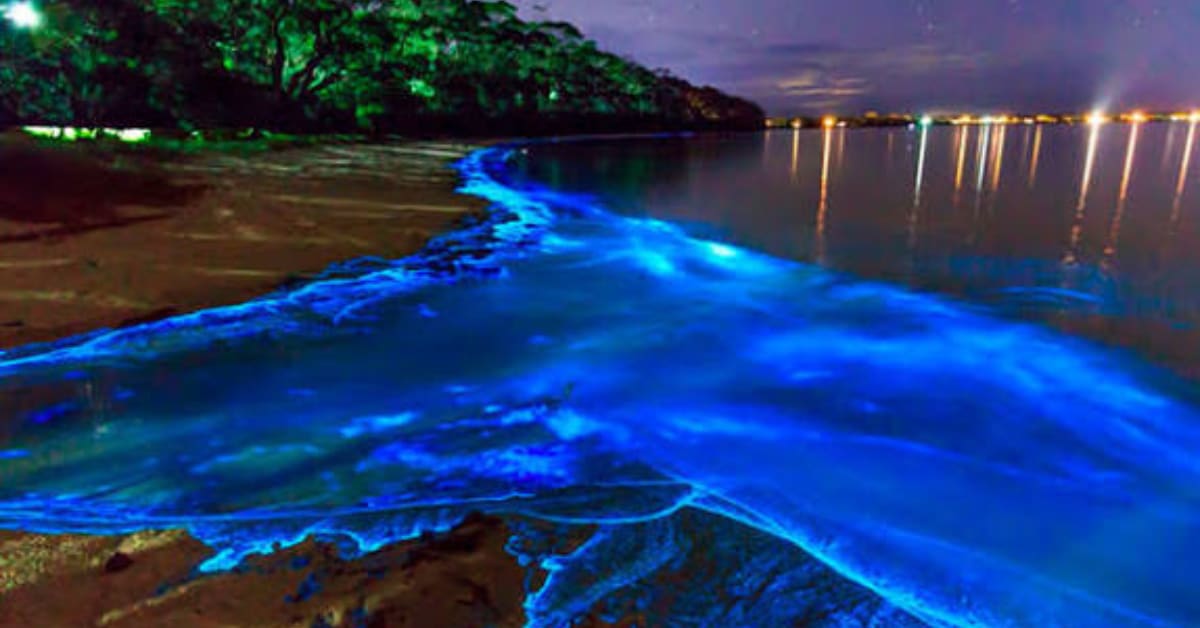
India's Glowing Forests Light Up After Dark in the Monsoon
Deep in India's Western Ghats, bioluminescent fungi turn decaying logs into natural light shows during monsoon season. Scientists are racing to protect these rare glowing ecosystems before climate change dims them forever.
Imagine walking through a rainforest at night and watching the ground glow green beneath your feet, like something straight out of a science fiction movie.
That's exactly what happens in parts of India's Western Ghats from July to September. Hidden beneath dense canopies, decaying logs and fallen branches emit a soft emerald glow after sunset, creating one of nature's most magical spectacles.
The phenomenon comes from bioluminescent fungi that colonize dead wood during the monsoon. Heavy rainfall and humid conditions trigger a chemical reaction inside these tiny organisms, producing light without heat through molecules called luciferin and an enzyme called luciferase.
Unlike the glowing beaches that attract tourists to India's coasts, these luminous forests remain largely unknown. The light is subtle and seasonal, visible only under the right conditions on moonless nights.
Bhimashankar Wildlife Sanctuary in Maharashtra has become India's best-known glowing forest destination. Between July and September, patches of wood emit faint green light beneath the evergreen canopy. Wildlife photographers recommend sitting quietly in complete darkness for a few minutes before your eyes adjust enough to see the glow.
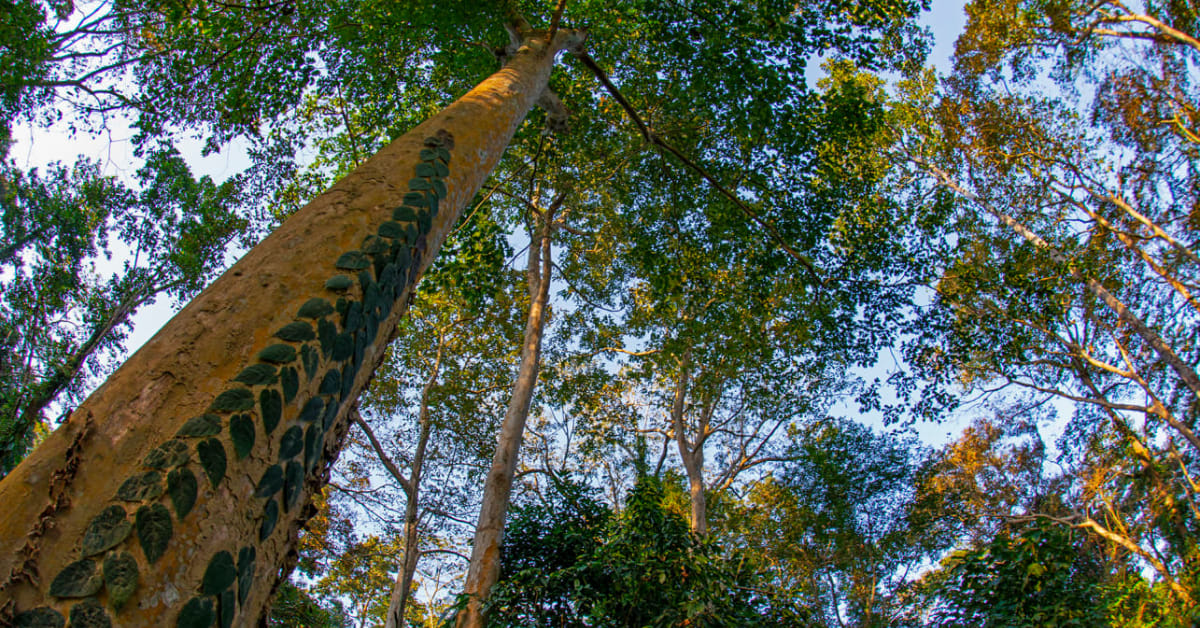
Other hotspots include Chorla Ghat near the Goa-Karnataka-Maharashtra border and Agumbe in Karnataka, sometimes called the "Cherrapunji of South India." Silent Valley National Park in Kerala, one of India's last undisturbed tropical rainforests, also hosts these luminous fungi.
Scientists have identified several fungal species capable of bioluminescence, many belonging to the genus Mycena. Researchers continue documenting new species across the Western Ghats.
Why This Inspires
These glowing forests remind us that nature still holds mysteries waiting to be discovered, even in our own backyards. But they also sound a gentle alarm about what we stand to lose.
Glowing fungi depend on cool, humid forests with abundant dead wood. Changes in rainfall patterns, habitat fragmentation, and the removal of fallen logs can reduce the conditions they need to thrive. As climate change disrupts monsoon patterns, these delicate ecosystems face an uncertain future.
The fact that scientists are still discovering and documenting these species shows how much we have yet to learn about our forests. Every fallen log serves a purpose in the ecosystem, creating habitat not just for fungi but for countless organisms we're only beginning to understand.
India's glowing forests prove that wonder doesn't require a plane ticket to distant lands. Sometimes magic happens right here, glowing quietly in the rain.
More Images
%2Fenglish-betterindia%2Fmedia%2Fmedia_files%2F2026%2F08%2F04%2Fwestern-ghat-2026-08-04-18-25-43.png)
%2Ffilters%3Aformat(webp)%2Fenglish-betterindia%2Fmedia%2Fmedia_files%2F2026%2F08%2F04%2Fwestern-ghat-1-2026-08-04-18-29-34.png)
%2Ffilters%3Aformat(webp)%2Fenglish-betterindia%2Fmedia%2Fmedia_files%2F2026%2F08%2F04%2Fwestern-ghat-2-2026-08-04-19-54-24.png)
Based on reporting by The Better India
This story was written by BrightWire based on verified news reports.
Spread the positivity!
Share this good news with someone who needs it