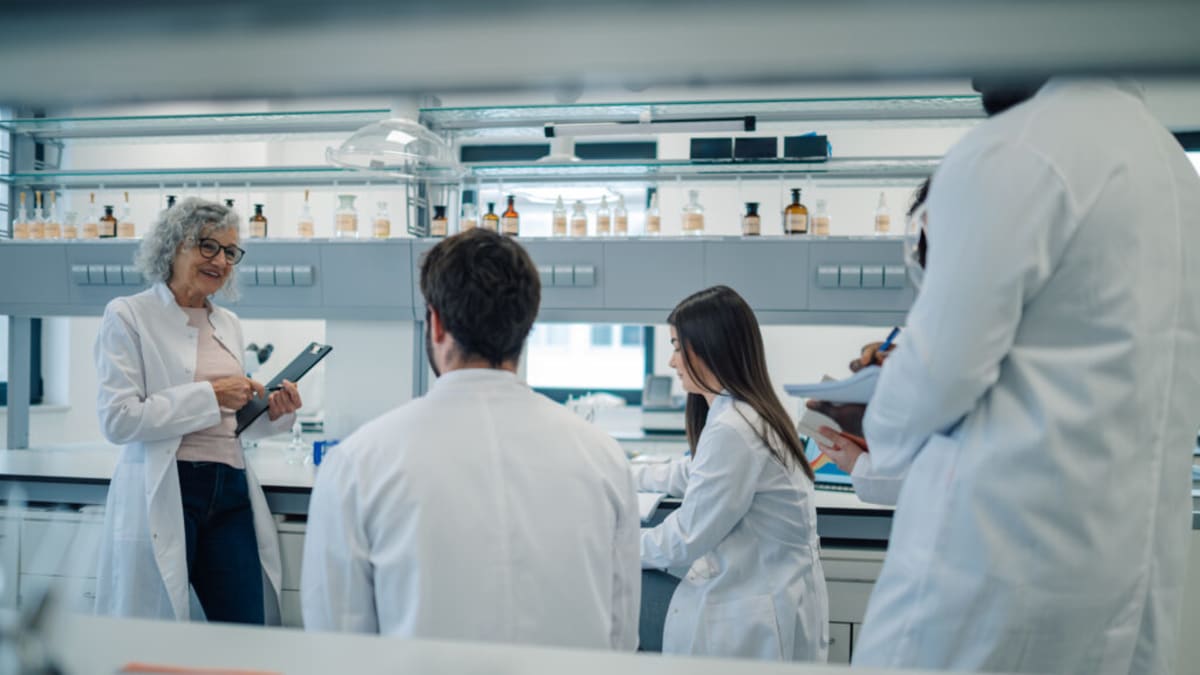
$47M Program Gives Science PhD Students Real Industry Jobs
Science graduate students will finally get paid industry experience as part of their degrees, thanks to a groundbreaking $47 million pilot program. Around 30 universities are partnering with major companies to reshape how America trains its next generation of scientists.
The National Science Foundation just greenlighted a bold experiment that could solve one of science education's biggest problems: graduate students who've never worked outside a university lab.
Starting this year, PhD students in four new programs will spend at least one year of their doctoral training actually working at a company. They'll get real industry experience, industry paychecks, and still earn their academic degree.
The program tackles a challenge that's been building for years. Young life scientists have been leaving academia in droves, recognizing that most science jobs exist in industry, not universities. Yet traditional PhD programs train students almost exclusively for academic careers.
Around 30 university-industry pairs have signed on to participate. Academic partners include UC San Diego, Northwestern, Purdue, and Columbia. On the industry side, life science companies like Agilent Technologies are joining forces with agricultural giants like Bayer's Crop Science division and chemical company DuPont.
The universities and companies will jointly fund these four-year programs, with additional support from the National Science Foundation's $47 million investment. Students will conduct research both on campus and at company sites, bridging two worlds that have traditionally operated separately.
The Ripple Effect
This model could transform how America develops scientific talent. Students will graduate understanding both academic research and real-world product development. They'll have professional networks spanning universities and industry. And they'll be prepared for the actual job market, not just the tenure track.
Companies benefit too, gaining early access to talented researchers and helping shape the skills of future employees. Universities stay connected to industry needs, making their programs more relevant and attractive to prospective students.
The program addresses a fundamental mismatch in science education. For decades, universities trained PhDs primarily to become professors, even though only a fraction of graduates land tenure-track positions. Meanwhile, biotech and pharmaceutical companies desperately need skilled scientists but often must retrain new PhDs who lack industry experience.
Final agreements are still being signed, but the letters of intent signal serious commitment from major players in science education and industry. If successful, this pilot could become the new standard for graduate training in the life sciences.
America's next generation of scientists won't have to choose between academic rigor and real-world relevance anymore.
More Images




Based on reporting by STAT News
This story was written by BrightWire based on verified news reports.
Spread the positivity!
Share this good news with someone who needs it