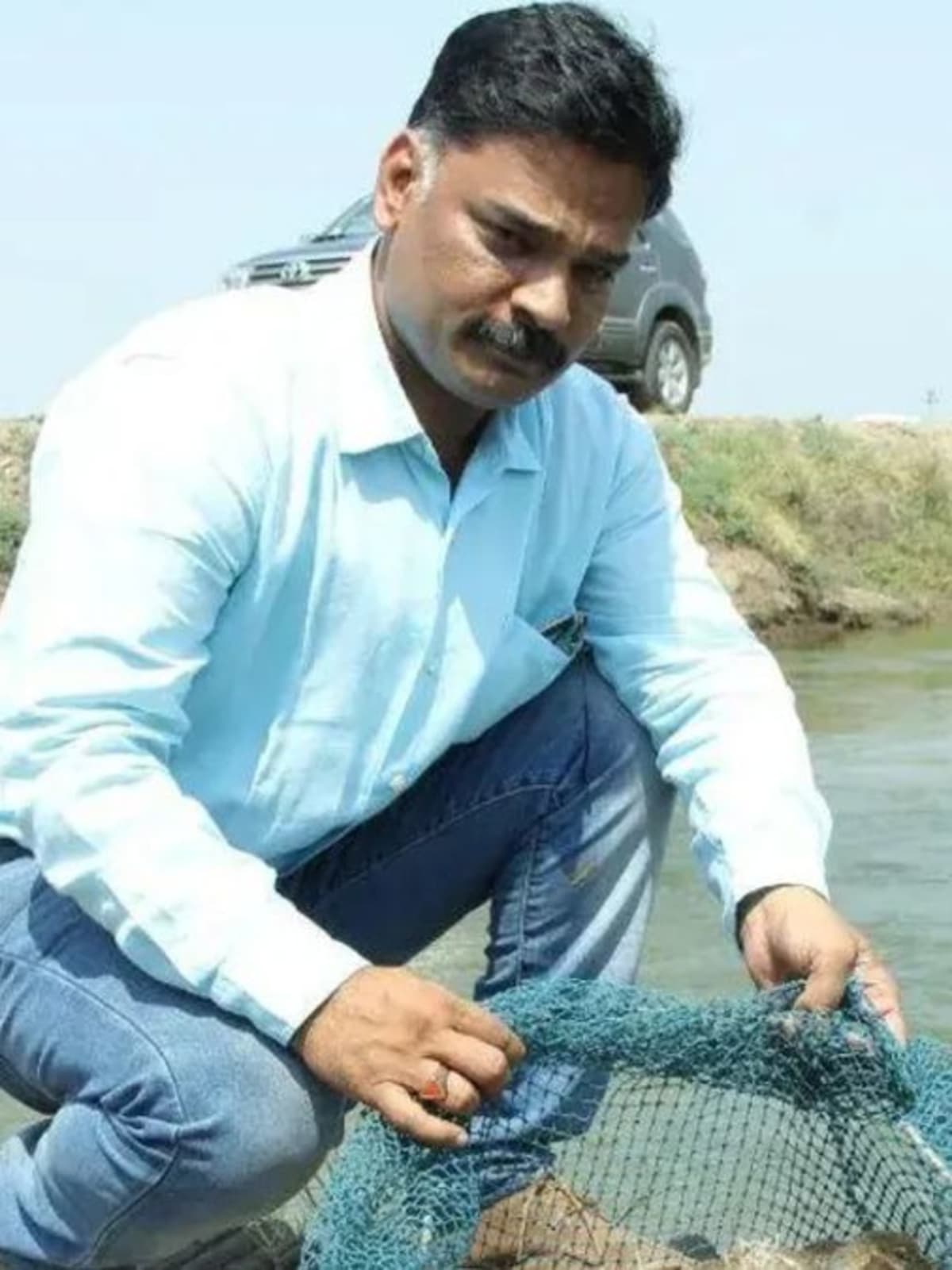
Dr. Manoj Sharma Turns Gujarat Wasteland Into $12M Shrimp Farm
A childhood fish enthusiast transformed 400 hectares of Gujarat's salt-poisoned coastline into a thriving shrimp farming empire worth $12 million annually. His success sparked a movement that lifted 500 struggling farmers out of poverty.
Dr. Manoj Sharma stared at land that everyone called useless, salt-crusted soil along Gujarat's coast where nothing would grow, and saw something no one else could imagine.
In 1994, the young aquaculture graduate from Maharashtra arrived in Olpad with a radical idea. The brackish water and saline soil that killed traditional crops might be perfect for shrimp farming.
His friends thought he was crazy. Farmers shook their heads at the barren fields he purchased.
But Sharma had studied Aquaculture Management at Mumbai's Central Institute of Fisheries Education. He understood that these supposedly worthless lands held hidden potential.
The early years tested everything he had. Viral outbreaks wiped out entire harvests. Legal challenges threatened to shut him down before he started. He began with just four hectares and sold his shrimp from a roadside corner.
Slowly, the salt-damaged earth came alive. Ponds filled with brackish water teemed with shrimp. What farmers abandoned as hopeless became productive again.
Today, Mayank Aquaculture spans 400 hectares and produces nearly 1,000 tonnes of shrimp each year. The operation generates between $9 million and $12 million in annual revenue.
The Ripple Effect
Sharma didn't keep his discovery to himself. Through the Surat Aquaculture Farmers Association, he trained over 500 farmers struggling with the same salt-ruined land.
He taught them disease control, provided technical support, and connected them to markets. Farmers who barely survived on damaged soil now earn stable incomes from shrimp cultivation.
Coastal youth found employment close to home instead of migrating to cities. Women joined processing operations, contributing to household earnings. Entire communities transformed economically.
His work earned him national recognition as Best Shrimp Farmer and the title "Father of the Blue Revolution in Gujarat." But the real reward walks through villages where families eat better and children stay in school.
Sharma now advocates for five national reforms: unified land policies for aquaculture, better financial support for farmers, scientific training programs, access to disease-free shrimp seeds, and public awareness about seafood nutrition.
His vision extends beyond profits to a domestic Blue Revolution where shrimp farming boosts nutrition, creates livelihoods, and proves that land written off as worthless can feed millions.
Based on reporting by The Better India
This story was written by BrightWire based on verified news reports.
Spread the positivity!
Share this good news with someone who needs it