Drones Save Hundreds in Mozambique's Worst Flood in Decades
When the worst floods in decades hit northern Mozambique in January, newly trained drone pilots guided rescue teams through murky waters and saved every single person without a single fatality. A South Korean training program launched just eight months earlier turned 30 public workers into lifesaving heroes.
When floodwaters swallowed hundreds of square miles in northern Mozambique this January, rescuers faced an impossible challenge: how do you find stranded families when everything looks the same under murky brown water? The answer came from above, where a small squadron of drones and their freshly trained pilots turned what could have been a tragedy into a miracle of zero deaths.
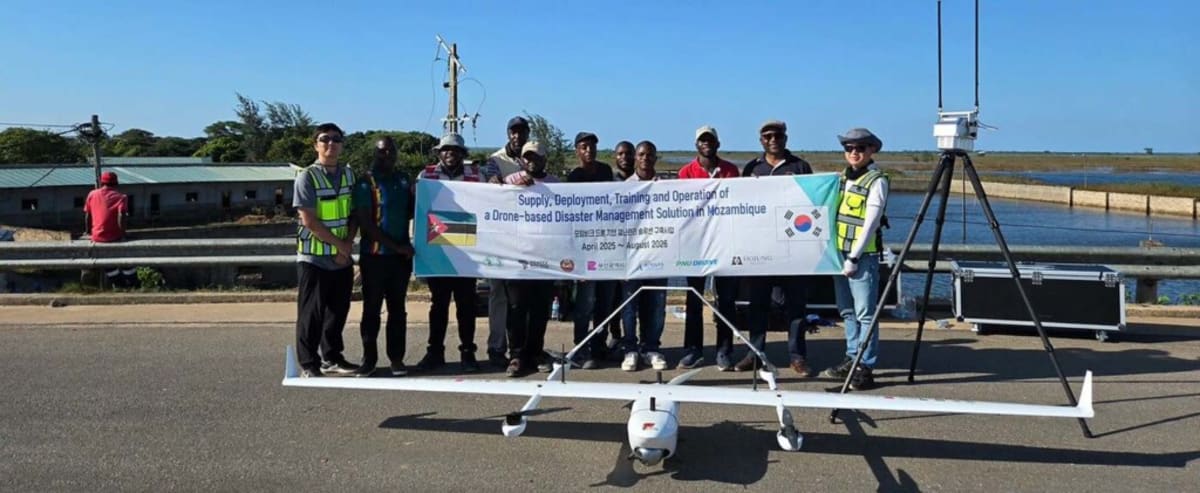
The Incomáti River burst its banks near Marracuene, just north of the capital, after weeks of relentless rain. Timing made all the difference. Eight months earlier, the African Development Bank's South Korea-Africa Economic Cooperation Trust Fund had launched a drone training program for 30 public sector workers from meteorology, road mapping, water management, and disaster response agencies.
The January floods hit halfway through their training course. Instead of a classroom exercise, these student pilots got thrown into the deep end of a real emergency. The government ordered them to Marracuene immediately.
Kátia Manjate, one of the new pilots, had never touched a drone before the program started. "I learned to run the entire pipeline, from data collection all the way to the final product," she says. That crash course in Korean drone technology suddenly became the difference between life and death for hundreds of families.
The pilots flew their drones over the submerged landscape, locating stranded families and mapping washed-out roads invisible beneath the flood. They streamed live imagery to rescue teams who had no other way to see what the water had destroyed. LiDAR sensors measured exactly how deep each pool was, guiding rescue vehicles safely through door-high floodwaters.
Their precise, real-time information meant rescue teams never drove into danger zones. Not one person drowned. Not one rescuer got hurt. Every stranded family made it to safety.
The Ripple Effect
In August, all 30 pilots graduated. Ten of them earned licenses to train even more drone operators, multiplying the program's impact across Mozambique. Local councilwoman Márcia Moiane sees the transformation clearly. "This project marks a major leap forward, not only in technology but also in how we respond to emergencies," she told the African Development Bank. "It means we can act faster and smarter, saving more lives."
The drones now sit ready for the next emergency, with trained operators who've already proven they can handle the worst nature throws at them.
When the next flood comes, Mozambique won't be starting from scratch anymore.
More Images



Based on reporting by Good News Network
This story was written by BrightWire based on verified news reports.
Spread the positivity!
Share this good news with someone who needs it