Duke's 20-Legged Robot Sees Everything, Moves Anywhere
Scientists at Duke University built a robot that breaks every rule in the robotics playbook. Instead of copying humans or animals, they created something entirely new that moves better than anything before it.
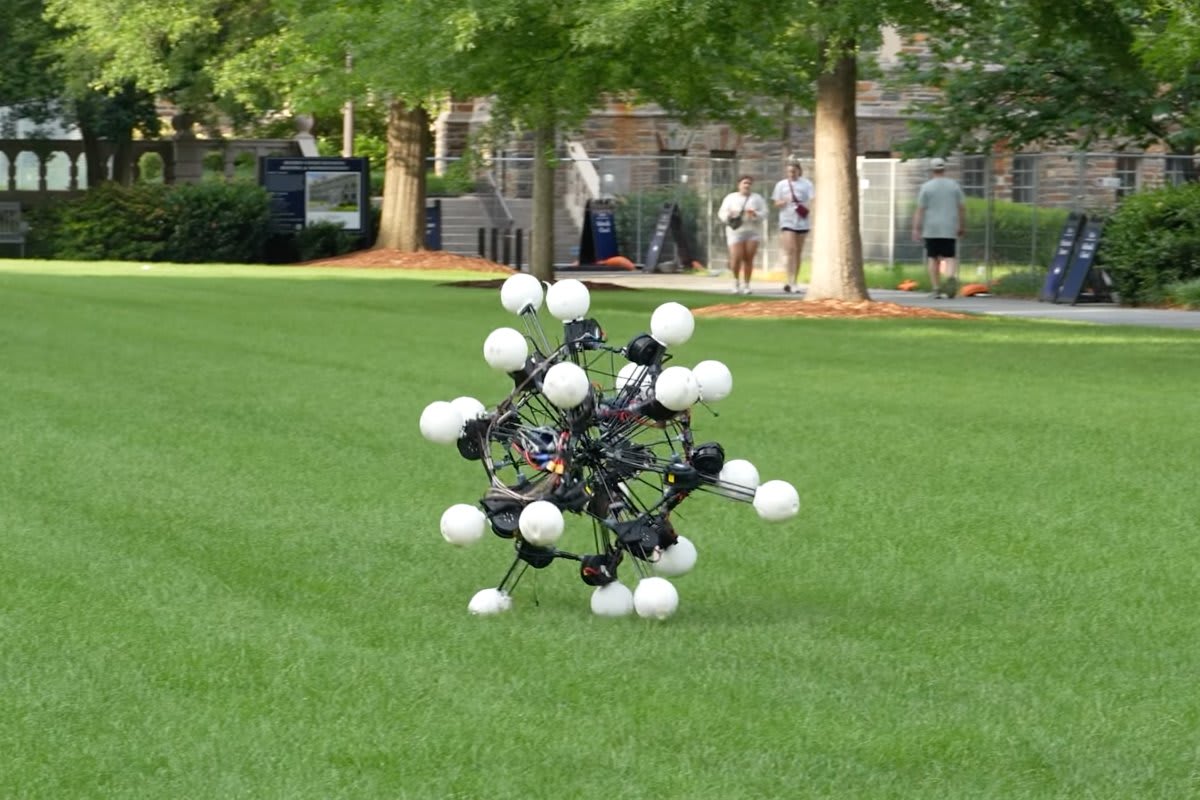
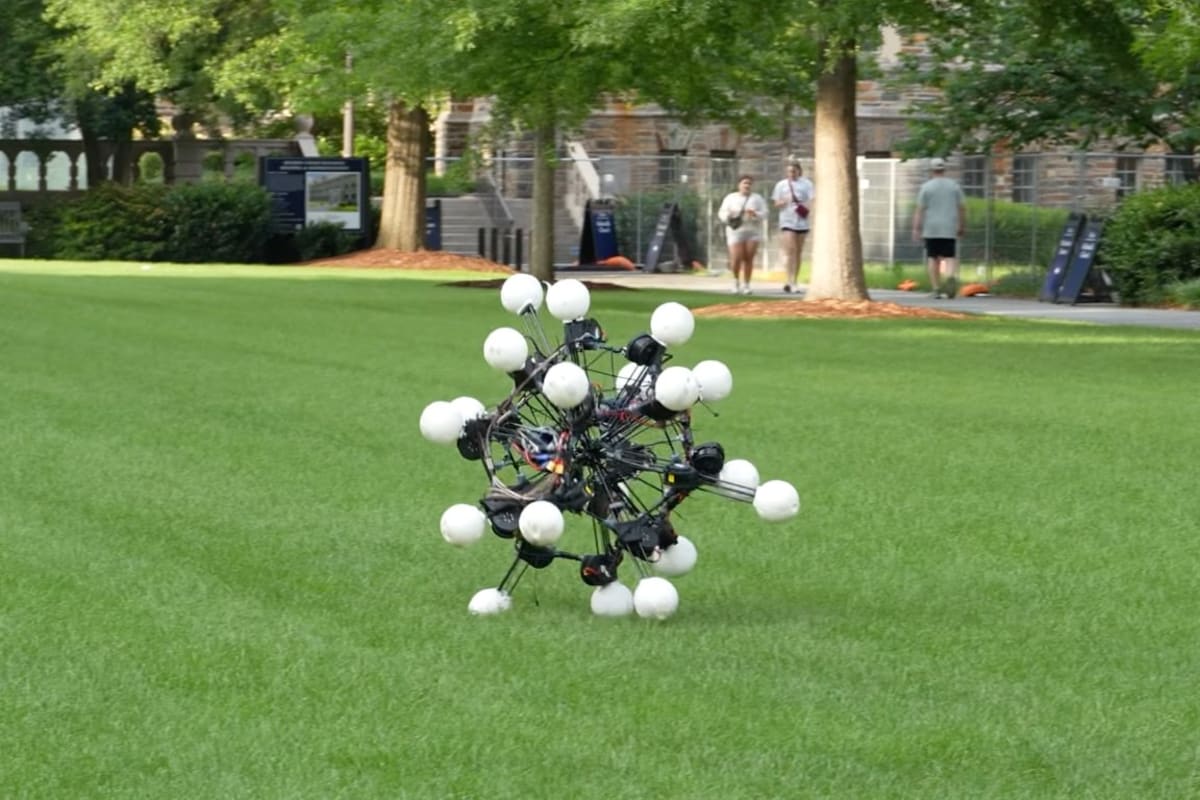
A sphere covered in eyes and twenty telescoping legs might sound like science fiction, but it's the future of robotics rolling out of Duke University's labs right now.
Meet Argus, a robot that looks nothing like the humanoid machines or robot dogs we're used to seeing. Named after the hundred-eyed giant from Greek mythology, this sphere-shaped machine can see in every direction at once and move across any terrain without missing a beat.
Engineering professor Boyuan Chen and his team wanted to throw out the old playbook. Instead of asking "how can we make robots look like us?" they asked "what would a robot look like if we designed it to move perfectly in any direction?"
The answer turns out to be twenty legs arranged around a central core, each one extending and retracting independently. Cameras sit at the end of each leg, letting Argus watch every step it takes while navigating obstacles.
The results speak for themselves. When researchers tested how smoothly different robots change direction, most scored below 0.6 on their new measurement scale. Argus scored 0.91, making it more agile than humanoid robots and even flying drones.
Video footage shows the robot rolling effortlessly across pavement, sand, and forest paths. In its most impressive move, Argus climbs between two parallel walls by bouncing smoothly between them as it ascends.
Why This Inspires
Chen sees Argus as more than just a clever robot design. His team proved that sometimes the best solutions come from forgetting what already exists and imagining what could be.
The same principle that makes Argus move so smoothly could transform other fields. Chen suggests using the robot itself as a manipulator hand, able to handle objects from any angle without needing human-like fingers.
Other researchers are catching the same wave. Northwestern University recently unveiled modular robots where each limb operates independently, creating machines that work together but survive alone.
These teams aren't just building better robots—they're showing us that innovation happens when we stop copying nature and start learning from all of it at once.
More Images
Based on reporting by Futurism
This story was written by BrightWire based on verified news reports.
Spread the positivity!
Share this good news with someone who needs it