Dutch Floating Wind Turbine Tests Wave-Tilting Technology
A Netherlands company just launched a floating wind turbine that tilts its blades to catch stronger winds and boost power output. The 2026 test could help wind farms generate more clean energy from the same ocean space.
Imagine if wind turbines could lean into the breeze like sailboats, capturing stronger gusts and powering more homes without taking up extra ocean real estate.
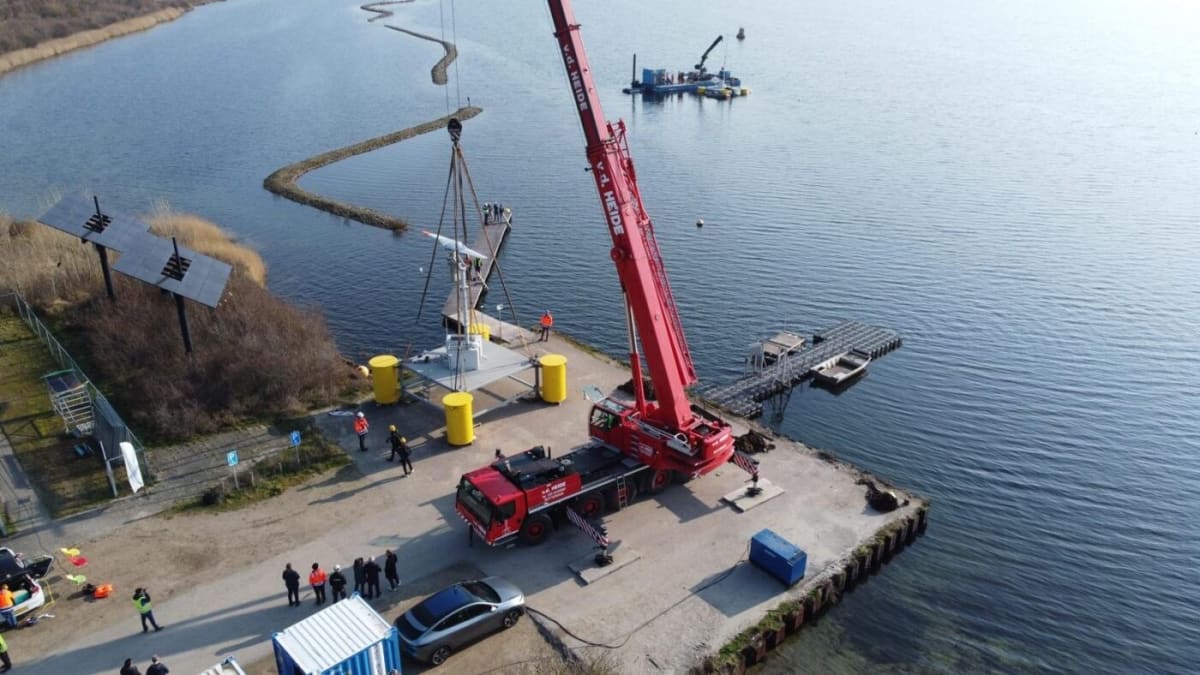
That's exactly what Dutch company TouchWind is testing right now. The company just deployed a floating wind turbine prototype off the coast of Westvoorne in the Netherlands, kicking off a year-long trial that could reshape how we harvest ocean wind energy.
The secret lies in the tilt. Unlike traditional turbines that stand straight up, this experimental design can angle its rotor to redirect airflow and tap into higher-energy wind layers above the surface. Think of it as fishing where the biggest catch swims instead of casting your line in shallow water.
The project, called POWER (Positive Wake Effects of turbines with tilted Rotors), aims to prove that tilted turbines can help wind farms pack more power into less space. When wind passes through a traditional turbine, it creates a "wake" of slower air behind it, reducing efficiency for turbines downstream. By tilting and redirecting that airflow, these turbines could actually help their neighbors perform better.
The floating platform sits anchored to the seafloor with steel and polyester lines attached to concrete weights. Those anchors aren't just holding the turbine in place. They're equipped with 3D-printed reef structures designed to create new habitat for fish and marine life, turning renewable energy infrastructure into an underwater nursery.
A floating weather mast installed nearby in April 2025 is measuring wind conditions throughout the test. Load sensors built into the mooring lines track every force acting on the system, collecting data that engineers will use to refine the design for full-scale deployment.
The Ripple Effect: If the tilted rotor technology works as hoped, it could allow future offshore wind farms to generate significantly more electricity from the same footprint. That means more clean power without requiring additional ocean permits or disturbing new marine areas. The consortium behind the project includes partners from Japan and across Europe, with funding from the Netherlands Enterprise Agency, showing how innovation in one country can spread benefits globally.
The testing will continue throughout 2026, with researchers also studying how multiple tilted turbines interact when positioned close together. Every data point brings us closer to wind farms that work smarter, not just bigger.
More Images


Based on reporting by Google News - Wind Energy
This story was written by BrightWire based on verified news reports.
Spread the positivity!
Share this good news with someone who needs it