Earth's Fungal Network Could Span 10% of Milky Way
Scientists just mapped Earth's underground fungal network for the first time, and it's mind-blowing. If stretched out, these tiny threads would reach across 10% of our entire galaxy.
Beneath your feet right now, an invisible network is feeding the planet, and scientists just discovered it's almost incomprehensibly vast.
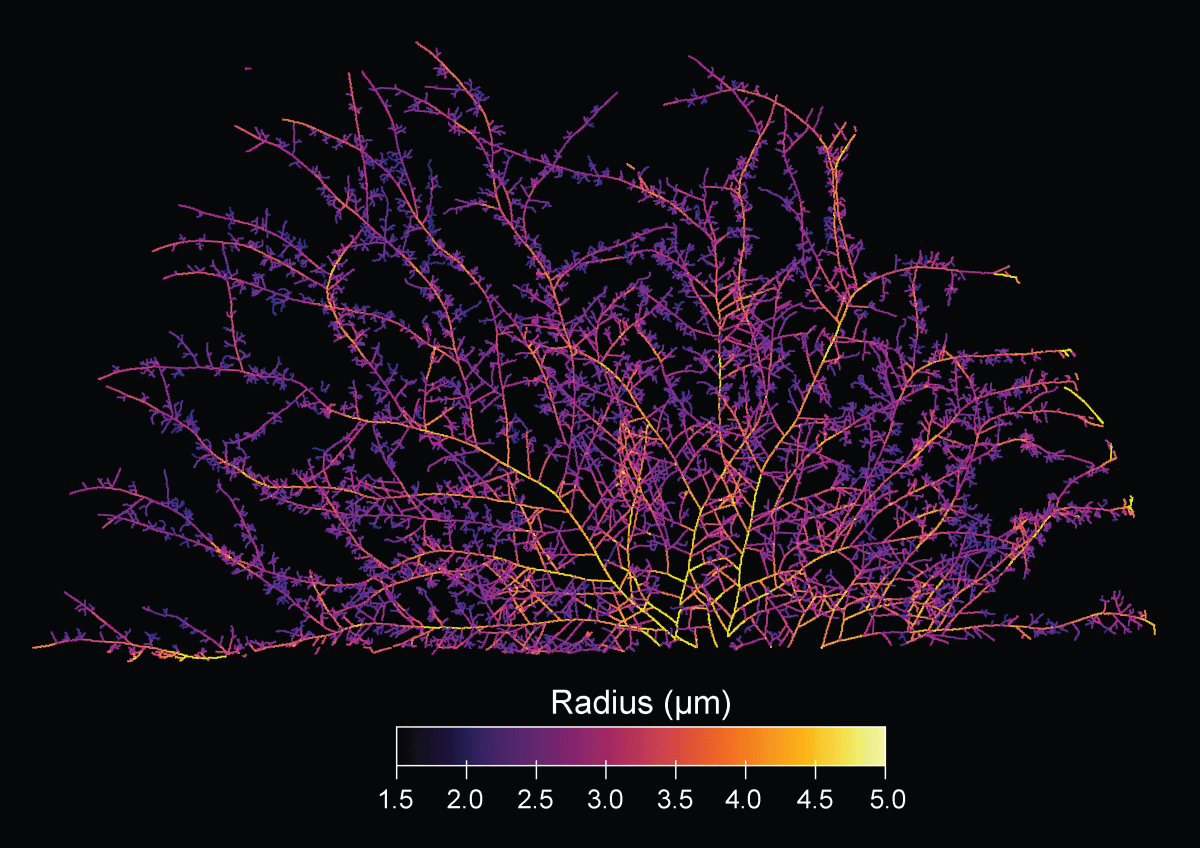
Researchers created the first global map of Earth's underground fungal network, revealing microscopic threads so extensive that if laid end to end, they would stretch 68 quadrillion miles. That's nearly a billion times the distance from Earth to the sun, or roughly 10% the width of the Milky Way galaxy.
These fungi, called arbuscular mycorrhizal networks, partner with most of the world's land plants in a beautiful exchange. The fungi deliver nitrogen and phosphorus to plant roots, while plants return the favor with carbon. It's a win-win relationship that's been sustaining life for millions of years.
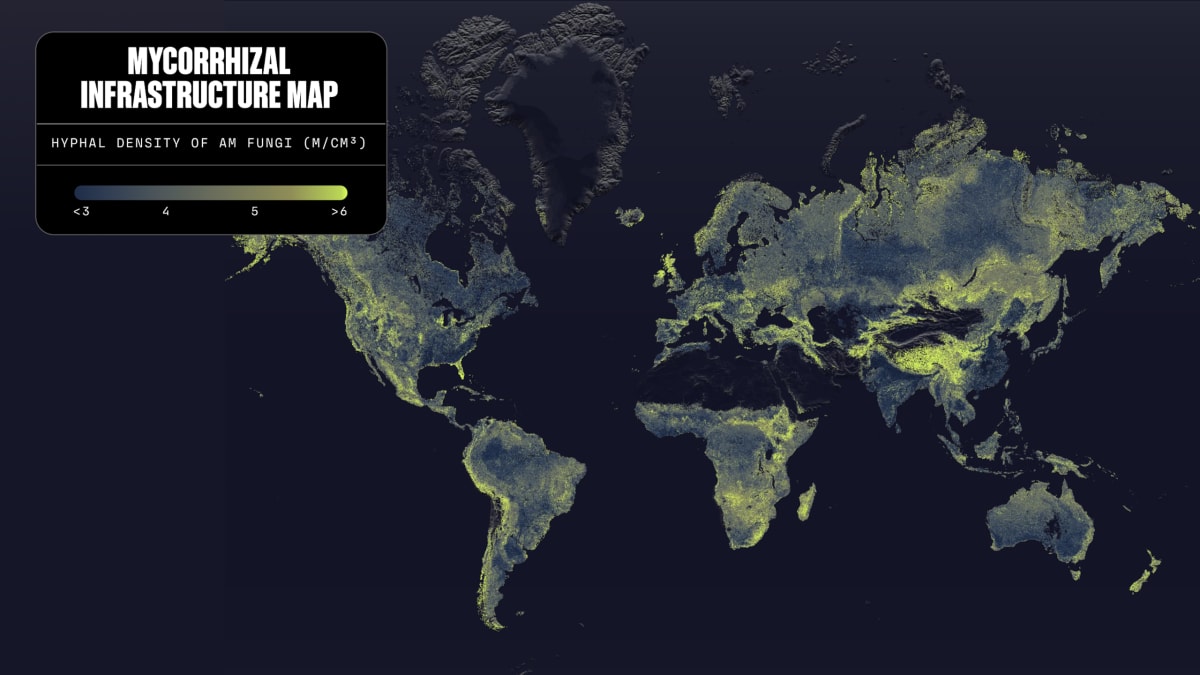
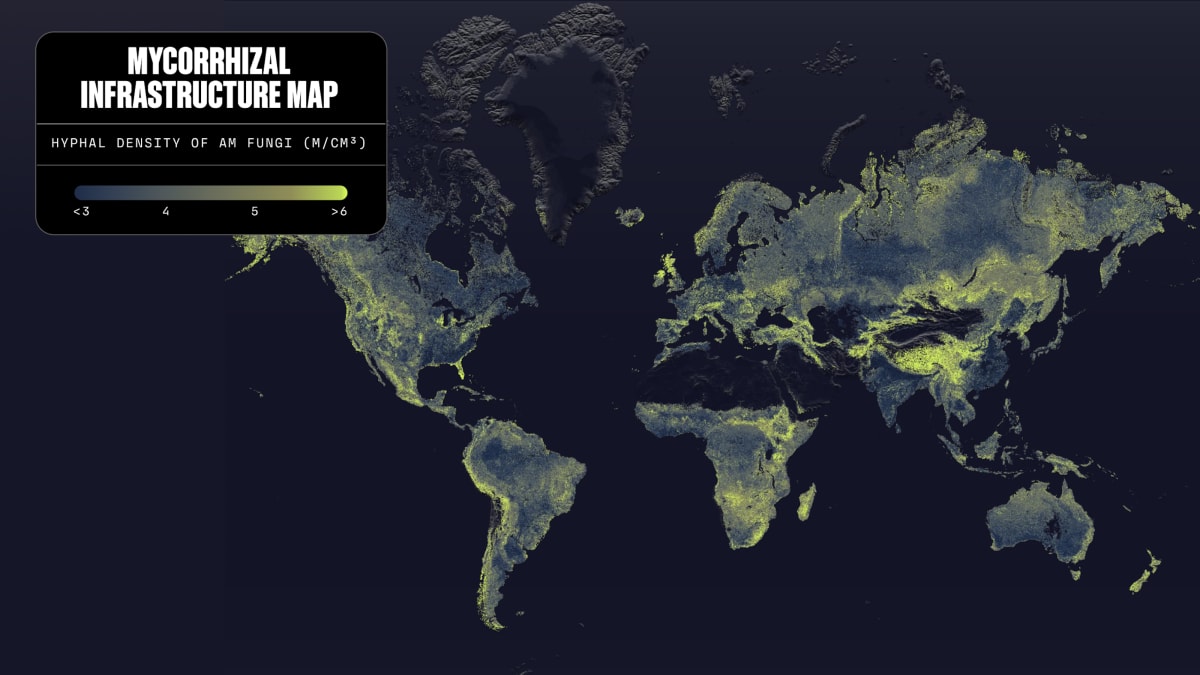
Justin Stewart, an evolutionary biologist at the Society for the Protection of Underground Networks, led the study published in Science. His team analyzed data from over 16,000 soil cores collected worldwide to create the map. Using artificial intelligence, they predicted fungal distribution for every square kilometer of topsoil on Earth.
The results revealed something surprising. Wild grasslands, including high-altitude meadows and flooded areas like Florida's Everglades, contain the densest fungal networks on the planet. Just the top six inches of soil in these grasslands hold about 40% of Earth's total fungal biomass.
"This is the most dense fungal forest on Earth, and they're under wild grasslands," Stewart told Live Science. "It's changing the way that we're discussing how life is distributed on Earth."
These fungi are climate champions too. They absorb around 4.3 billion tons of carbon dioxide equivalent each year, representing roughly 11% of global fossil fuel emissions from 2021. That makes undisturbed grasslands crucial carbon sinks.
The Ripple Effect goes beyond carbon storage. This discovery highlights why protecting wild grasslands matters more than many people realized. Agricultural practices are already taking a toll, with cropland topsoil containing roughly 50% lower fungal densities on average. Fungicides and chemical fertilizers likely explain the difference.
"I hope this builds into the conversation for their protection because wild grasslands are going away quite quickly," Stewart said. "These are areas that people are really ripping up because it's much easier to rip up a grass than it is to rip up a tree."
The team found an average of 237 feet of fungal threads in every cubic inch of topsoil worldwide. Wild grasslands topped the charts at 355 feet per cubic inch, while cultivated tree farms had the lowest density at 204 feet per cubic inch.
Some regions, particularly tropical rainforests and deserts, still need more sampling to complete the picture. Stewart's team is actively filling those gaps, with plans to update the map within five years for an even clearer understanding of how these essential organisms are distributed across our planet.
More Images

Based on reporting by Live Science
This story was written by BrightWire based on verified news reports.
Spread the positivity!
Share this good news with someone who needs it