
Ecologist Shows How Nature's Feedback Loops Can Heal Earth
A new book reveals how the same forces that created stars can help us restore damaged ecosystems and build momentum for environmental recovery. Scientist Thomas Crowther argues that positive change accelerates when nature's benefits become self-reinforcing.
Thomas Crowther's harmless snakebite nearly sent him to the hospital because his mind convinced his body the danger was real. That terrifying lesson became the foundation for understanding how feedback loops shape everything from forest recovery to human hope.
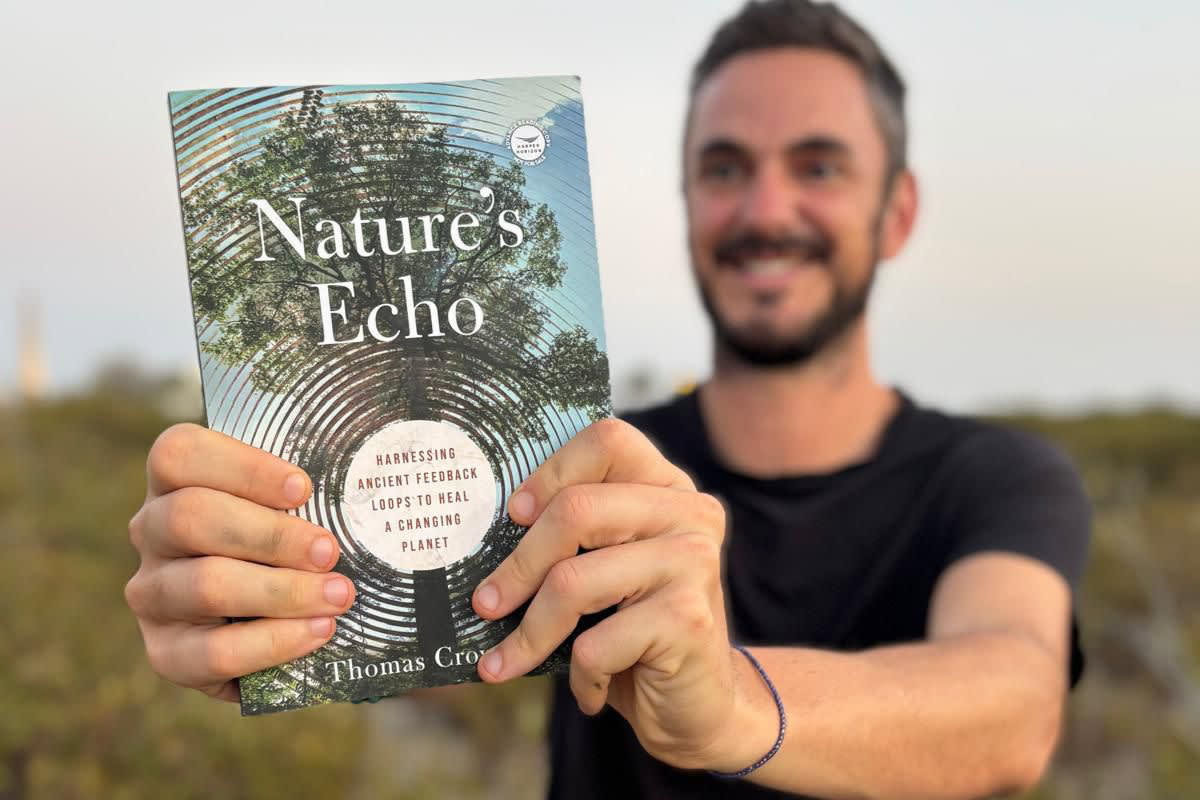
In his new book Nature's Echo, the ecologist traces a surprising pattern across the universe. The same reinforcing processes that allowed stars to form also drive biological evolution, ecological recovery, and even social change.
The idea sounds abstract until Crowther grounds it in real ecosystems. Healthy forests don't just exist in balance; they create conditions that help more forest grow, while predators and competition provide the brakes that prevent any single force from taking over.
These aren't just nature documentaries in book form. Crowther applies the same thinking to how humans respond to environmental challenges, showing how fear can spiral or dissolve based on what information interrupts the loop.
The book's most practical insight flips traditional conservation thinking on its head. Instead of framing restoration as endless effort requiring more money and enforcement, Crowther asks what conditions help systems sustain themselves.
When nature recovery creates tangible benefits that people want to protect, positive momentum builds. Falling renewable energy costs and spreading regenerative agriculture demonstrate loops already gaining speed without massive top-down intervention.
Crowther describes feedback loops simply: "They happen when a process causes something that reinforces that inciting process." Once you spot these patterns, you can identify not just how systems behave but how they might change.
The Ripple Effect
This framework helps explain why some restoration projects flourish while others stall despite similar resources. When ecological recovery generates visible wins, community support strengthens, which enables more recovery, creating an upward spiral.
The book moves from cosmology to psychology, sometimes requiring readers to leap between vastly different scales. Crowther is most convincing when describing forests, food webs, and restoration rather than abstract systems.
His central claim offers genuine hope without false promises. Positive change isn't inevitable, but it becomes more likely when reinforcing dynamics align in its favor, turning isolated efforts into self-sustaining momentum.
The writing stays earnest without preaching. Environmental change emerges not just as a technical problem awaiting fixes, but as a question of conditions: what allows recovery to reinforce itself, and what causes damage to compound.
For conservationists tired of fighting uphill battles, the message lands differently. Small actions can become planetary forces when they tap into nature's tendency to amplify what works.
More Images



Based on reporting by Mongabay
This story was written by BrightWire based on verified news reports.
Spread the positivity!
Share this good news with someone who needs it