Ecuador Tags First Leatherback Turtle to Save Species
Scientists in Ecuador just attached the country's first satellite tracker to a critically endangered leatherback sea turtle, opening a new window into protecting one of the ocean's most mysterious giants. With fewer than 1,000 Eastern Pacific leatherbacks left, this breakthrough could reveal where they travel and how to keep them safe.
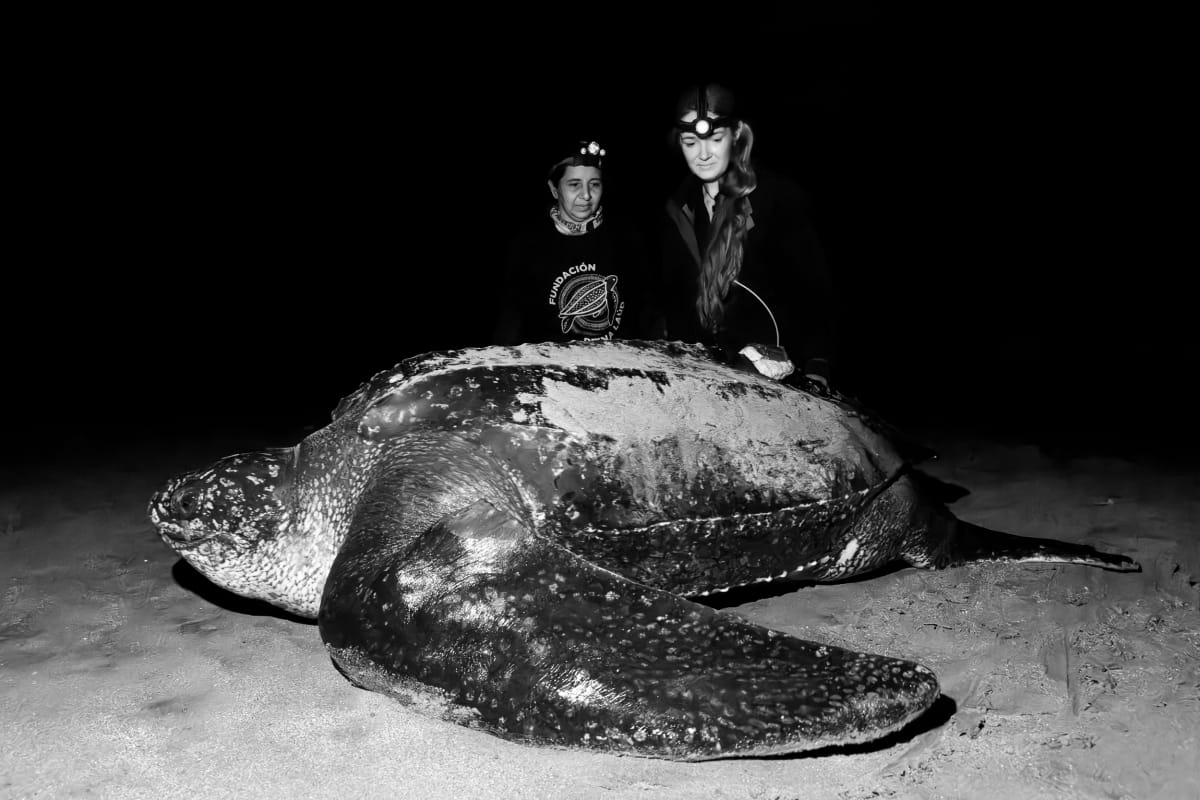
Just after 3 a.m. on a remote Ecuadorian beach, a 4.5-foot leatherback turtle finished burying her eggs and became part of history. As she swept sand over her nest with powerful flippers, scientists carefully attached the country's first satellite tag to her back.
"We just satellite-tagged the first leatherback sea turtle in all of Ecuador," said Callie Veelenturf, a marine biologist and co-founder of The Leatherback Project. She worked alongside Kerly Briones Cedeño from Fundación Reina Laúd, a volunteer conservation group that monitors turtle nesting sites.
The milestone couldn't come at a more critical time. Eastern Pacific leatherbacks have plummeted by more than 90 percent since the 1980s, with fewer than 1,000 individuals remaining.
Scientists have long tracked leatherbacks in Mexico and Costa Rica, where larger nesting populations exist. But Ecuador's waters have remained largely unmapped, leaving dangerous gaps in understanding how these ancient mariners use the ocean.
The satellite tag transmits the turtle's location each time she surfaces to breathe, revealing her feeding grounds, mating areas, and migration routes. This data will show scientists exactly where protection is most needed.
The Bright Side
The information gathered could transform ocean conservation across Ecuador's Pacific coast. By mapping where leatherbacks spend their time, authorities can better regulate fishing activities in critical areas and reduce accidental turtle deaths.
Ecuador hosts one of the eastern tropical Pacific's largest artisanal fishing fleets, with tens of thousands of small boats operating daily. Large-mesh gillnets pose the greatest threat to sea turtles, which can become entangled and drown alongside sharks, rays, dolphins, and seabirds.
The tracking project represents a powerful partnership between international scientists and local Ecuadorian conservationists who have spent years monitoring nesting beaches. Their combined expertise is creating the first comprehensive picture of how leatherbacks navigate these waters.
Understanding migration patterns will also help identify gaps in marine protected areas. When scientists know where turtles travel, they can advocate for expanding protections to cover those routes.
For a species that has survived for 100 million years, this single satellite tag represents hope that human innovation can help them survive the next century too.
Based on reporting by Inside Climate News
This story was written by BrightWire based on verified news reports.
Spread the positivity!
Share this good news with someone who needs it