Egypt Uncovers 12,000-Year-Old 'Open-Air Museum' in Sinai
Egyptian archaeologists have discovered a massive rock shelter in South Sinai featuring prehistoric paintings, ancient inscriptions, and artifacts spanning 12,000 years of human history. The site reveals continuous human presence from 10,000 BC through the Islamic period.
Deep in the South Sinai mountains, archaeologists just found what they're calling a natural museum that tells the story of humanity across 12 millennia.
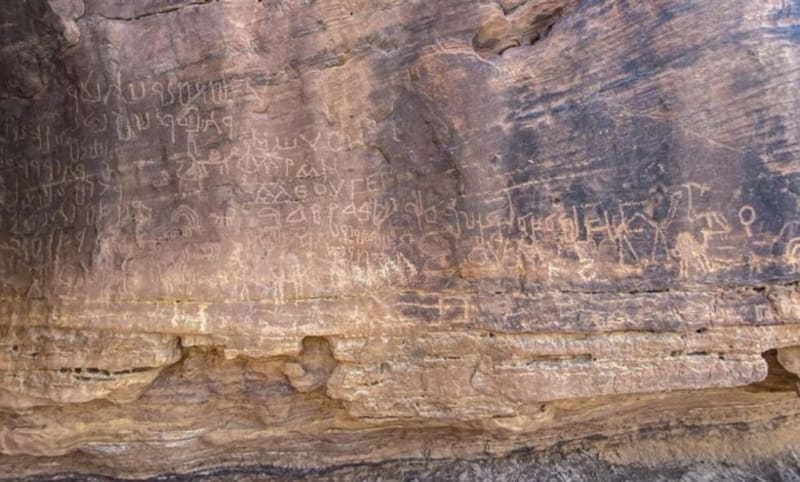
The Umm Arak Plateau discovery features a 100-meter sandstone shelter covered in rock art from multiple civilizations. Egyptian teams documented paintings, inscriptions, and artifacts that show people have been visiting this spot for over 12,000 years.
The ceiling contains red paintings of animals dating back as far as 10,000 BC, making them among the oldest artistic expressions in the region. Researchers also found grayscale paintings documented for the first time, showcasing techniques never before recorded in Egyptian archaeology.
Sheikh Rabie Barakat, a local resident of the Serabit al-Khadim area, guided the archaeological team to the hidden site. His knowledge of the region proved essential to uncovering this treasure that had remained undocumented until now.
The site reads like a history book etched in stone. Later inscriptions show camels and horses with armed riders alongside Nabataean writing, revealing the diverse cultures that passed through Sinai over centuries.
Pottery fragments found at the site date from Egypt's Middle Kingdom through the Roman period around the third century AD. Flint tools scattered throughout the shelter add physical evidence to the visual story painted on the rocks above.
Arabic inscriptions prove the shelter remained important even after Islam arrived in the region. This continuous use across thousands of years makes Umm Arak unique among archaeological discoveries.
The Ripple Effect
This discovery does more than add to our understanding of ancient Egypt. It shows how a single location served as a gathering place, shelter, and canvas for countless generations across wildly different time periods.
The site's artistic diversity reveals cultural exchanges between groups separated by thousands of years but connected by the same landscape. Nabataean traders, Roman-era travelers, and Islamic-period visitors all left their mark alongside prehistoric artists.
Secretary-General Hesham al-Leithy called it one of the most important rock art sites recently discovered, and the technical variety supports that claim. Each civilization brought its own artistic style while respecting what came before.
The discovery opens new questions about migration patterns, trade routes, and cultural exchange in Sinai throughout human history. Researchers are now studying the symbols and techniques to understand what stories these ancient artists wanted to preserve.
A shelter in the desert has become a window into 12,000 years of human creativity, survival, and connection.
More Images
Based on reporting by Egypt Independent
This story was written by BrightWire based on verified news reports.
Spread the positivity!
Share this good news with someone who needs it