Egypt Uncovers 2,500-Year-Old Tomb Network at Saqqara
Archaeologists in Egypt discovered an ancient tomb of a royal official and an interconnected network of burial shafts containing over 100 artifacts, shedding new light on 2,500 years of Egyptian history. The find includes perfectly preserved ritual objects still in their original positions.
Egyptian archaeologists just unveiled one of the most complete ancient tomb discoveries in recent years, and what they found has experts celebrating.
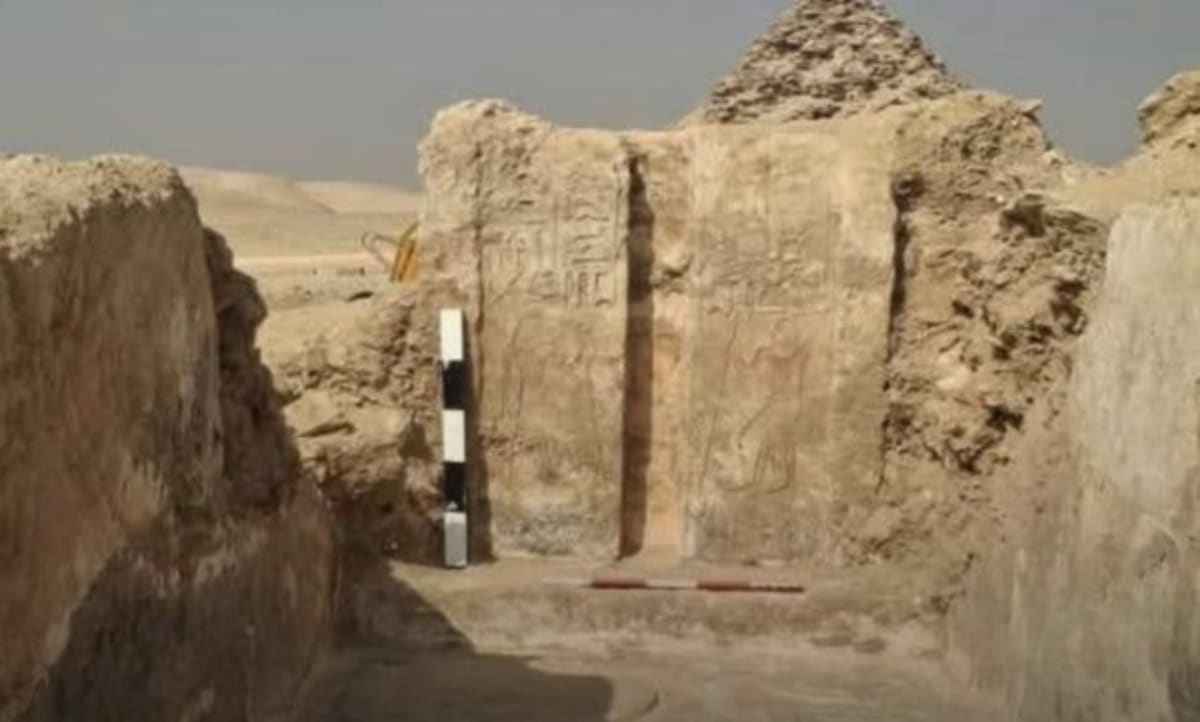
At the Bubastion Necropolis in Saqqara, researchers discovered the tomb of Sekhentiu-Ptah, a high-ranking official who served Egyptian kings during the Old Kingdom. His titles included Royal Chamberlain, Overseer of All the King's Works, and Keeper of the Secrets of Royal Commands, revealing he was one of the most powerful administrators of his time.
What makes this discovery exceptional is what survived intact. In front of the tomb's false door, archaeologists found a complete set of alabaster ritual objects exactly where they were placed thousands of years ago: an offering table, disk, purification basin, jug, and basin. Each piece bears hieroglyphic inscriptions naming Sekhentiu-Ptah and recording his impressive titles.
The team also uncovered an interconnected network of burial shafts used across multiple historical periods. Inside, they found more than 100 faience ushabti figurines, three sealed stone sarcophagi in their original condition, a wooden falcon statue, and painted funerary cartonnage. Despite evidence that some shafts were looted in ancient times, the surviving artifacts offer tremendous scientific value.
The Ripple Effect
This discovery does more than add artifacts to museums. The complete assemblage found in its original location provides researchers with rare insights into funerary rituals and practices during the Old Kingdom, a period from roughly 2686 to 2181 BCE.
The hieroglyphic inscriptions preserved on the false door and ritual objects help scholars understand the administrative structure of ancient Egypt's government. Meanwhile, the burial network shows how the site remained culturally significant across multiple dynasties, with new generations returning to honor this sacred ground.
The team is now documenting and analyzing their findings for publication in peer-reviewed scientific journals, making the knowledge available to researchers worldwide. Their work follows an integrated scientific approach including meticulous excavation, stratigraphic recording, and digital documentation.
Early signs suggest more structures and artifacts may still lie beneath the sand, promising additional chapters in Saqqara's remarkable story.
Based on reporting by Google: archaeological discovery
This story was written by BrightWire based on verified news reports.
Spread the positivity!
Share this good news with someone who needs it