Egypt Unveils Byzantine City and 18 Ancient Tombs
Archaeologists in Egypt have discovered a remarkably preserved Byzantine residential city and 18 ancient tombs, offering fresh glimpses into daily life from centuries past. The government hopes these latest finds will boost tourism to a country rich with archaeological treasures.
Stepping back into the fourth century just got a lot easier for history lovers visiting Egypt.
Archaeologists recently uncovered an entire Byzantine-era residential city at the Dakhla Oasis in Egypt's western desert. The settlement reveals extraordinary details about how people lived, worked, and worshiped when Egypt was part of the Byzantine empire.
The ancient city features north-south roads intersected by east-west streets, creating open squares and public spaces that would feel familiar to any modern city dweller. A basilica church from the mid-fourth century stands at the heart of the settlement, overlooking the main streets.
Two watchtowers guarded the city's edges, while thick defensive walls protected a heavily fortified structure within. Archaeologists found numerous houses with reception halls and vaulted roofs, including the home of Tisous, a church deacon who lived in the second half of the fourth century.
Inside these ancient homes, researchers discovered bread ovens, kitchens, and stone grinding tools still showing signs of use. Well-preserved bronze coins bearing portraits of Byzantine emperors turned up alongside gold coins from the reign of Roman emperor Constantius II, who ruled between 337 and 361.
Perhaps most exciting were 200 pottery fragments called ostraca that ancient residents used as writing material. These pieces detail commercial transactions, personal correspondence, and everyday activities, giving us a window into ordinary life nearly 1,700 years ago.
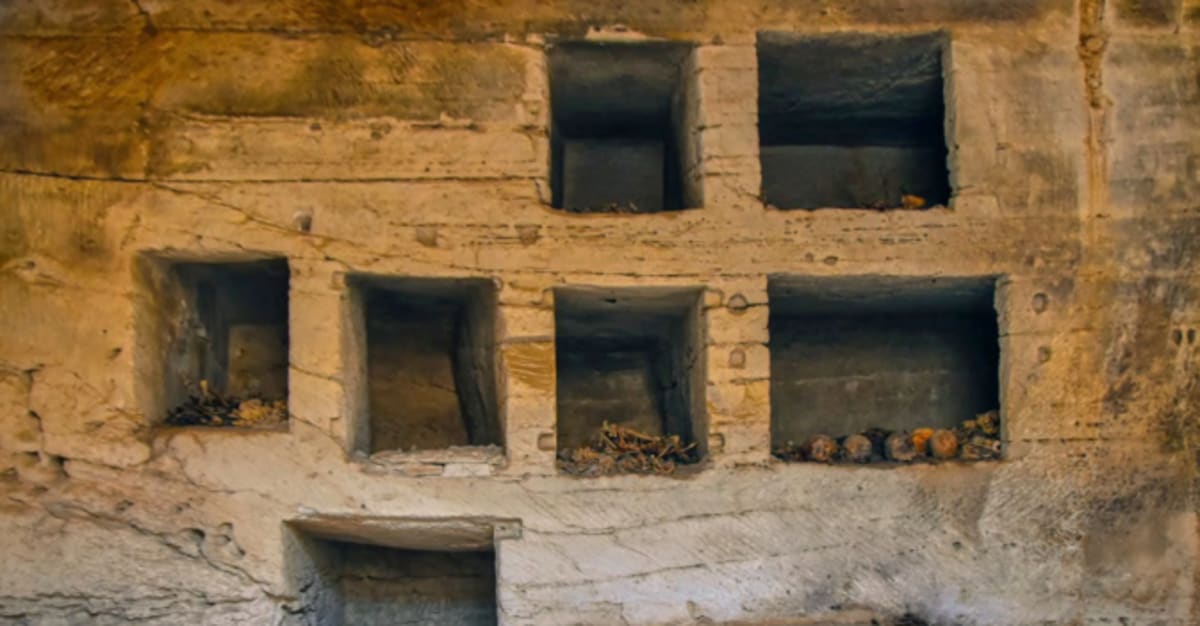
In a separate discovery about 100 kilometers west of Alexandria, archaeologists unearthed 18 ancient tombs at the Marina el-Alamein site. The findings included 11 rock-cut tombs averaging 8 meters deep and seven surface limestone tombs.
Inside, researchers found pottery vessels, lamps, plates, altars, and a 2.5-meter-long granite sarcophagus containing skeleton remains. Near the sarcophagus lay pieces of a plaster sphinx statue.
Four gold pieces discovered inside the mouths of some deceased individuals reflect "the golden tongue" practice, a funerary belief common in that era. These discoveries bring the total tombs found at Marina el-Alamein to 48.
The Ripple Effect
These archaeological treasures do more than satisfy our curiosity about the past. Tourism, partially driven by antiquities sightseeing, serves as a major source of foreign currency for Egypt alongside the Suez Canal.
The Dakhla Oasis site sits on UNESCO's Tentative List, one step away from joining the World Heritage List. That designation would bring even more international attention and resources for preservation.
Every artifact uncovered tells a story not just of ancient civilizations, but of the continuous human experience connecting us across millennia.
More Images
Based on reporting by Regional: saudi arabia development (SA)
This story was written by BrightWire based on verified news reports.
Spread the positivity!
Share this good news with someone who needs it