Electric Cars Could Power Solar Cities During Storms
Tropical cities can use parked electric vehicles as backup batteries during thunderstorms, solving a major solar power challenge without expensive new infrastructure. The breakthrough works even in cities with few cars.
Afternoon thunderstorms in tropical cities might soon become opportunities instead of obstacles for clean energy.
Researchers at Columbia Engineering discovered that parked electric cars can keep solar-powered cities running smoothly when clouds block the sun. The solution addresses one of the biggest challenges facing tropical cities as they transition to renewable energy.
Professor Markus Schläpfer noticed the problem after moving to Singapore a decade ago. Brief thunderstorms would cast shadows over neighborhoods, cutting off solar panel generation and threatening to destabilize the power grid.
Traditional fixes would require new transmission lines costing around $45 million per mile in dense cities. But Schläpfer's team found a simpler answer already sitting in parking spaces.
The study, published in Nature Communications, shows how electric vehicle batteries can temporarily supply power to neighborhoods when storms block solar generation. When sunshine returns, the solar panels recharge the cars.
The system works by managing charging at the neighborhood level rather than city-wide. This approach prevents power from traveling long distances through overwhelmed transmission lines.
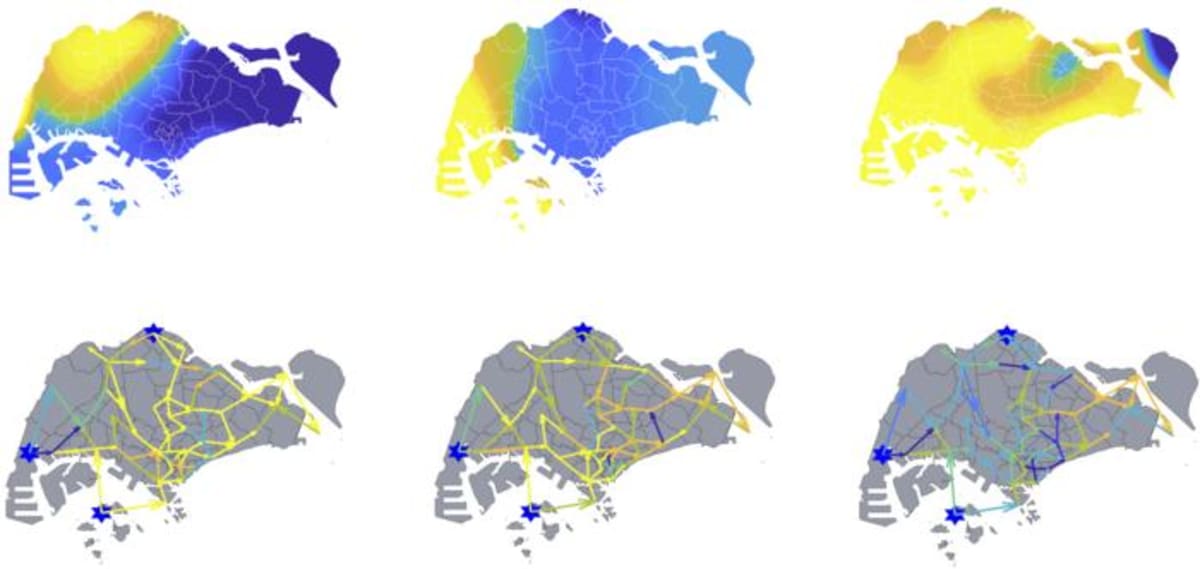
Singapore served as the perfect test case with only one car per eight residents. The researchers used mobile phone data to track where vehicles parked throughout the day, revealing patterns that made the solution even more effective.
Commercial districts fill with parked cars exactly when solar generation peaks during daytime hours. Residential areas see the opposite pattern, but together they create a balanced system.
The neighborhood approach reduced maximum transmission line loads by 18 percent during storm days. It also smoothed daily demand curves without requiring any new infrastructure.
The Ripple Effect
This breakthrough matters most for tropical regions, which will soon house half the world's population. These areas receive abundant sunshine but also experience frequent afternoon thunderstorms that complicate solar adoption.
The solution makes solar power more reliable without the massive costs that often prevent developing cities from going green. Cities can integrate more renewable energy using existing roads, parking spaces, and electrical grids.
Even better, the approach requires surprisingly few vehicles. The fact that it works in car-light Singapore means it could succeed in cities across Southeast Asia, Latin America, and Africa where car ownership remains low.
The technology for connecting cars to grids already exists. The missing piece was understanding how to coordinate charging and discharging at the right scale to maximize impact.
Now tropical cities have a roadmap for reliable solar power that doesn't break the bank or require years of construction. The batteries they need are already on four wheels, waiting in parking spaces when storms roll through.
More Images
Based on reporting by Google News - Electric Vehicle
This story was written by BrightWire based on verified news reports.
Spread the positivity!
Share this good news with someone who needs it
%2Ffile%2Fauthors%2F1610682923998940344.jpg)