Electric Ships Could Cut Maritime Emissions 20% by 2030
Battery-powered ships are already making economic sense for short routes, and a new study shows they could slash nearly a fifth of shipping emissions within six years. The best part? It's profitable right now.
📺 Watch the full story above
Shipping doesn't need to go fully electric to make a massive dent in global emissions, and the math is finally proving it.
A new study published in the Nature journal family reveals that battery-electric ships could handle 30% of maritime energy use by 2030. That translates to cutting nearly 20% of the industry's greenhouse gas emissions, and here's the surprising part: about 90% of those potential electric routes already make financial sense today.
The shipping industry has long been painted as impossible to clean up. Everyone pictures massive container ships crossing oceans for weeks without stopping, and sure, those vessels aren't ready for batteries yet.
But ferries, coastal ships, inland vessels, port craft, and short-sea routes tell a different story. These ships make frequent stops, travel shorter distances, and operate in patterns that work perfectly with today's battery technology.
The study stands out because it analyzed real vessel categories, port constraints, and fuel costs across the entire short-sea shipping sector. This wasn't a single demonstration project or a company promoting its own product.
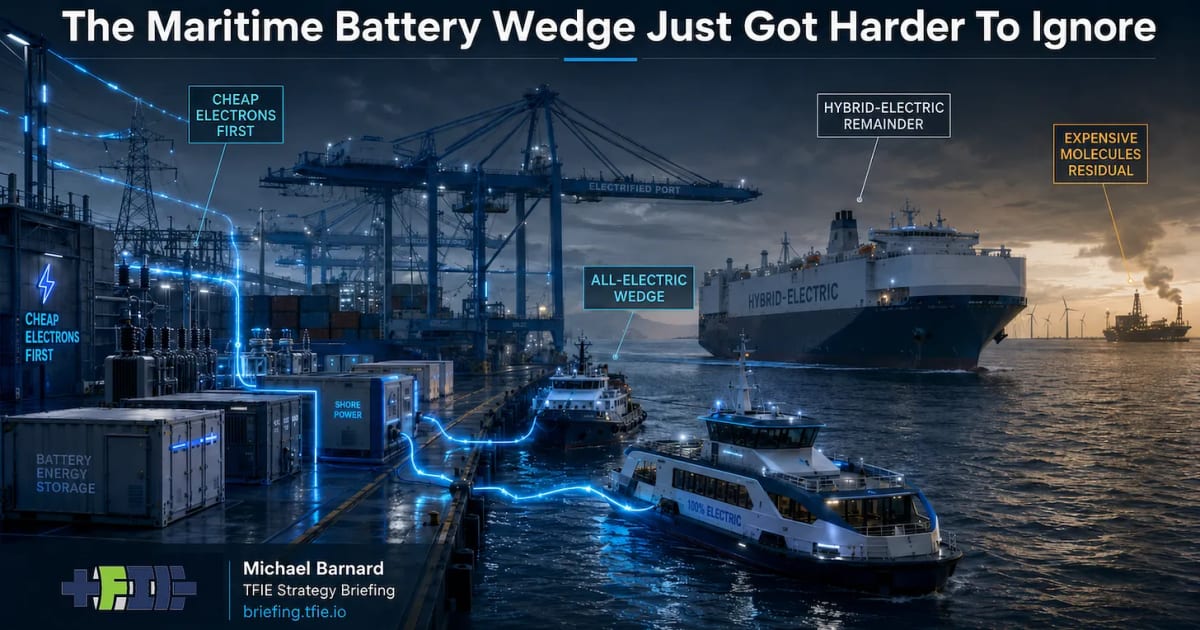
What makes electric ships even more attractive is what they're competing against. As regulations tighten, shipping companies will need to switch from cheap fossil fuels to expensive low-emission alternatives like biomethanol, ammonia, or synthetic hydrogen fuels. These replacement fuels are costly, complicated to handle, and still waste most of their energy as heat.
Electric ships skip all that. They plug in at ports that already have power infrastructure, use energy efficiently, and avoid building entirely new global fuel supply chains.
The Ripple Effect
Even ships that can't go fully electric can still run on batteries near ports, through canals, in national waters, and during maneuvering. They only need to burn fuel for the parts of their journey where batteries don't yet reach. This hybrid approach could displace even more fuel use than the study's already impressive numbers suggest.
Ports will need upgrades to charging infrastructure, substations, and grid connections. But that's the same challenge facing electric trucks, buses, and rail yards, and cities are already building that infrastructure. Expanding it to include ships is far simpler than inventing entirely new fuel types.
Battery costs keep dropping faster than research models predict, especially for the lithium iron phosphate systems that work well for marine use. Studies that looked cautious just a few years ago are already outdated by today's prices.
The transition is already beginning, not because of future breakthroughs, but because the numbers work right now.
More Images
Based on reporting by CleanTechnica
This story was written by BrightWire based on verified news reports.
Spread the positivity!
Share this good news with someone who needs it