Engineer Wins Nikon Contest With Rare Disease Discovery
A Chinese optical engineer captured the first super-resolution video of abnormal cilia movement in a child's airways, winning Nikon's prestigious microscopy competition. His breakthrough imaging technique helps doctors understand a rare genetic respiratory disorder without harming living tissue.
Tiny hairlike structures in our lungs never stop moving, sweeping away germs and dust with every breath, but for children born with a rare genetic disorder, those crucial cilia don't work right.
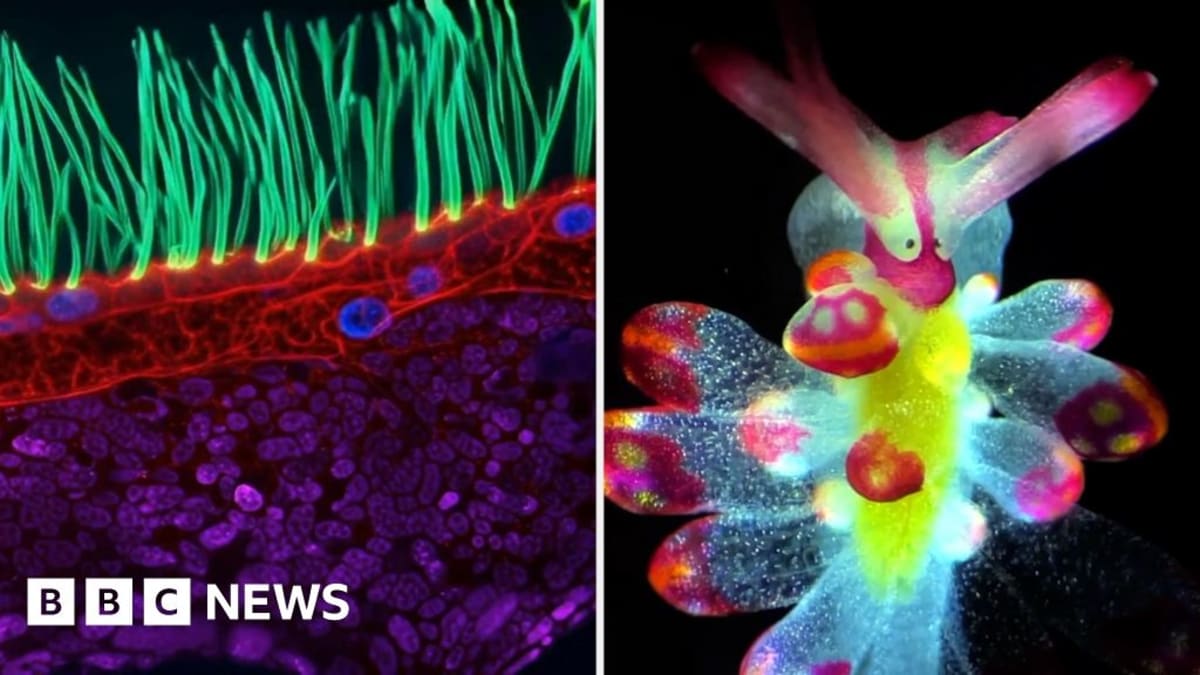
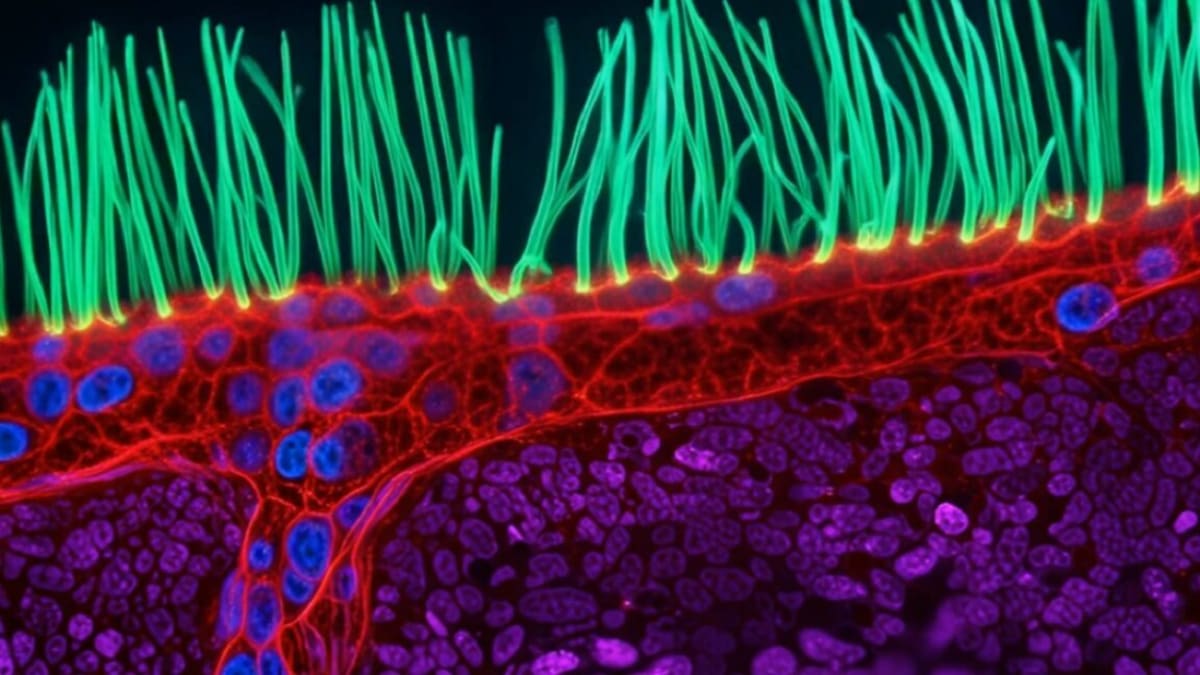
Ning Xu, an optical engineer at Tsinghua University in Beijing, just won Nikon's 2024 Small World in Motion competition for capturing the first super-resolution video of those abnormal cilia movements. His entry beat 346 other submissions from 40 countries.
The video shows cilia from a child with Primary Ciliary Dyskinesia, a genetic condition where the hairlike structures lining the airways are either missing, misshapen, or move incorrectly. When cilia can't sweep properly, mucus and irritants build up in the lungs, causing chronic respiratory infections and serious complications.
Here's the challenge: these cilia are incredibly tiny and beat incredibly fast. Doctors need to watch them move for at least 10 seconds to diagnose the disease, but traditional high-resolution microscopes use intense light or fluorescent dyes that damage or kill living cells.
Xu solved this problem using diffractive super-resolution microscopy, a cutting-edge technique he helped develop. The system uses multiple light waves and a digital micromirror to shape light so precisely that it captures rapid movement at high resolution while exposing living tissue to minimal light.
"When people watch cilia beating, they immediately understand that something beautiful and important is happening inside us," Xu said. "This competition turns microscopy into a shared language."
Why This Inspires
Xu's innovation represents more than just a beautiful video. His imaging technique gives doctors a new tool to diagnose Primary Ciliary Dyskinesia earlier and more accurately, potentially helping thousands of children worldwide get faster treatment.
The technology he developed could also help researchers study other conditions where cell movement matters, from fertility issues to cancer metastasis. By finding ways to observe living cells without harming them, engineers like Xu are opening doors scientists couldn't peek through before.
The Small World in Motion competition, founded in 2011 as a spinoff of Nikon's 50-year-old photography contest, celebrates these moments where art meets science. This year's other winners included videos of jellyfish larvae suspended in water droplets, synchronized cell division, and the inner workings of plant cells.
Every breakthrough in medical imaging starts with someone figuring out how to see what was previously invisible, and this year's winning video proves that sometimes the most important discoveries also happen to be breathtaking.
More Images



Based on reporting by Ars Technica Science
This story was written by BrightWire based on verified news reports.
Spread the positivity!
Share this good news with someone who needs it