Engineer's Ice Towers Solve Ladakh's Water Crisis
A simple observation of ice under a bridge sparked an innovation that now stores millions of liters of water for drought-stricken communities in the Himalayas. Sonam Wangchuk's cone-shaped ice stupas are transforming how remote villages survive climate change.
High in the Himalayan region of Ladakh, farmers and herders faced a growing crisis as climate change disrupted their water supply, creating a crucial dry month that threatened their crops and livestock.
Engineer and educator Sonam Wangchuk spotted a clue while crossing a bridge in summer 2013. A mound of ice sat sheltered beneath it, melting slowly despite the heat.
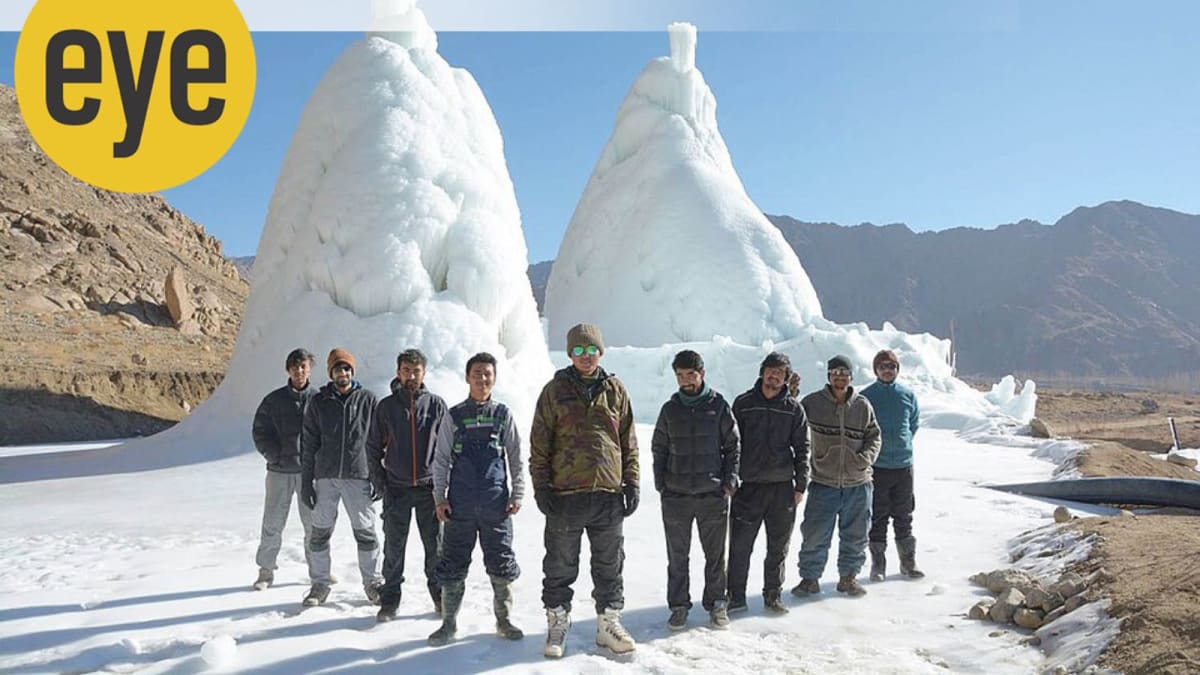
That observation sparked a brilliant question: What if we could store winter water as massive ice cones that release it slowly when spring crops need it most? The cone shape, inspired by traditional Buddhist stupas, has the smallest surface area exposed to sun, making it melt slower than any other form.
On a freezing winter night when temperatures hit minus 30 degrees Celsius, Wangchuk tested his theory. He piped water from a mountain stream through a narrow pipe with a fine nozzle, then shot it skyward. The spray froze instantly, forming a 6-foot ice tower that held 150,000 liters of water.
By 2015, he had built versions storing 1.5 million liters. Communities across Ladakh now create these frozen reservoirs at different elevations, ensuring water flows continuously as lower stupas melt first, followed by higher ones.
The innovation does more than just solve water problems. It shows that climate solutions work best when designed by people who understand their local environment, not imposed from distant cities.
Why This Inspires
Wangchuk's breakthrough came from paying attention to his surroundings and asking a simple question. He proved that you don't need massive budgets or complex technology to tackle climate challenges, just curiosity and willingness to experiment.
His work earned him the prestigious Rolex Prize and the Ramon Magsaysay Award. More importantly, it inspired communities across high-altitude regions to adapt the concept for their own needs.
The ice stupas demonstrate what happens when we trust local innovators to solve local problems. Each region faces unique climate challenges that require custom solutions, not one-size-fits-all approaches designed in boardrooms far away.
Young minds equipped with good education and freedom to experiment can transform their communities. Wangchuk founded SECMOL to improve education in Ladakh, understanding that tomorrow's solutions will come from students encouraged to think creatively today.
The real magic happens when someone looks at ordinary things differently, asking "what if" instead of accepting limitations. That ice under the bridge could have been just ice, but to an imaginative mind, it became the answer thousands of people were searching for.
Based on reporting by Google News - Climate Solution
This story was written by BrightWire based on verified news reports.
Spread the positivity!
Share this good news with someone who needs it