Ethiopia and Brazil Partner to Transform Coffee Innovation
Ethiopia's largest coffee group just teamed up with Brazil's top agricultural research institute to share cutting-edge farming technology. The partnership could revolutionize how Africa's oldest coffee producer grows and exports its most valuable crop.
Two of the world's coffee powerhouses are joining forces to bring 21st-century farming methods to Ethiopia's ancient coffee heartland.
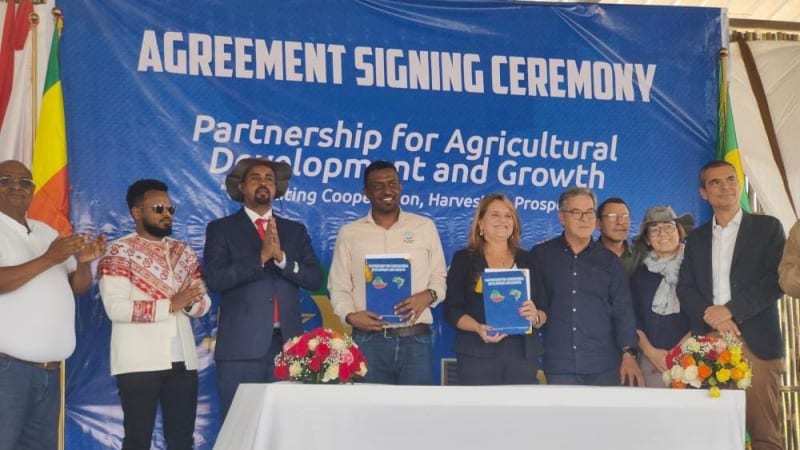
Ethiopia's Kerchanshe Group and Brazil's Agricultural Research Corporation (Embrapa) signed a groundbreaking cooperation agreement this month to share modern agricultural technology and coffee development expertise. The partnership targets coffee farms in Debeka, located in Ethiopia's West Guji Zone, where some of the country's finest beans are grown.
The timing couldn't be better. Ethiopia relies on coffee as its flagship export, while Brazil has spent decades perfecting tropical agriculture through science and innovation. Now Brazil is sharing that hard-won knowledge.
"This agreement will play a significant role in supporting Ethiopia's economic development," said State Minister of Agriculture Efa Muleta. The Ethiopian government has pledged direct support to ensure the partnership delivers real results for farmers.
The collaboration will focus on improving coffee quality, building worker skills, and introducing climate-smart farming practices. Embrapa brings world-class expertise in plant genetics, soil management, and sustainable low-carbon production systems to the table.
Kerchanshe Group CEO Israel Degafa sees the partnership as a bridge between two agricultural giants. "This agreement framework will help elevate cooperation between the two countries to a higher level, especially through the transfer of Brazil's agricultural development experience," he said.
The Ripple Effect
Kerchanshe Group already exports coffee seedlings to more than 20 countries, showing Ethiopia's growing influence in global coffee markets. This new partnership could amplify that impact exponentially.
When Ethiopia modernizes its coffee production, smallholder farmers benefit first. Better technology means higher yields, improved quality, and stronger incomes for rural communities that depend on coffee cultivation.
The deal also signals something bigger: South-South cooperation is alive and thriving. Rather than waiting for Western aid or investment, developing nations are sharing solutions that actually work in tropical climates and resource-constrained environments.
Embrapa transformed Brazil from a modest agricultural producer into a global farming superpower over the past 50 years. If even a fraction of that knowledge reaches Ethiopian coffee farms, the results could reshape East African agriculture.
This partnership proves that the future of global food security might be written in cooperation between countries that understand each other's challenges best.
Based on reporting by Regional: ethiopia development (ET)
This story was written by BrightWire based on verified news reports.
Spread the positivity!
Share this good news with someone who needs it