Ethiopia Plants 48 Billion Trees in 7-Year Green Revival
Since 2019, Ethiopia has mobilized millions of citizens in one of the world's largest ecosystem restoration movements, planting 48 billion seedlings to reverse decades of environmental damage. What started as a tree-planting campaign has grown into a national transformation connecting climate resilience with economic development.
When 27 million Ethiopians planted 714 million trees in a single day last July, they weren't just breaking records. They were rebuilding their country's future, one seedling at a time.
Ethiopia launched its Green Legacy Initiative in 2019 under Prime Minister Abiy Ahmed, transforming environmental restoration from a government program into a citizen-driven movement. Since then, the East African nation has produced more than 48 billion seedlings and mobilized participation across every sector of society.
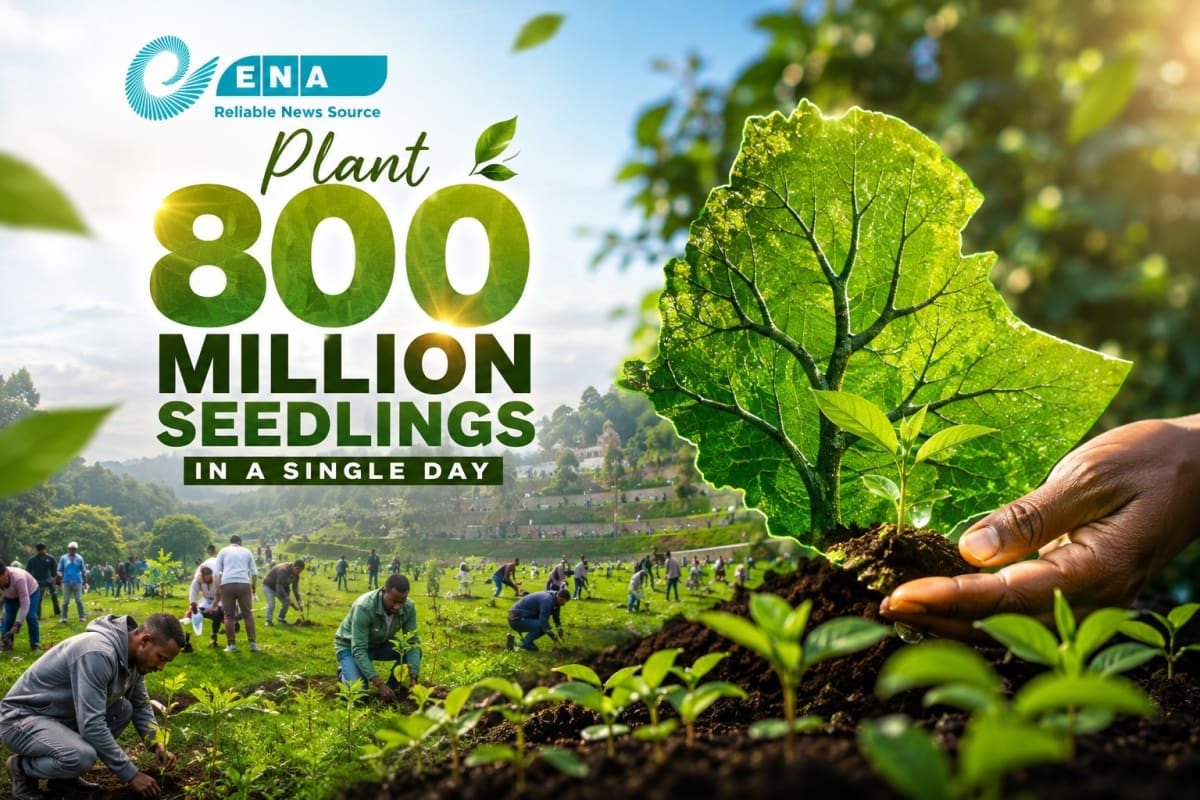
The scale is staggering. Farmers, students, teachers, civil servants, soldiers, religious leaders, and volunteers gather each rainy season on degraded hillsides, riverbanks, and farmlands with seedlings and tools. This year, Ethiopia aims to plant 800 million trees in a single day, which would rank among the largest environmental mobilizations ever attempted.
But the initiative goes far deeper than planting trees. Ethiopia faced a mounting crisis as decades of deforestation, agricultural expansion, and climate variability stripped away forest cover. Every rainy season, millions of tons of fertile topsoil washed into rivers and reservoirs, reducing agricultural productivity and threatening the livelihoods of millions who depend on farming.
The government recognized that environmental degradation wasn't just an ecological problem but an economic one. Forest loss meant declining crop yields, water shortages, flooding, reduced hydroelectric efficiency, and increased food insecurity across vulnerable communities.
The Green Legacy Initiative treats restoration as a comprehensive strategy integrating soil and water conservation, watershed rehabilitation, biodiversity protection, and sustainable agriculture. Unlike conventional planting campaigns that end when seedlings enter the ground, Ethiopia follows each tree through production, site selection, planting, monitoring, and long-term maintenance.
The approach is working. Restored watersheds are improving water infiltration and reducing flooding. Replanted hillsides are stabilizing soil and protecting agricultural land. Communities are gaining ownership over local ecosystems while creating sustainable economic opportunities through agroforestry.
The Ripple Effect
The transformation extends beyond environmental metrics. Ethiopia has shifted how an entire nation understands its relationship with the land. Government institutions adjust work schedules during planting campaigns, schools integrate environmental stewardship into education, and religious institutions promote ecological responsibility as a moral obligation.
The initiative demonstrates that environmental recovery and economic development aren't competing priorities but mutually reinforcing goals. Healthier ecosystems mean more productive farms, reliable water sources, and stronger climate resilience for future generations.
Ethiopia has prepared 8 billion additional seedlings for the 2026 planting season. As climate change accelerates globally, this East African nation is proving that massive-scale restoration is possible when environmental protection becomes a shared national mission rather than a government mandate.
In Ethiopia's mountains, valleys, and river basins, millions of hands are literally reshaping the landscape and writing a story of renewal that the entire world can learn from.
More Images
Based on reporting by Regional: ethiopia development (ET)
This story was written by BrightWire based on verified news reports.
Spread the positivity!
Share this good news with someone who needs it