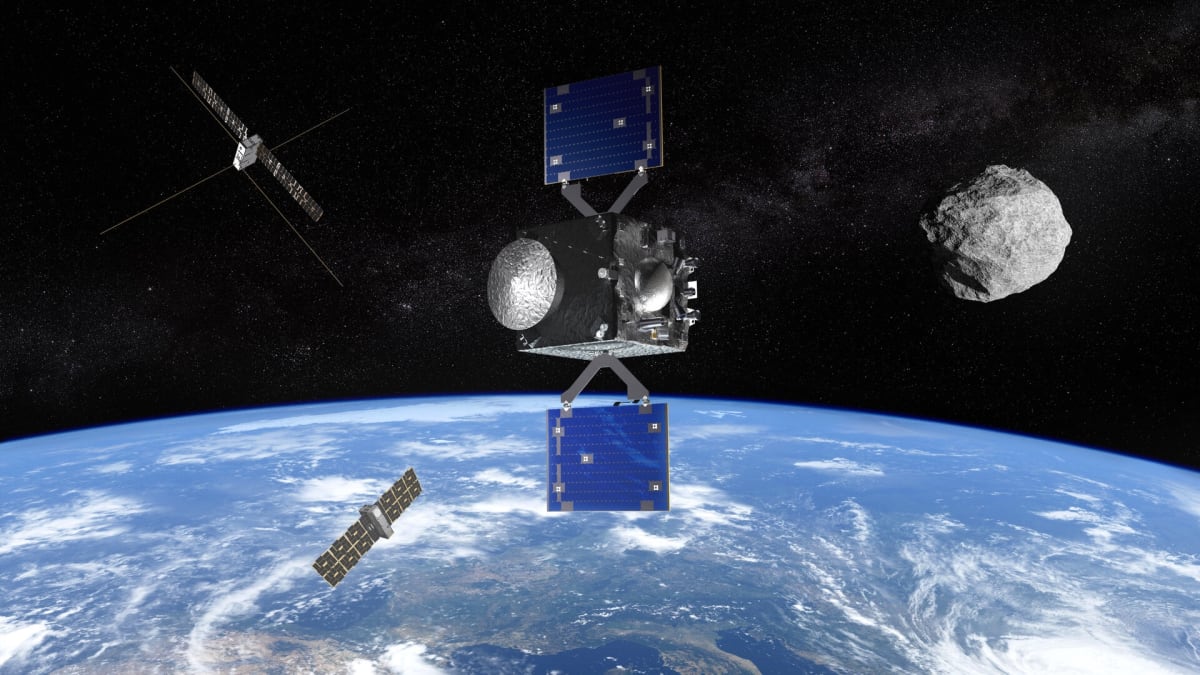
Europe and Japan Team Up for 2029 Asteroid Mission
Two space agencies are joining forces to study asteroid Apophis when it zooms past Earth in 2029, offering scientists a once-in-a-lifetime chance to learn how gravity reshapes space rocks. The mission shows international cooperation reaching new heights in planetary defense.
In 2029, an asteroid named Apophis will pass closer to Earth than some of our satellites, and scientists just locked in plans to witness this cosmic spectacle up close.
The European Space Agency and Japan Aerospace Exploration Agency signed a formal agreement in Berlin on May 7 to launch the Ramses mission together. They'll send a spacecraft to meet Apophis in February 2029, two months before the asteroid swings within 20,000 miles of Earth.
That's closer than many weather satellites orbit. While Apophis poses zero threat to our planet, its flyby offers researchers something incredibly rare: a front-row seat to watch how Earth's gravity physically changes an asteroid's surface in real time.
Japan is bringing critical technology to the mission, including solar panels to power the spacecraft and a thermal camera to capture infrared images. They're also providing the H3 rocket that will launch Ramses toward its target in April 2028.
The partnership reflects months of planning that started with a handshake agreement in November 2024. Both agencies had to secure funding first, with ESA getting the green light at their ministerial meeting in November 2025.
"We are moving decisively from shared intention to concrete implementation," said ESA Director General Josef Aschbacher. Italy's OHB Italia will build the spacecraft as prime contractor.
The Ripple Effect
The Ramses mission is just one part of a growing international effort to study Apophis during its historic pass. NASA's OSIRIS-APEX spacecraft, which previously collected samples from another asteroid, will arrive at Apophis right after the flyby to study any changes.
China has proposed sending two small spacecraft called CROWN/Apophis to join the observation party. Private companies are also getting creative, with one Australian firm planning to repurpose an old communications satellite for asteroid photography and another company exploring sponsorship deals to fund their mission concept.
This international enthusiasm isn't just about one space rock. Every mission to Apophis helps scientists understand near-Earth asteroids better, improving our ability to track and potentially deflect any future threats.
The 2029 flyby won't happen again in our lifetimes. By working together across borders and space agencies, humanity is turning a rare celestial event into a shared opportunity for discovery that benefits everyone.
More Images


Based on reporting by SpaceNews
This story was written by BrightWire based on verified news reports.
Spread the positivity!
Share this good news with someone who needs it

%2Ffile%2Fattachments%2F2997%2F14300024_667918.jpg)