European Honeybees Can Count, Australian Scientists Discover
Australian researchers have discovered that European honeybees possess numerical abilities, potentially using this skill to assess flower abundance in nature. This breakthrough could inspire new biologically-based technology designs.
Tiny pollinators just revealed a big secret about their brains.
Australian researchers at Monash University have discovered that European honeybees can process numbers, a cognitive ability once thought to be reserved for larger-brained animals. The finding opens exciting doors for both understanding nature and developing smarter technology.
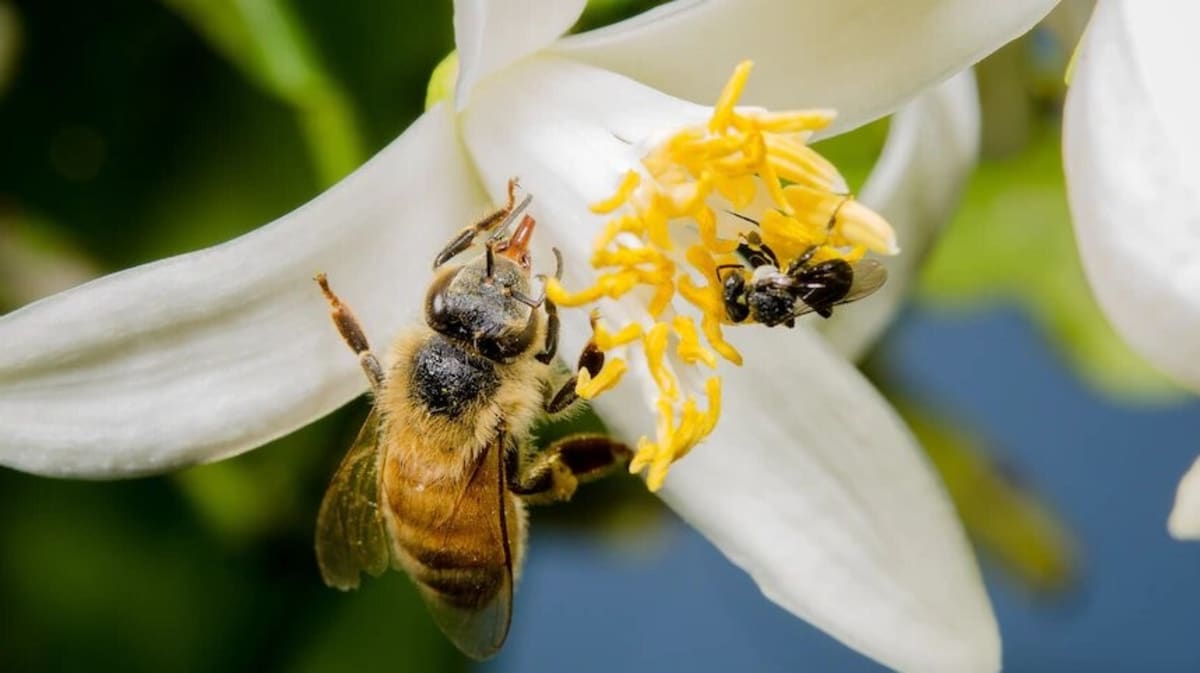
Dr. Scarlett Howard, a researcher and Senior Lecturer in the school of biological sciences at Monash University, led the groundbreaking study. Her team found that these essential pollinators may use their counting abilities to assess the abundance of flowers or petals when foraging in the wild.
The discovery matters beyond bee science. European honeybees are crucial for crop pollination and food security worldwide, making any insight into their behavior valuable for agriculture and conservation efforts.
But the implications stretch even further into technology. The research could help engineers create biologically inspired designs that mimic how bees process numerical information efficiently with such tiny brains.
Why This Inspires
This discovery reminds us that intelligence comes in many forms and sizes. Bees, with brains smaller than a grain of rice, can perform mathematical tasks that require sophisticated neural processing.
The finding also showcases how studying nature's solutions can advance human innovation. By understanding how bees count with minimal neural resources, scientists might develop more efficient algorithms and computing systems that use less energy.
Australian researchers continue leading the charge in understanding these remarkable creatures. Their work not only protects vital pollinators but also unlocks nature's secrets to solve modern technological challenges.
The next time you see a bee visiting flowers in your garden, you might be watching a tiny mathematician at work.
More Images



Based on reporting by Google News - Researchers Find
This story was written by BrightWire based on verified news reports.
Spread the positivity!
Share this good news with someone who needs it