Europe's Battery Boom Stores Clean Energy, Eases Blackouts
Europe just crossed 100 GWh of battery storage capacity, enough to power 75 million homes and prevent millions of euros in wasted solar and wind energy. Despite recent concerns, experts say batteries pose only a "tiny risk" to grid stability while solving Europe's renewable energy storage challenge.
Europe is finally solving one of clean energy's biggest headaches, and the solution is charging up faster than anyone expected.
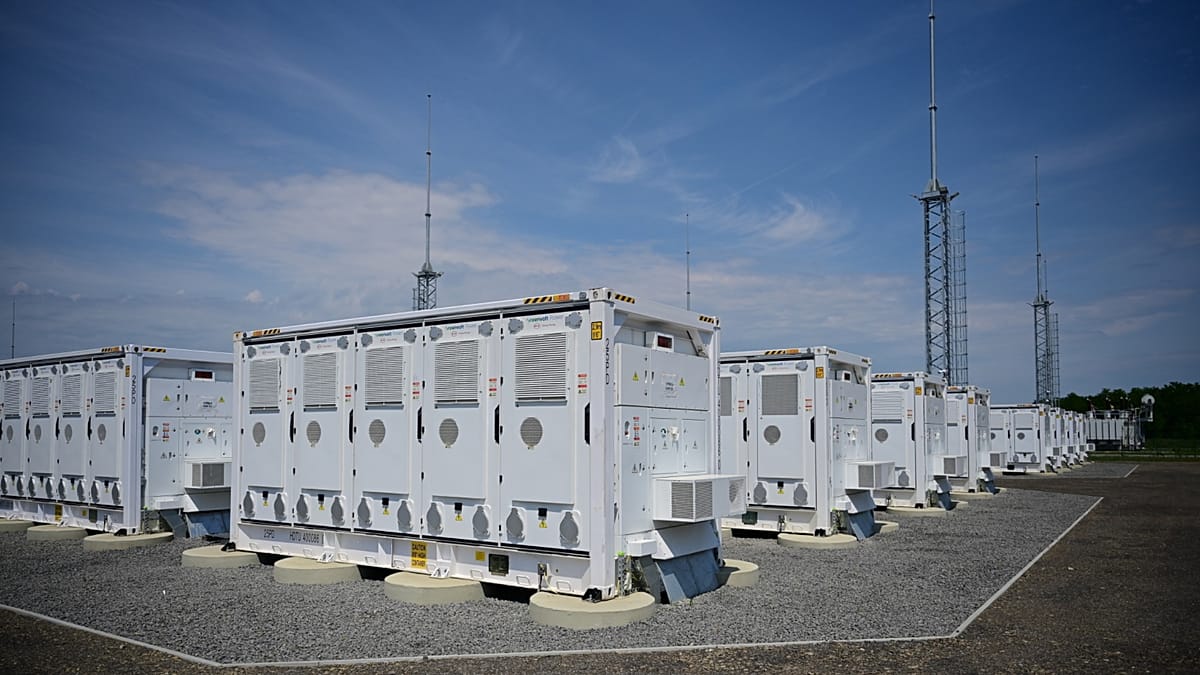
The continent just surpassed 100 gigawatt hours of battery storage capacity for the first time, installing 36 GWh in 2025 alone. That's enough power to keep roughly 75 million homes running when the sun sets and the wind stops blowing.
The timing couldn't be better. Europe currently wastes millions of euros worth of solar and wind energy because these sources produce power when demand is low. Sometimes supply gets so high that electricity prices actually turn negative, meaning producers pay to give energy away.
Batteries fix this beautifully simple problem with an equally simple solution. They store electricity from sunny afternoons and breezy nights, then release it during evening hours when families turn on lights, cook dinner, and charge devices.
Last week, concerns emerged that Britain's battery boom might overwhelm the grid and trigger blackouts. A UK government advisory panel suggested that batteries charging simultaneously during stress events could create problems that need better modelling.
The Bright Side
Adrian Hiel, director of the Electrification Alliance, isn't worried. "This is the same challenge we have been managing with solar power for the last 20 years," he tells Euronews. "We have steadily gotten better and better at ensuring installations improve the grid rather than harm it."
The solution involves two proven strategies. First, grid operators will improve their models to predict how battery fleets behave, just like they learned to forecast rooftop solar patterns over the past two decades. Second, companies are already aggregating thousands of batteries into networks that respond instantly to grid needs.
This aggregation approach already works with smart electric vehicle charging across Europe. A grid operator can contact one battery aggregator to either start consuming or discharging quickly, rather than managing millions of individual installations.
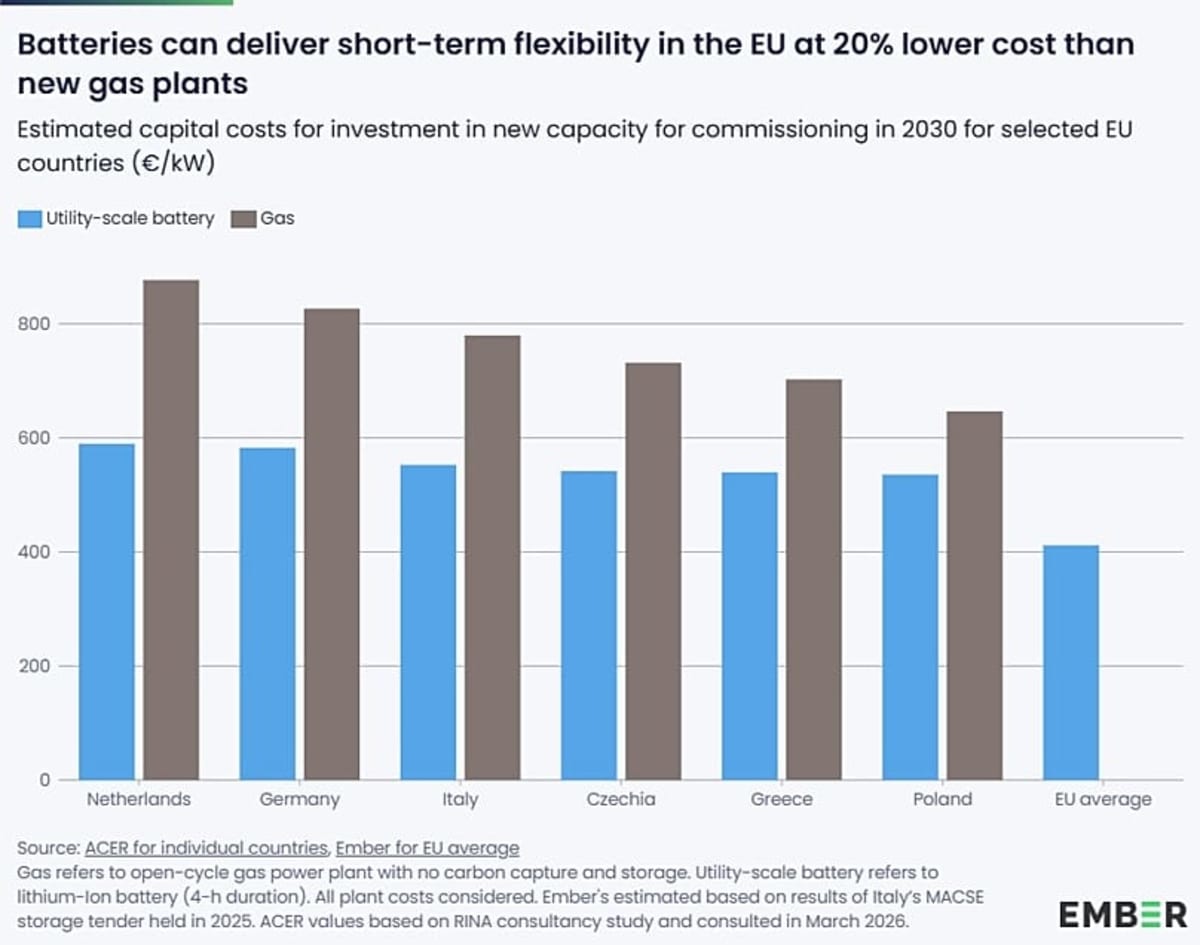
The economics make the technology even more attractive. Battery costs have plummeted 90 percent since 2010 thanks to better chemistry and manufacturing. By 2030, utility scale batteries could deliver short term flexibility at 20 percent lower cost than new gas plants, according to energy think tank Ember.
Within four years, EU batteries could deliver in a single hour more than 80 percent of the power that all EU gas power plants combined generate in the same period. That's massive backup capacity without burning fossil fuels.
SolarPower Europe calls storage "a strategic asset, instrumental to strengthening Europe's resilience, competitiveness and energy sovereignty" as the bloc pushes toward 69 percent renewable energy by 2030 and 80 percent by 2050.
Batteries are going to be a much bigger help to the grid than hindrance.
More Images



Based on reporting by Euronews
This story was written by BrightWire based on verified news reports.
Spread the positivity!
Share this good news with someone who needs it