
Europe's Tiny Tech Cities Punch Above Their Weight
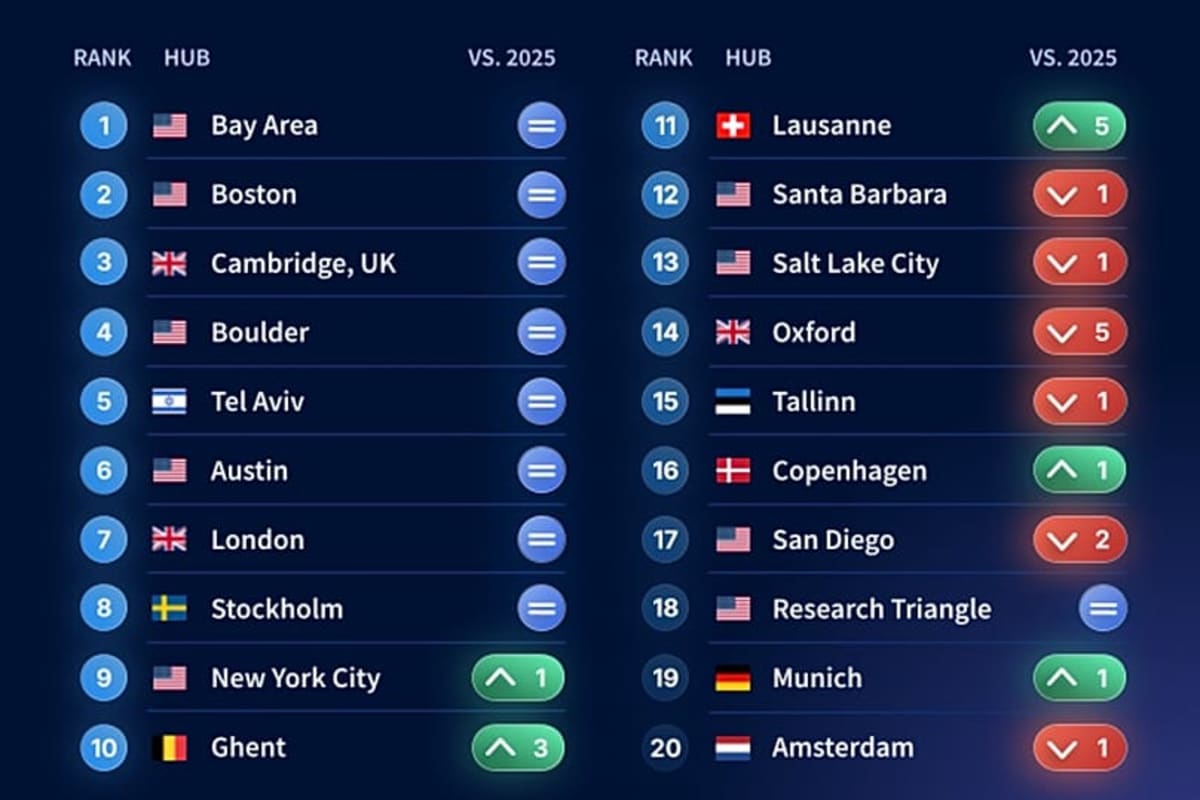
Small European cities are dominating global tech rankings by packing more innovation per person than anywhere else. A new report shows how places like Ghent, Belgium and Zagreb, Croatia are building outsized tech ecosystems that rival Silicon Valley's density.
Europe has cracked the code on tech success, and it doesn't require being the biggest player in the room. The continent is home to more high-performing tech ecosystems relative to population size than any other region in the world, according to the new Global Tech Ecosystem Index from Dealroom.co.
Take Ghent, Belgium. This city of under 300,000 people ranks second in Europe among smaller cities for tech density. It's powered by biotech giant Argenx, valued at €41 billion, plus a thriving pipeline of university spinouts creating new companies each year.
The secret sauce isn't just one big company. Ghent combines strong academic roots at Ghent University with a high rate of founders launching startups, while simultaneously building a new software sector led by companies like Aikido Security.
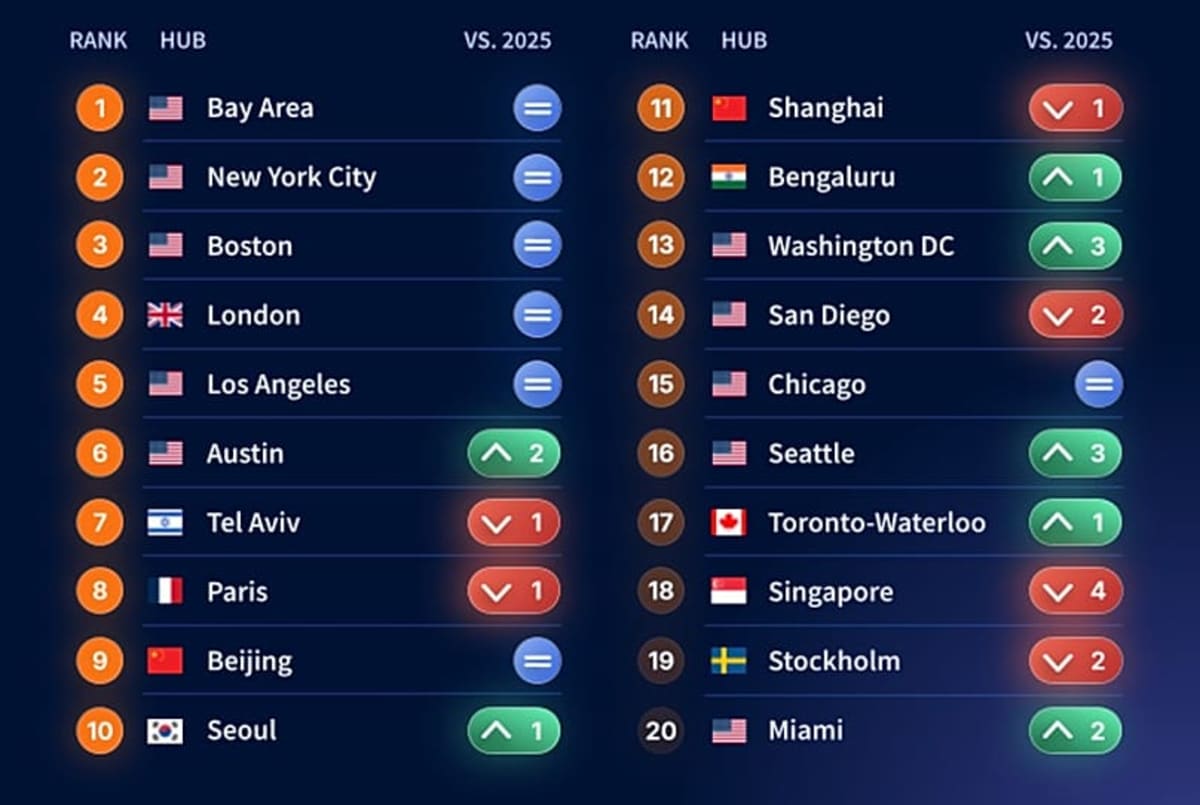
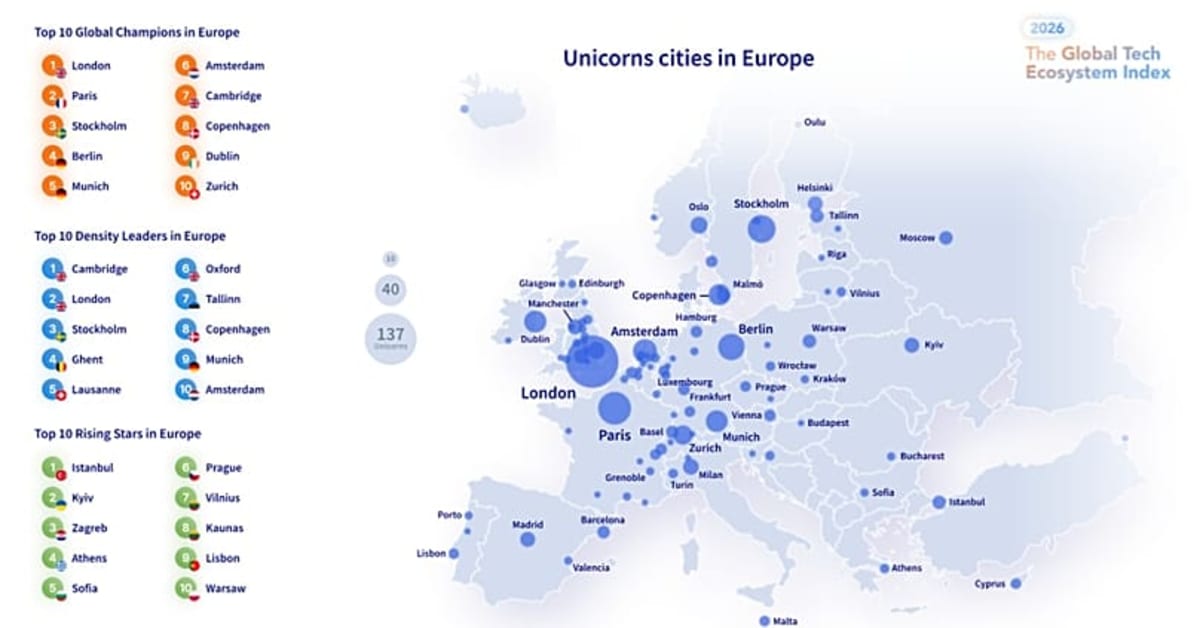
London reclaimed its crown as Europe's top tech hub in 2026, ranking fourth globally and jumping ahead of Los Angeles, Austin, and Tel Aviv. The city attracted €6 billion in AI investment alone in 2025, nearly doubling from the previous year. Overall, London tech companies raised €15.3 billion last year, up 45% from 2024, and the city now hosts 138 unicorn companies worth over $1 billion each.
Paris continues showing strength too, particularly in artificial intelligence. The French capital raised €4.3 billion in venture capital funding and houses leading AI companies including Mistral and AMI Labs. AI now accounts for roughly 30% of all venture capital investment across Europe.
The rising stars list reveals Eastern Europe's growing momentum. Zagreb, Croatia has become the fastest growing tech hub in the EU and ranks 11th worldwide for growth rate. Athens, Sofia, Prague, and Vilnius all appear in Europe's top five rising tech cities.
The Ripple Effect
What makes these smaller ecosystems special is their density of talent and resources. They're creating more value per person than sprawling tech capitals, proving that innovation doesn't require massive scale. These cities combine strong universities, supportive communities of founders, and focused expertise in areas like biotech, AI, and deep tech.
The model offers hope for cities everywhere. Stockholm became the only other European city besides London to break into the world's top 20, showing that Nordic innovation continues to thrive alongside traditional tech centers.
Istanbul is climbing fast too, ranking as the third rising star in the global tech scene. Kyiv maintains its position in the top ten rising stars despite ongoing challenges, demonstrating the resilience of Ukraine's tech community.
Innovation is spreading beyond traditional hubs, and Europe's small cities are leading the way.
More Images
Based on reporting by Euronews
This story was written by BrightWire based on verified news reports.
Spread the positivity!
Share this good news with someone who needs it