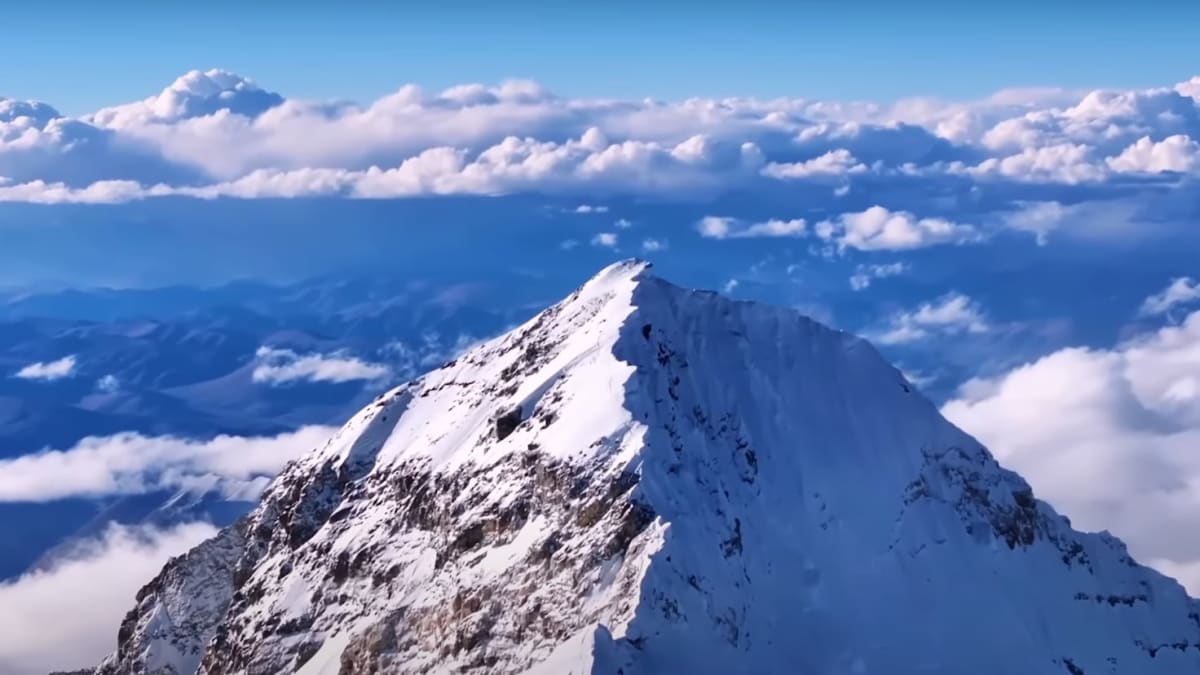
Everest Summit Was Ocean Floor 450 Million Years Ago
Scientists confirmed marine fossils on Mount Everest's peak, proving the world's highest point once thrived underwater. The discovery reveals how ancient ocean life became part of Earth's rooftop.
📺 Watch the full story above
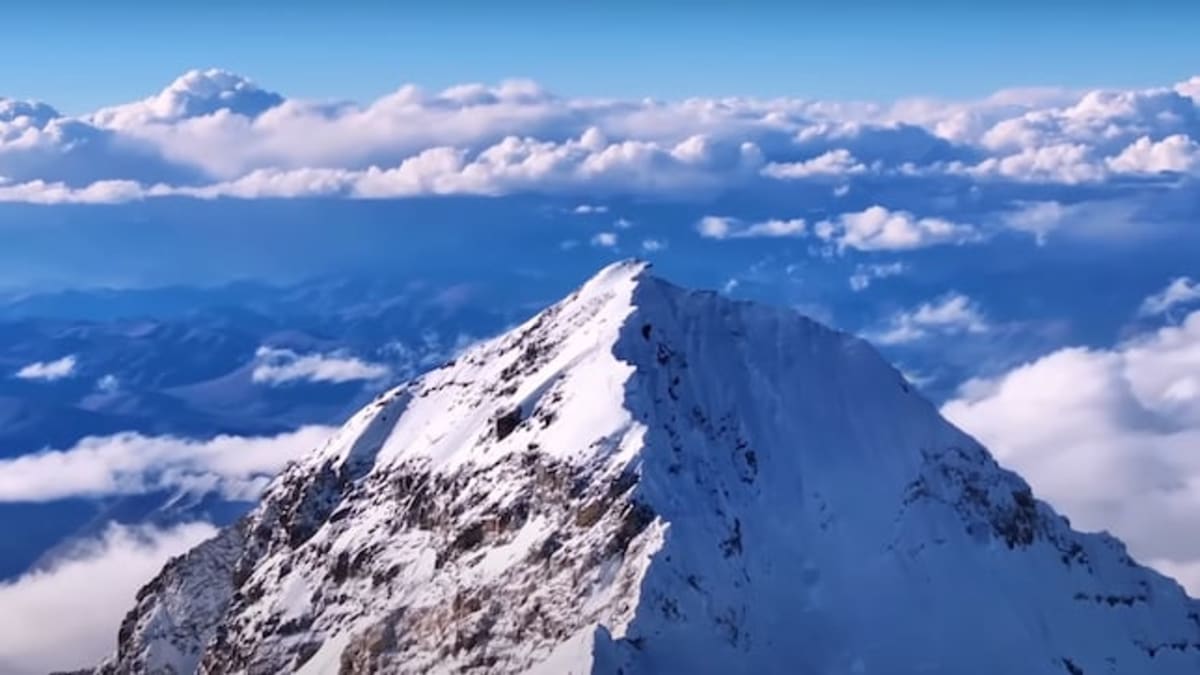
The summit of Mount Everest, now touching the sky at over 29,000 feet, spent millions of years buried under a warm, shallow sea teeming with life.
Researchers have confirmed the discovery of 450-million-year-old marine fossils at more than 13,000 feet above sea level on the world's tallest mountain. Inside limestone rocks near the peak, scientists identified remains of crinoids, trilobites, cephalopods, and brachiopods—creatures that once swam and crawled across the ancient Tethys Ocean floor.
These organisms lived their entire lives underwater, in tropical seas covering the region hundreds of millions of years before Everest existed. When they died, ocean sediments gradually buried their remains, compressing them into the limestone that now forms the mountain's rocky crown.
The transformation from seafloor to summit happened through the collision of continents. About 50 million years ago, the Indian continental plate crashed into the Eurasian plate with such force that it folded massive layers of ancient ocean sediment upward, creating the Himalayan mountain range.
This dramatic reshaping of Earth's surface continues today. The Himalayas still rise about a third of an inch each year as the two plates push against each other, making Everest slightly taller with each passing decade.
Why This Inspires
This discovery does more than reveal Everest's underwater past. It stands as living proof that our planet constantly reinvents itself, turning ocean floors into mountain peaks over deep time.
The fossils also validated a once-controversial idea. When German scientist Alfred Wegener proposed in 1915 that continents could move, many dismissed his theory as impossible. Discoveries like these marine fossils at extreme heights eventually proved him right, demonstrating that Earth's surface flows and shifts across millions of years.
Every limestone fragment at Everest's summit carries within it the story of ancient seas and the slow, powerful forces that lifted them skyward. What seems permanent and unchanging—even the roof of the world—is actually part of an ongoing transformation that stretches across hundreds of millions of years.
The finding reminds us that patience and persistence, whether in geological processes or scientific discovery, can move mountains.
More Images


Based on reporting by Google: fossil discovery
This story was written by BrightWire based on verified news reports.
Spread the positivity!
Share this good news with someone who needs it