Faith Leader Calls for Hope Amid Global Division
A World Council of Churches leader inspired theological students with a powerful message about building bridges across divisions while maintaining convictions. His sermon challenged future faith leaders to transform communities through compassion rather than conflict.
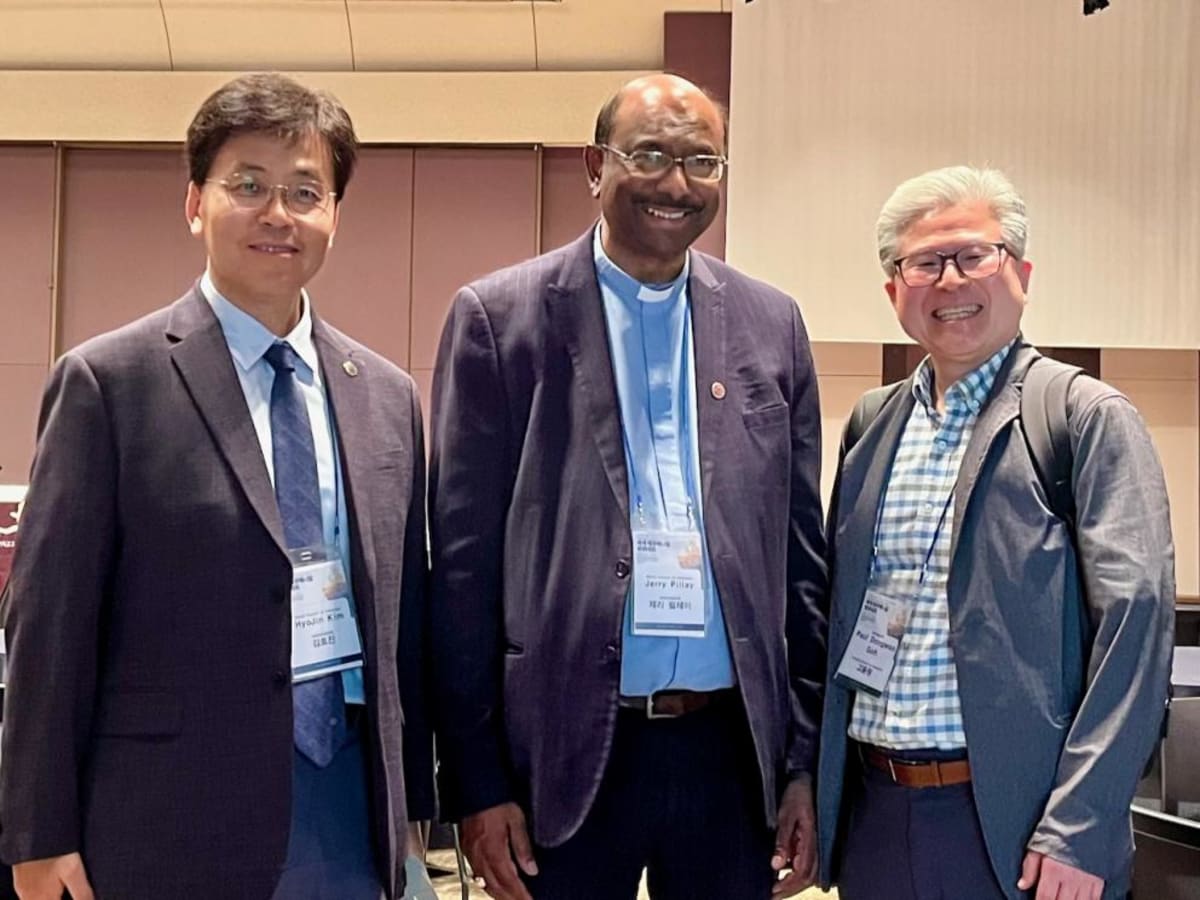
When Rev. Prof. Dr. Jerry Pillay stood before theological students in Vancouver, he delivered a message the world desperately needs to hear: we can hold strong beliefs without hatred and speak truth without cruelty.
The World Council of Churches general secretary addressed students at Vancouver School of Theology on September 17, using the biblical story of Esther to frame an urgent call for transformative leadership. His sermon came as the WCC Reference Group gathered to discuss their ongoing Pilgrimage for Justice, Reconciliation, and Unity.
Pillay acknowledged the heavy reality facing today's faith leaders. Wars, displacement, inequality, and ecological crisis dominate headlines and weigh on hearts.
But rather than offering empty optimism, he challenged students to see theological education as more than academic exercise. "The purpose of theology is not simply to fill your head. It is to open your heart," Pillay told the gathering.
The message resonated particularly in its practical wisdom about navigating disagreement. In an era of deep polarization, Pillay offered a roadmap for maintaining conviction while building bridges.
He drew on Jesus' call to love both neighbor and enemy, emphasizing that Christians must develop the capacity to live with difference without allowing disagreement to become division. This ability to engage across divides while staying rooted in values represents exactly the kind of leadership communities need.
Why This Inspires
Pillay's sermon offers something rare in discussions about global problems: a framework for action that anyone can apply. His vision doesn't require political power or vast resources, just courage and compassion.
The gathering itself demonstrates this principle in practice. Faith leaders from diverse backgrounds spent five days at the University of British Columbia working together toward reconciliation and unity, hosted by the Vancouver School of Theology and Canadian Council of Churches.
Pillay's closing words captured the essence of grounded hope. "God is not finished with the world. And God is not finished with the church. And God is certainly not finished with you."
That message reminds us that acknowledging suffering and maintaining hope aren't contradictory but companions in the work of healing our world.
Based on reporting by Google News - Reconciliation
This story was written by BrightWire based on verified news reports.
Spread the positivity!
Share this good news with someone who needs it