Father and Daughter Find 3,000-Year-Old Rock Art in Norway
A roadside stop near Oslo turned into an archaeological sensation when a rock art enthusiast and his daughter discovered Bronze Age carvings featuring ships, warriors, and mysterious handprints. The 3,000-year-old artwork was carved into rare soft stone, revealing intimate details that harder granite would have hidden.
Tormod Fjeld and his daughter weren't looking for history when they pulled over on Kolsatoppen hill near Oslo, but they stumbled onto something archaeologists had been missing for three millennia.
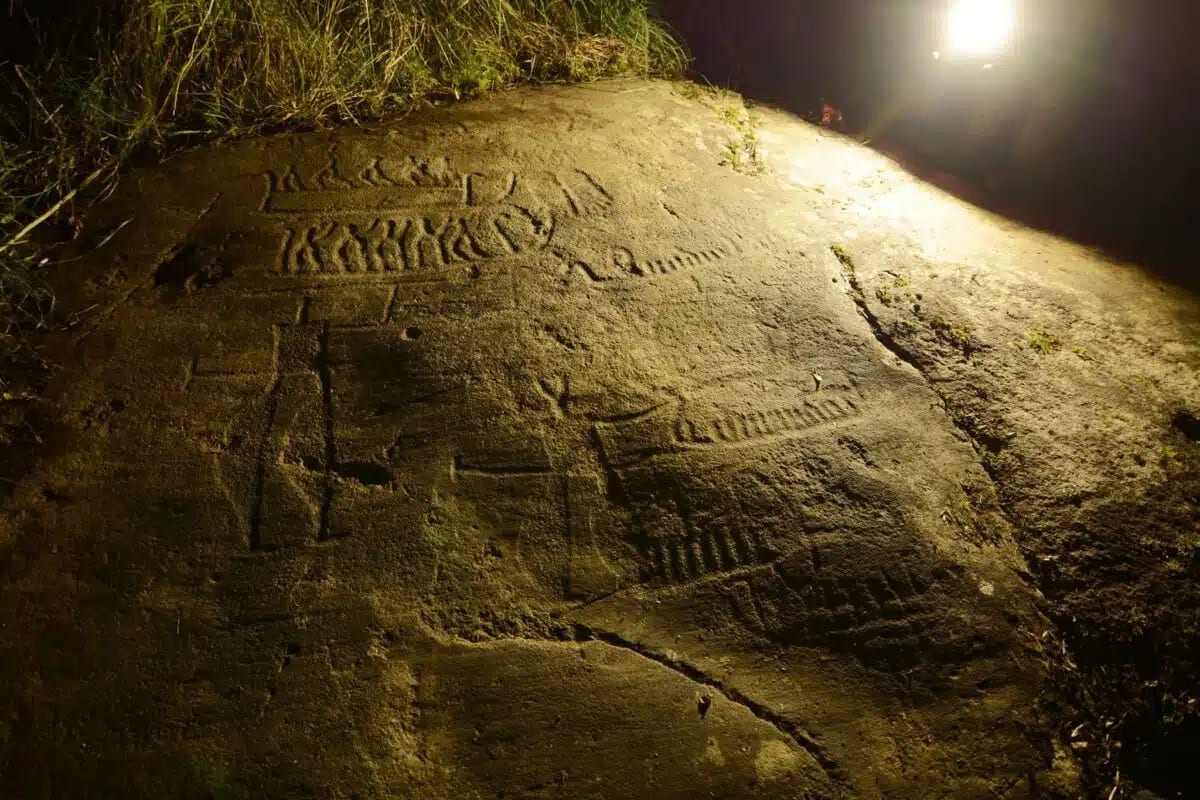
The pair discovered a panel of Bronze Age rock carvings estimated to be around 3,000 years old, featuring ships with helmeted warriors, human footprints, and an unusual handprint with broad fingers. What makes this find special isn't just the age but what the ancient artists chose to carve on.
Most Bronze Age rock art in Norway was etched into hard granite, built to withstand time. These carvings were made in sandstone, a softer material that captured every strike of the ancient tools in surprising detail.
"You can almost see each strike as a small indentation in the surface," Fjeld told Science Norway. The softer stone preserved individual marks that would have been lost in harder rock, giving researchers an intimate window into how Bronze Age artists worked.
Fjeld isn't a professional archaeologist, but he's identified around 70 rock art scenes across Norway using his own methods. He studies ancient coastlines and sun-facing rocks, tracking where maritime communities would have traveled and lived thousands of years ago.
The newly discovered panel shows ships both upright and upside down, with human figures aboard some of the vessels. The combination of a handprint and footprint adds what researchers call "a personal, almost intimate dimension" to the site, suggesting the location may have held ceremonial importance.
The Ripple Effect
Reidun Marie Aasheim, county archaeologist for Akershus, called Fjeld's discovery "very exciting" and highlighted a larger truth about cultural heritage. Professional archaeologists typically only search for sites when construction projects require surveys, leaving countless historical treasures waiting to be found.
"We don't have the resources to search the way Fjeld does, so we really appreciate his contributions," Aasheim told Norwegian newspaper Budstikka. His citizen science approach is helping fill gaps that official teams simply can't cover.
The discovery reminds us that history isn't just buried in remote locations or locked behind museum doors. Sometimes it's waiting on a hillside near a modern road, preserved for thousands of years until someone with curiosity and knowledge stops to look closely.
Fjeld's passion for interpreting ancient landscapes has already uncovered dozens of forgotten sites, and he shows no signs of slowing down. Each discovery adds another piece to understanding how Bronze Age Scandinavians lived, traveled, and expressed themselves through art.
The Bærum carvings now join Norway's rich archaeological record, offering future researchers a rare glimpse into ancient artistic techniques and the communities who created them 3,000 years ago.
More Images



Based on reporting by Google News - Science
This story was written by BrightWire based on verified news reports.
Spread the positivity!
Share this good news with someone who needs it