Fire Tornadoes Cut Oil Spill Cleanup Time in Half
Scientists have turned fire tornadoes into a powerful tool for cleaning up ocean oil spills, burning crude twice as fast while cutting pollution by 40%. The spinning flames could protect coastlines and marine life from disasters like the 2010 Deepwater Horizon spill.
Scientists just turned one of nature's most terrifying forces into a weapon against environmental disasters.
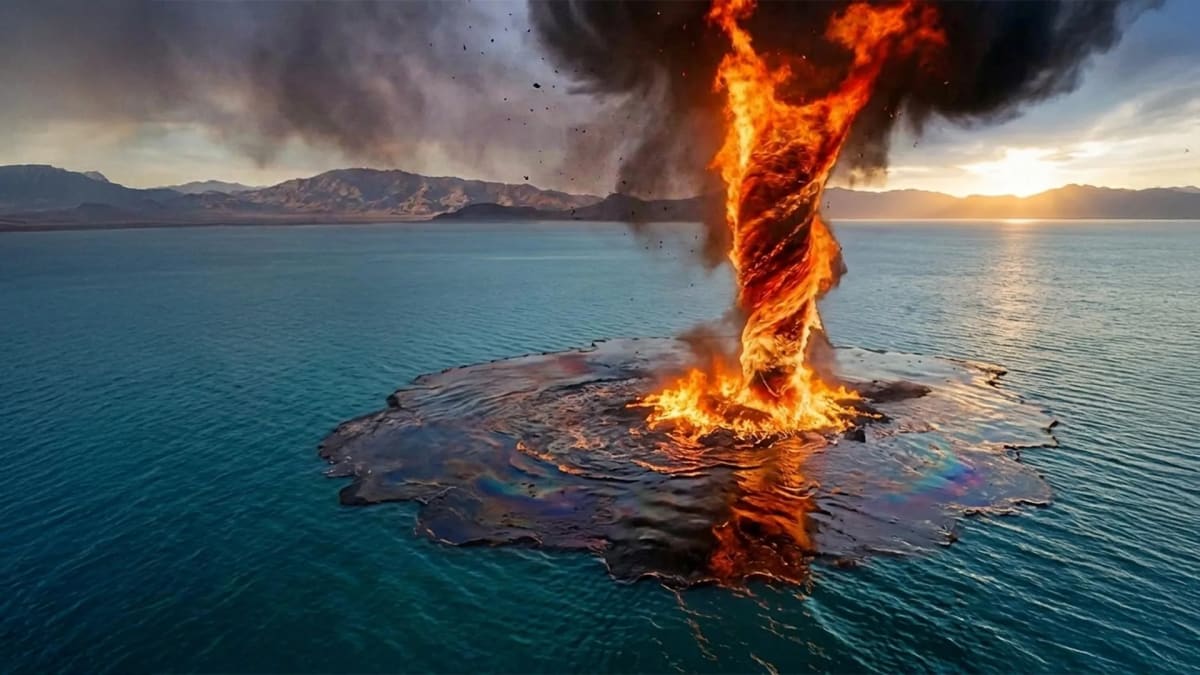
Researchers at Texas A&M University and UC Berkeley have discovered that controlled fire tornadoes can clean up ocean oil spills faster and more cleanly than any existing method. The spinning columns of flame burn crude oil nearly twice as fast as traditional techniques while producing 40% less soot and smoke.
When major oil spills happen at sea, emergency crews face an impossible choice. Let the oil spread and destroy marine habitats, or burn it and fill the sky with toxic black smoke. Neither option is good, and both leave behind tarlike residue that poisons the ocean for years.
The new approach changes everything. Fire whirls work like giant natural incinerators, spinning so fast they pull in massive amounts of oxygen. The extra air creates hotter, more efficient flames that vaporize the oil before it can turn into pollution.
Dr. Elaine Oran, who led the study, built a 16-foot-tall structure at a Texas fire training facility to test the idea. Her team ignited a pool of crude oil floating on water and watched as a 17-foot fire tornado consumed it. The results stunned them: the fire whirl burned through 95% of the oil, leaving almost nothing behind.
"This is the first time anyone has conceived using fire whirls for oil spill remediation," said Oran, a professor of aerospace engineering. Speed matters because every hour an oil slick spreads puts more wildlife and coastline at risk.
The technique could have prevented some of the worst damage from the 2010 Deepwater Horizon disaster. That spill killed 11 workers, thousands of marine animals, and caused damage that persists today. Faster cleanup could stop future spills before they reach protected waters and sensitive ecosystems.
The Bright Side
Beyond oil spills, understanding fire whirls could help engineers design cleaner combustion systems and better predict wildfire behavior. The same physics that makes these spinning flames so efficient for cleanup could revolutionize how we think about controlled burning.
The team is already working on ways to make fire whirls more stable in windy conditions. Strong gusts can destabilize the spinning column, so finding the right balance of airflow is critical. Once perfected, the technique could become standard equipment for oil spill response teams worldwide.
What started as a radical idea to harness chaos might become the cleanest way to protect our oceans.
Based on reporting by Science Daily
This story was written by BrightWire based on verified news reports.
Spread the positivity!
Share this good news with someone who needs it


