First Stellar Stream Found Outside Milky Way
Scientists just spotted a faint trail of stars in another galaxy for the first time ever, opening a new window into understanding the mysterious dark matter that makes up most of our universe. This breakthrough could help unlock one of astronomy's biggest puzzles.
Imagine finding a cosmic breadcrumb trail that could solve one of the universe's greatest mysteries. That's exactly what researchers at the University of Copenhagen and DTU Space just did.
PhD student Julie Kiel Holm and her team discovered something astronomers have been hoping to find for years: a globular cluster stellar stream in another galaxy. These streams are like ribbons of stars that stretch across space, and until now, scientists had only seen them in our own Milky Way.
The discovery happened in a galaxy called UGC9050-Dw1, which barely gives off any light. Finding anything there is like spotting a single candle flame from miles away, which makes this achievement even more impressive.
So why does a trail of stars matter? These stellar streams act like cosmic detectives, revealing the invisible dark matter that shapes our universe. Dark matter makes up 80 to 85 percent of everything out there, yet scientists still don't fully understand what it is or how it works.
"We have discovered a globular cluster stellar stream in another galaxy. This is the first time such a stream has been observed outside our own galaxy, the Milky Way," says Kiel Holm. The team's findings just appeared in Nature, one of the world's most respected science journals.
The streams form when a galaxy's gravity slowly pulls stars away from tightly packed clusters over millions of years. Because gravity shapes these trails, astronomers can study them to map where dark matter sits and how much of it exists in different galaxies.
The Ripple Effect
This single discovery could transform how we study the entire universe. For years, scientists could only use stellar streams to understand dark matter in the Milky Way. Now they can look at completely different types of galaxies and compare what they find.
The researchers measured the dark matter in UGC9050-Dw1 using this brand new tool, and their results matched what other methods had shown. That confirmation proves the technique works beyond our home galaxy.
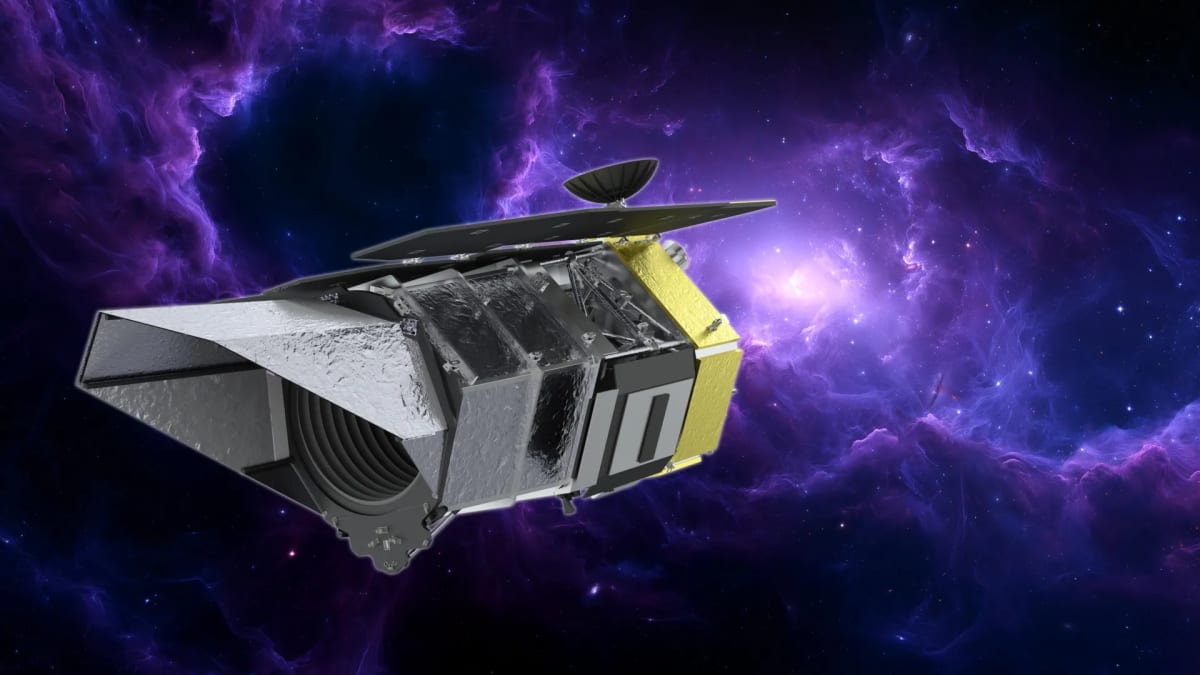
Better yet, this is just the beginning. New space telescopes launching soon, including the Euclid Space Telescope and the Nancy Grace Roman Space Telescope, should spot many more of these stellar streams. Each one will add another piece to the dark matter puzzle.
"Being able to observe these streams in entirely different kinds of galaxies opens the door to using them to build a much broader understanding of how dark matter behaves," Kiel Holm explains.
The universe just became a little less mysterious, one faint stream of stars at a time.
Based on reporting by Google News - Breakthrough Discovery
This story was written by BrightWire based on verified news reports.
Spread the positivity!
Share this good news with someone who needs it