Fish Rides Turtle Onto Beach and Survives 19 Minutes
A remora fish clung to a sea turtle during nesting in Costa Rica and survived nearly 20 minutes out of water. The rare observation reveals how devoted these fish are to their ocean companions.
A fish that can't breathe air just proved it would rather risk death than leave its chosen companion behind.
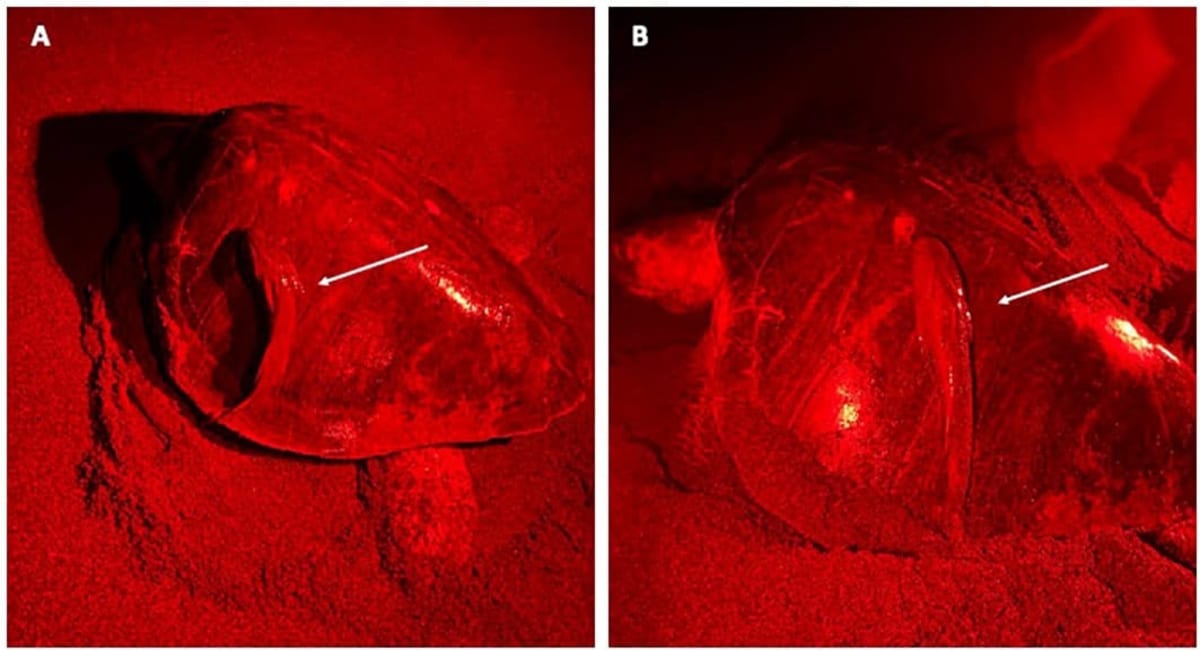
Last September on Costa Rica's Osa Peninsula, research assistants spotted something extraordinary crawling out of the Pacific Ocean. A nesting olive ridley sea turtle emerged onto Playa Pejeperro with a large remora fish still attached to her shell.
Remoras are the ocean's hitchhikers. They use a modified fin that works like a suction cup to attach to sharks, rays, whales, and turtles. The arrangement saves them energy while keeping them close to food.
But remoras need water flowing over their gills to breathe. Following a turtle onto dry land should be a death sentence.
The research team from Comunidad Protectora de Tortugas de Osa (COPROT) watched the pair for 19 minutes starting at 10:29 p.m. The 11-inch fish stayed nearly motionless on the turtle's shell, working its gill covers open and shut in the night air. It only shifted position when a researcher approached to detach it.
The turtle seemed completely unbothered. She dug her nest and began laying eggs right on schedule at 10:48 p.m.
When researchers carried the remora back to the water, it writhed briefly and then swam away. It had survived nearly a third of an hour out of the ocean.
Why This Inspires
The observation, published in June in the journal Frontiers in Marine Science, tells a deeper story about loyalty in the natural world. Researchers believe the fish's risky choice reveals something surprising about how remoras bond with their hosts.
Recent studies have tracked individual remoras staying with the same animal for extraordinary periods. One sharksucker remained attached to the same parrotfish for 238 days, ignoring much larger potential hosts swimming past. Others have followed manta rays and sharks into deep water once thought impossible for them to survive.
Scientists now think remoras aren't just opportunistic hitchhikers grabbing whatever passes by. They're making deliberate choices about which animals to follow and refusing to let go, even when staying attached becomes dangerous.
Only a handful of similar cases exist on record, involving nesting turtles in French Guiana and Mexico. This Costa Rican observation adds Central America to a list spanning two continents, suggesting the behavior may be far more common than scientists realized.
The discovery came from nothing fancy. Just a crew of local residents walking a dark beach with red lights, measuring turtle shells, and writing down what they saw. COPROT was founded in 2018 and trains community members, including former illegal gold miners, to monitor one of Costa Rica's most important nesting sites.
Much of what we know about ocean life gets assembled exactly this way: one careful observation at a time, written in a field notebook under starlight.
Sometimes the smallest creatures teach us the biggest lessons about commitment.
More Images




Based on reporting by Tico Times Costa Rica
This story was written by BrightWire based on verified news reports.
Spread the positivity!
Share this good news with someone who needs it