Floating Wind Farm Attracts More Ocean Life Than Empty Water
Three floating turbines off Portugal became an unexpected sanctuary for marine life, with eight years of monitoring showing more octopuses, sharks, and fish than surrounding control areas. The findings suggest deep-sea wind farms might actually help ocean ecosystems thrive.
When researchers checked on three floating wind turbines off Portugal's coast after five years, they found something remarkable: the ocean around them was teeming with more life than the surrounding waters.
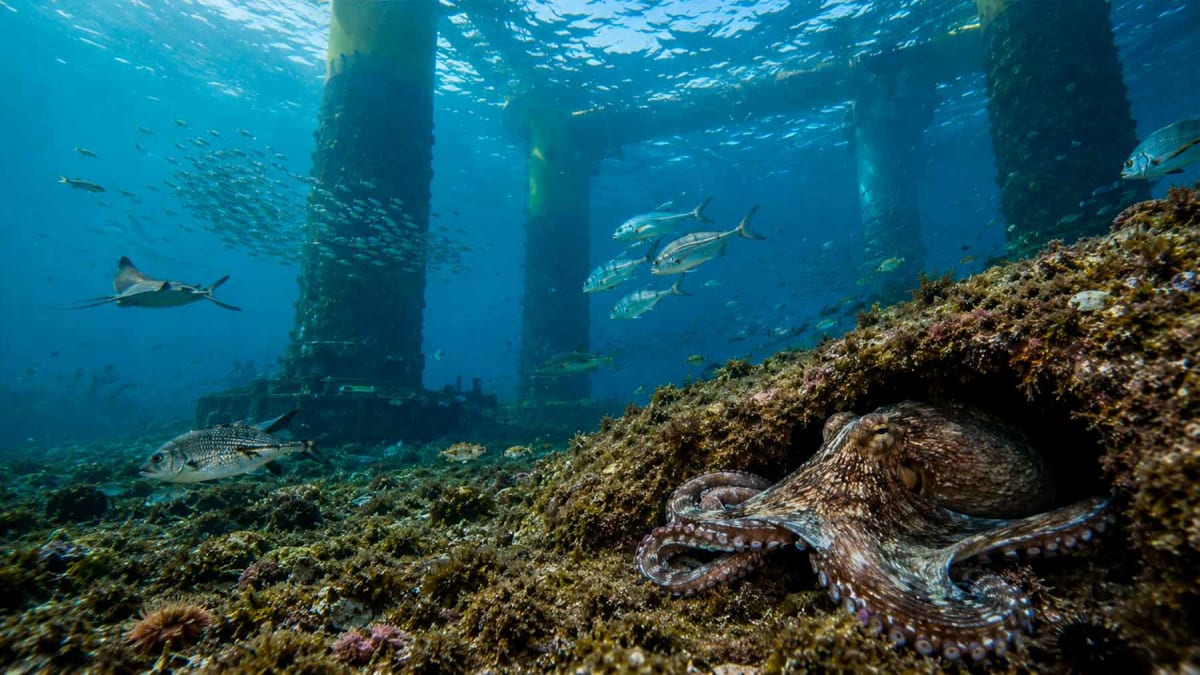
The WindFloat Atlantic project, located 12 miles off Portugal's coast, has been monitored for eight years by teams from Blue Grid and the University of Lisbon. Scientists tracked everything from tiny plankton to massive mammals across all project phases, documenting over 270 species in the area.
The results surprised everyone. Octopuses, sharks, rays, and flatfish showed up in higher numbers and biomass around the turbines than at control sites. The steel structures and anchor chains created what scientists call an "artificial reef effect," giving marine creatures new surfaces to inhabit and places to hide.
But that's only part of the story. Safety regulations around the wind farm created exclusion zones that banned commercial fishing and heavy boat traffic. Together with the reef effect, these protections turned the site into an accidental marine refuge where sea life could thrive undisturbed.
The Ripple Effect
This discovery comes at a crucial moment for clean energy. Global offshore wind capacity now sits at 92.5 gigawatts, powering over 100 million homes and offsetting millions of metric tons of carbon emissions annually. Yet traditional offshore turbines only work in waters shallower than 600 feet, creating fierce competition for space with fishing boats and shipping lanes.
Floating turbines solve this problem by operating in deep ocean waters where there's plenty of room. Until now, scientists worried these deeper installations might harm marine ecosystems. The Portugal findings flip that concern on its head.
The research shows that when developers combine floating structures with fishing exclusion zones and long-term environmental monitoring, these clean energy sites can actually boost ocean biodiversity. What started as a climate solution turned into a conservation win too.
Ocean Winds published all eight years of biodiversity data publicly, setting a new standard for transparency. Their approach proves that commercial deep-sea wind generation doesn't have to choose between clean energy and healthy oceans.
As the world races to meet climate goals, floating wind farms now offer a path forward that benefits both the atmosphere and the sea.
Based on reporting by Google News - Wind Energy
This story was written by BrightWire based on verified news reports.
Spread the positivity!
Share this good news with someone who needs it